Wano is the most historically layered arc in One Piece. Its structure is a deliberate double reference: Japan’s greatest national catastrophe fused with Japan’s most ancient folk tale. Every major location in Wano maps to a real place tied to the Mongol invasions of the 13th century. And the enemy is built from the actual historical invaders.
Kaido = Khaidu Khan, Grandson of Genghis Khan
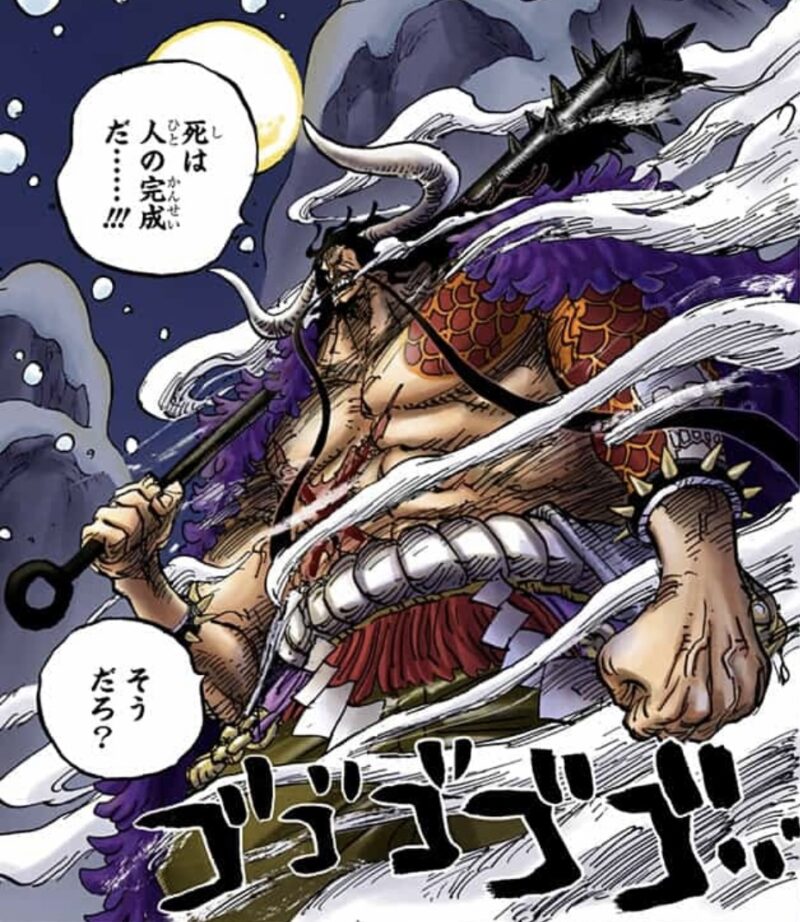
Kaido’s name is not an approximation. Khaidu Khan was a real ruler — a grandson of Genghis Khan who controlled Central Asia and was one of the most powerful men on earth in the late 13th century. Khaidu maintained a running conflict with Kublai Khan (the emperor who launched the invasion of Japan) for over thirty years. He is one of the most significant figures in the Mongol Empire’s history, and his name is Kaido.
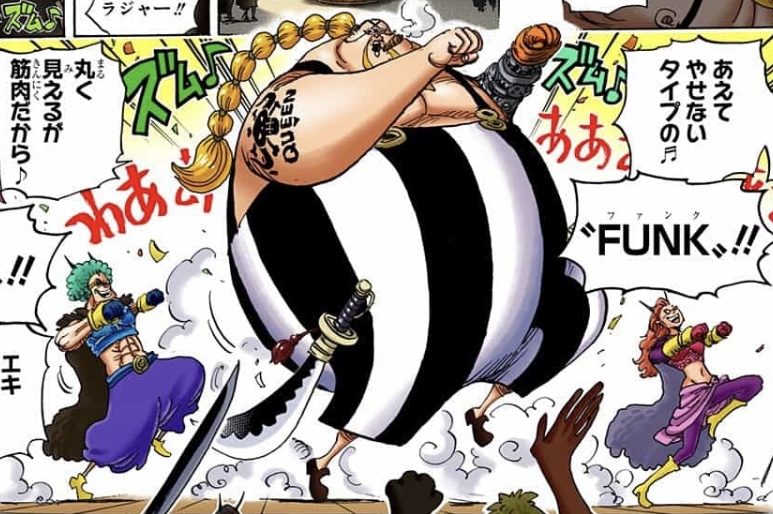
The Beasts Pirates’ visual design continues the theme. King and Queen both wear their hair in bianfa — the distinctive braided hairstyle that was the signature of the Mongol nobility and military. It is an immediately recognizable visual marker of northern Asian steppe culture. Oda put the Mongol aesthetic directly on the two strongest members of Kaido’s crew.
Kuri Beach = Iki no Matsubara, Fukuoka (Site of the Mongol Landing)
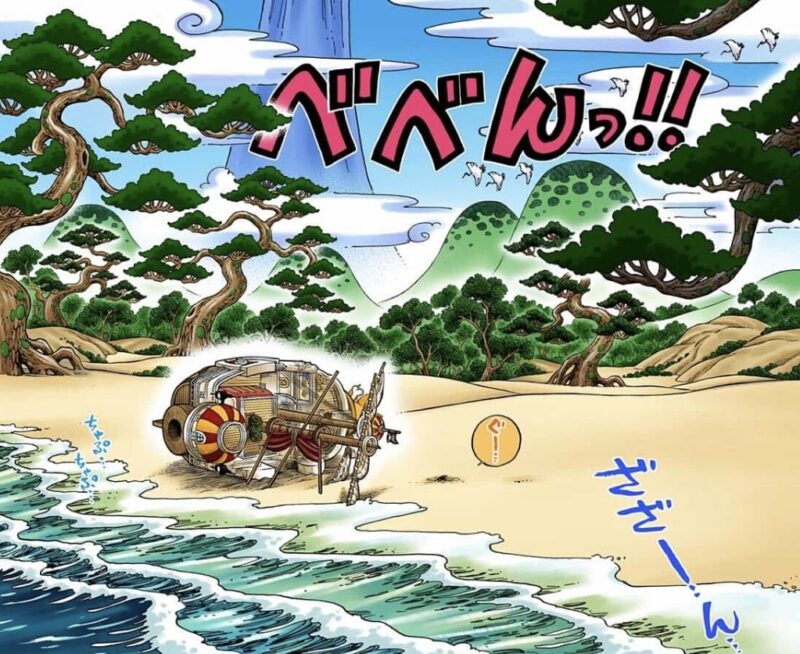
The beach where Luffy and Big Mom wash ashore after escaping Totto Land is Kuri Beach. The model is Iki no Matsubara — a pine forest beach on Hakata Bay in Fukuoka, the site where the Mongol army made its landing during both the 1274 and 1281 invasions. The name “Kuri” (Kuri-hama = Chestnut Beach) contains a phonetic reference to Kyushu while the model is the specific beach where Japan’s worst military crisis began.
The Genko Borui — the stone wall built along Hakata Bay to stop the Mongol cavalry from advancing inland — still exists on this coastline. The Japanese government constructed the most expensive defensive fortification in its history right here, a direct response to the Mongol threat. Kuri Beach is that beach.
Itachi Port = Imari Bay (The Mongol Fleet Is Still at the Bottom)
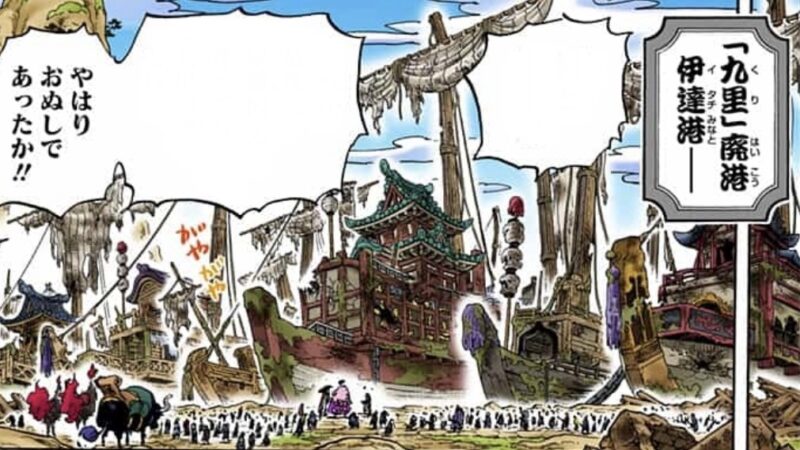
The port where Kinemon and the alliance repair ships from wreckage is Itachi Port. The model is Imari Bay in Saga and Nagasaki prefectures — the bay where the Mongol fleet assembled in 1281 before the typhoon struck.
The divine wind — kamikaze — destroyed roughly 4,000 Mongol ships in Imari Bay. The wrecks are still on the seabed. Japanese and American archaeological teams have been recovering artifacts from the Mongol fleet there since the 1980s. The scene where the alliance gathers abandoned ships from the sea to repair them into a fighting force is drawn from the actual history of what that bay contains.
The Folk Tale Layer: Momotaro
The second structural layer is Momotaro — Japan’s oldest and most widely known folk tale. A boy born from a peach defeats the demon king on Oni Island, accompanied by companions he recruits along the journey.
Momonosuke (whose name literally means “Peach Help”) is Momotaro. The Straw Hats are his recruited companions. Kaido is the demon king (oni), and Onigashima is Oni Island (onigashima = demon island). The place name and the folk tale character type align precisely. Oda layered the historical catastrophe of the Mongol invasions onto the structure of the folk tale, building a narrative where Japan’s oldest story and Japan’s worst military crisis become the same story.
For other arcs with layered historical references, see One Piece History is Real History. For the real-world Grand Line route, see The Real Grand Line.