Egghead Homage
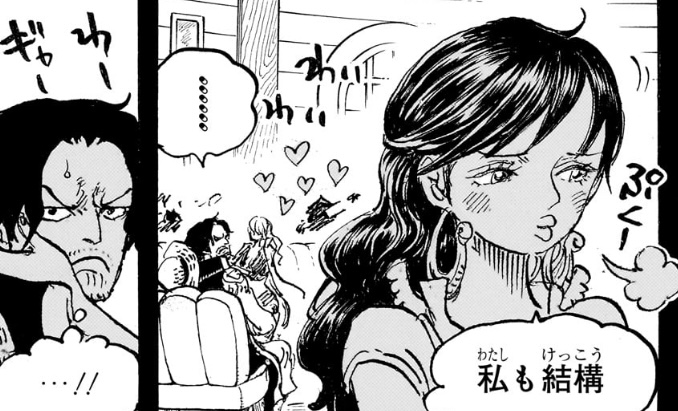
Timeline update: 42 years ago — Shakuyaku’s bar opens on Hachinosu. 40 years ago — Rocks’ eldest son Teach is born. 39 years ago — Shanks and Shamrock are born. God Valley is now just one year away.
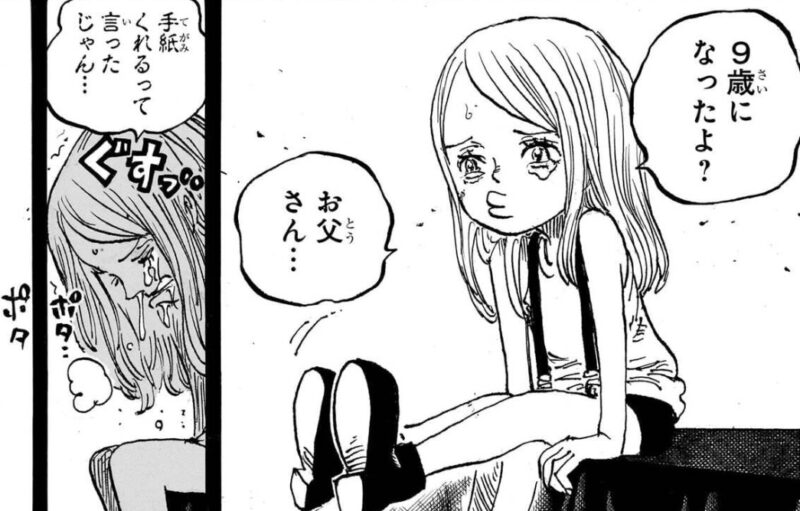
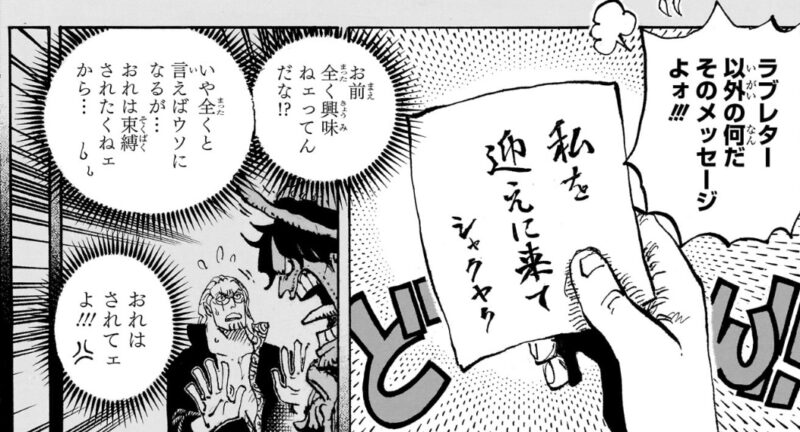
Roger sulking after seeing a letter Rayleigh wrote to Shakuyaku. Shakuyaku sulking because Rayleigh didn’t come visit. Both of these = Egghead arc’s Bonney homage. Structural rhymes across decades of story.
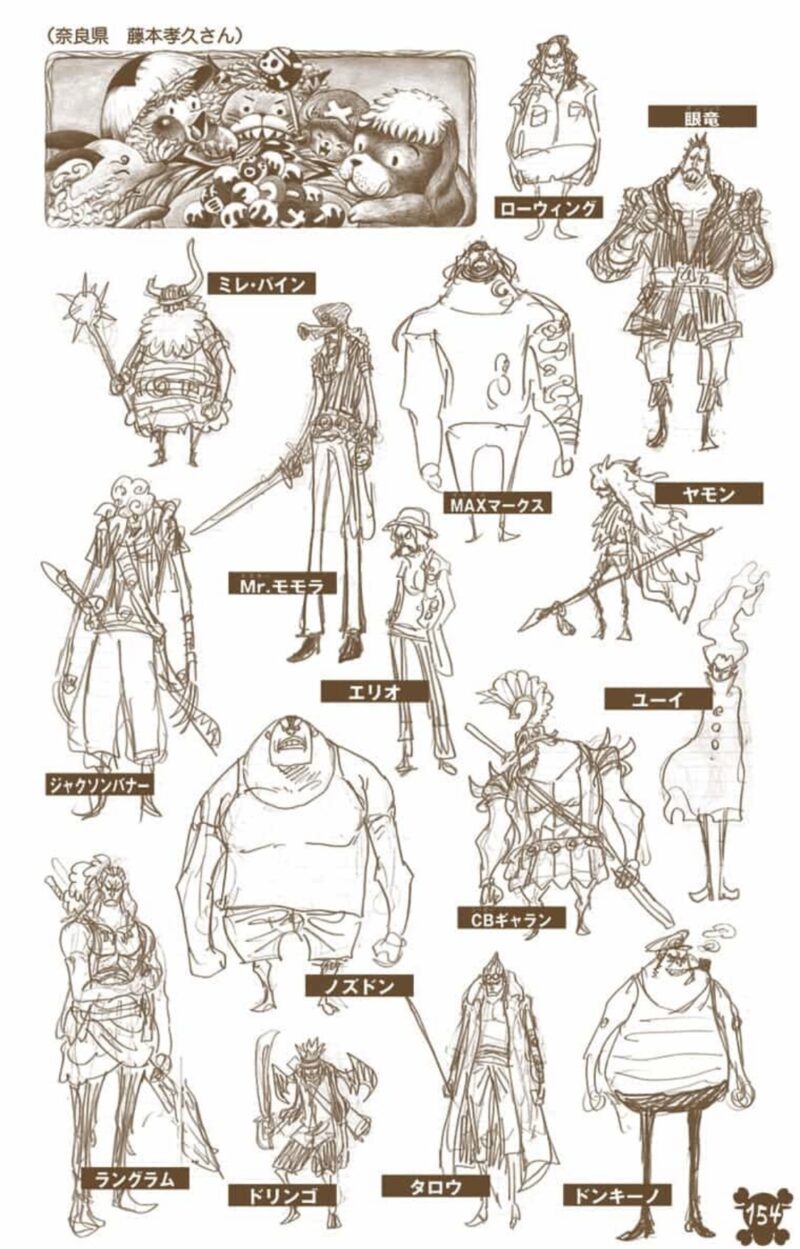
Roger Pirates Crew Identification
Since the Loki flashback began, the Roger Pirates have been getting proper face time, and fans finally have enough panels to identify almost everyone. Oda said “you don’t need to memorize them!” in the Vol.96 SBS — but as a fan, at least knowing face and name feels worthwhile. Here’s a compiled rundown of confirmed Roger Pirates crew members as they’ve appeared across chapters:
From various panels across Vol.96, Ch.1096, Ch.1156, and Ch.1158: Mille Pine, Ganryu (Eye Dragon), Silvers Rayleigh, Dringo, Scopper Gaban, Taro, Nozdon, Peter Moo, Spencer, Fish-Man Sunbell, Kozuki Oden, Rowing, MAX Marks, Elio, Mr. Momola, Bankro, Crocus, Jackson Banner, Yuui, Moon Isaac Jr., CB Gallant, Muglen Colonel, Yamon. And the new member finally confirmed this chapter: Langram (alas — not Bullet, as some had hoped).
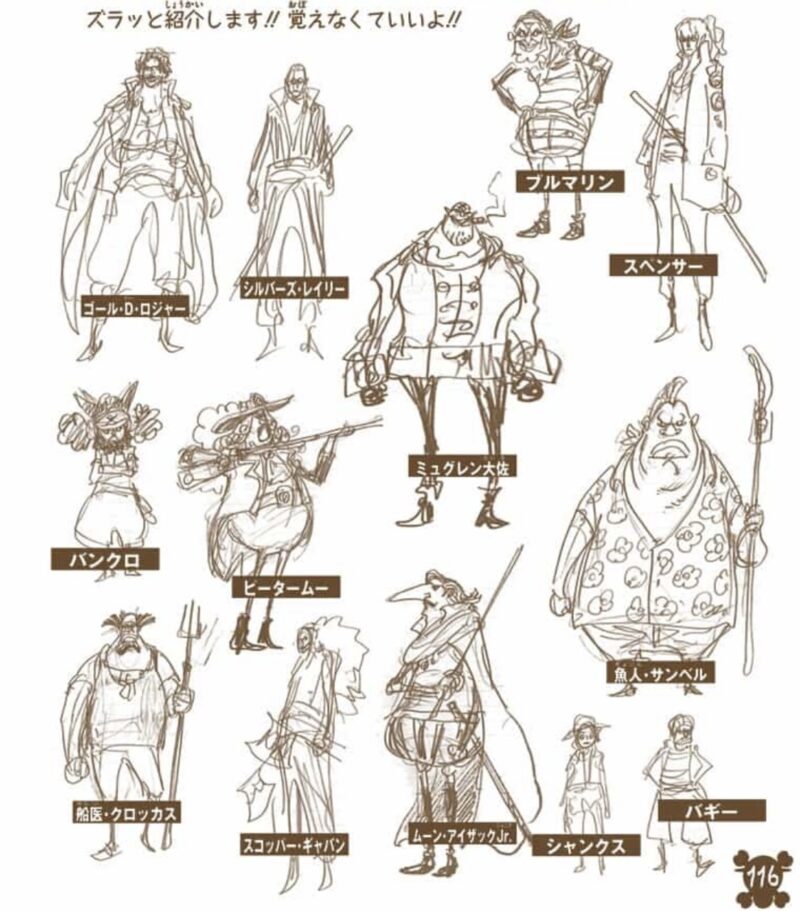
The only crew member not yet clearly shown on-panel: Bluemarine. Every other named member has now been visually confirmed.
Chapter 332 “Luffy vs Usopp” Homage
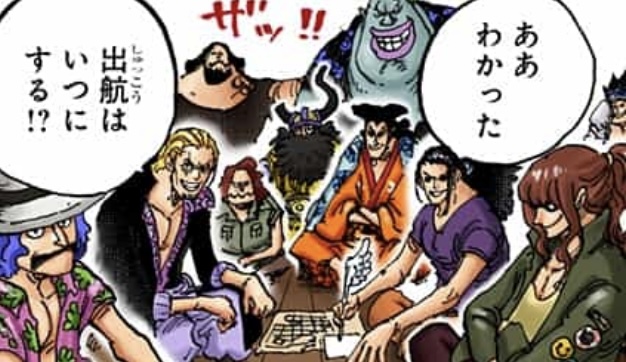
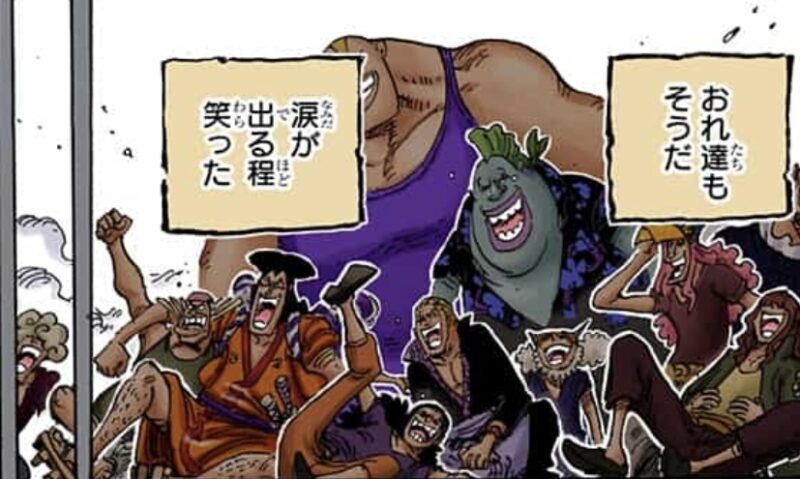
Shakuyaku’s bar rule: no fighting inside. Thanks to that rule, Roger and Rocks end up drinking at the same table — an almost impossible image. But the moment they’re at sea, they’re complete enemies.
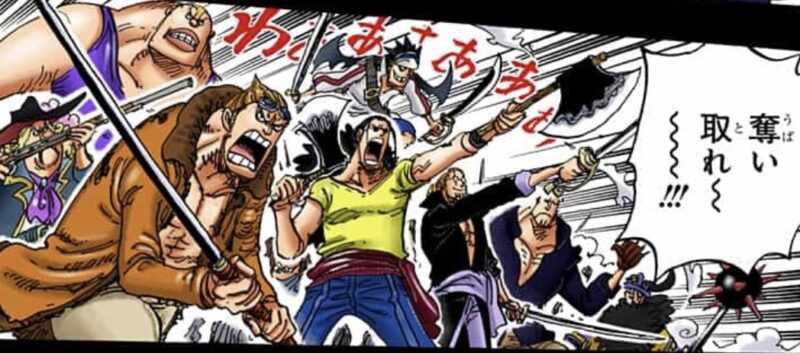
The standoff between Rocks and Harald outside the bar = a homage to Ch.332 “Luffy vs Usopp.” Best friends forced into a genuine duel against each other. The composition matches: two characters who share deep bonds, facing each other for real, the finishing blow aimed at the body. Luffy and Usopp. Harald and Rocks. Same emotional architecture.
Cover Story Vol.40 — Kozuki Moriah
Yamato cover story Vol.40: “The pirate of justice rests here.” The name on the gravestone: Kozuki Moriah. Is this the same person as Gecko Moria? If so, which is the real name? It’s a stunning reveal — and it connects to everything Moria has been doing throughout the series, including his obsession with restoring his lost crew.
Lately, Oda has been packing the cover stories with foreshadowing and thematic summaries of the main narrative. Recall Ch.1098’s cover, which had the text “ROCK” embedded — when Oda drew that chapter (Bonney’s birth, Jinny’s devastating end after being abducted by Celestial Dragons), he may have already decided that Rocks would avenge what was done to Jinny. The “ROCK” text as foreshadowing of exactly that payoff.
The Cover Art Associative Chain
The current cover story’s deeper meaning, decoded through Oda’s associative thinking: The main story reached 39 years ago, when Shanks was born. God Valley is 38 years ago. So Shakuyaku was kidnapped by Celestial Dragons 39 years ago. A beautiful woman kidnapped by Celestial Dragons → Jinny. Jinny → Kuma. Kuma → hero of Sorbet Kingdom. Roger sulking over Rayleigh’s letter → Bonney. Shakuyaku sulking that Rayleigh didn’t visit → Bonney. Bonney’s reason for sadness → Kuma. Kuma → hero. The cover’s “Kozuki Moriah” → hero of Wano’s village.
The unifying concept: monuments built to honor heroes who saved a village, country, island, or family. From that angle, the perfect visual match found in Vol.80: a monument to a hero at the center, a man in the same composition as Kikunojo on the right, and on the left — a boy at the same head angle as Yamato, wearing a Bartholomew Kuma T-shirt. The central character’s name is “Flapper” — meaning “to flutter” → butterfly → Ochou (the woman who guided Yamato to this grave). That layering is both stunning and slightly terrifying. Oda’s brain is operating on a level that makes you genuinely uncomfortable when you trace how deep it goes.
Related Reading
- ← Ch.1157: The Truth of God Valley Continues, Rocks
- Ch.1159: D is the Natural Enemy of God, and Davy →
- Browse all Chapter Analysis →