The Duel for Fleet Admiral
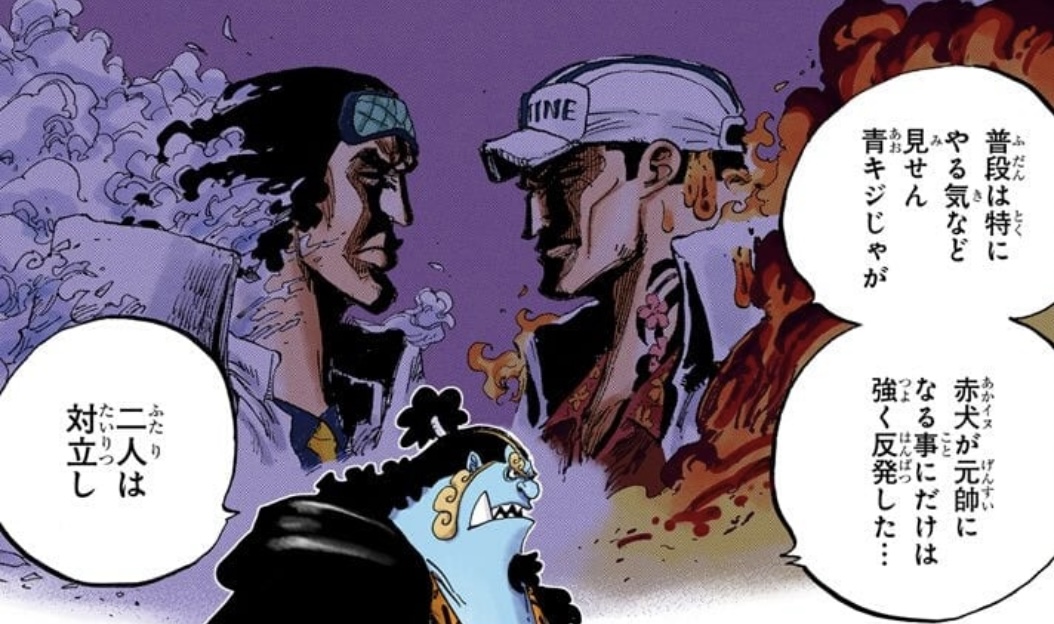
After the Summit War, Aokiji lost the duel for the position of Fleet Admiral against Akainu, resigned from the Navy, and became captain of Blackbeard’s 10th fleet.
What happened to Aokiji? And why did he risk everything in a duel to prevent Akainu from becoming Fleet Admiral?
The answer lies in what happened at Ohara.
Justice Gone Too Far
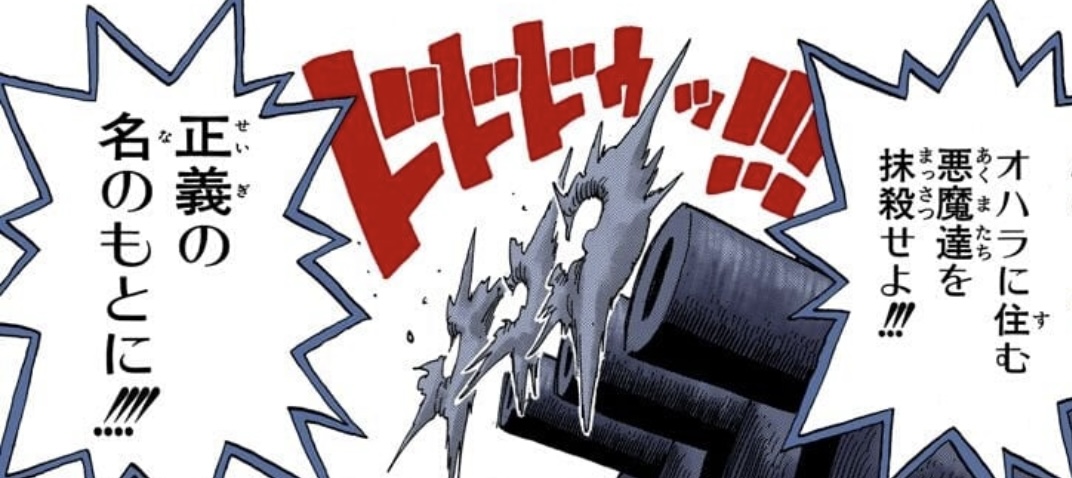
The World Government’s justification for the Buster Call on Ohara went like this:
- Reading the Poneglyphs could enable the revival of Ancient Weapons, threatening the world
- Therefore, deciphering ancient text is declared illegal
- Those who break this law are sentenced to death
- Archaeologists were tracked and Ohara was identified as their base
- Ohara’s research had progressed far beyond what the government imagined
- To prevent the scholars’ knowledge from spreading, not one person may leave the island
- Annihilate the demons living in Ohara!! In the name of justice!!
Looking at this again, the logic is quite coercive — especially calling scholars “demons” to retroactively justify what was already decided: total annihilation.
Akainu’s decision to shell the evacuation ship was actually the correct execution of the government’s intent. He understood the order perfectly.
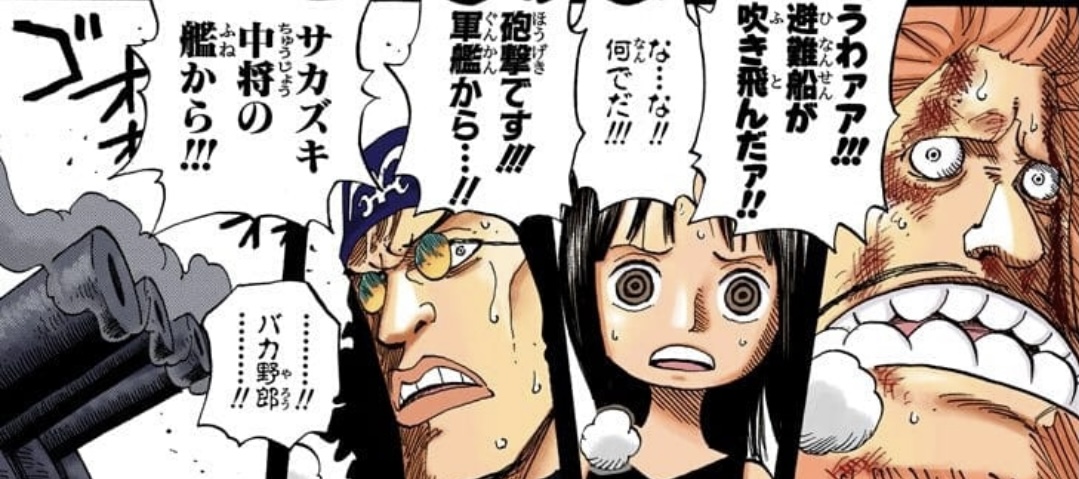
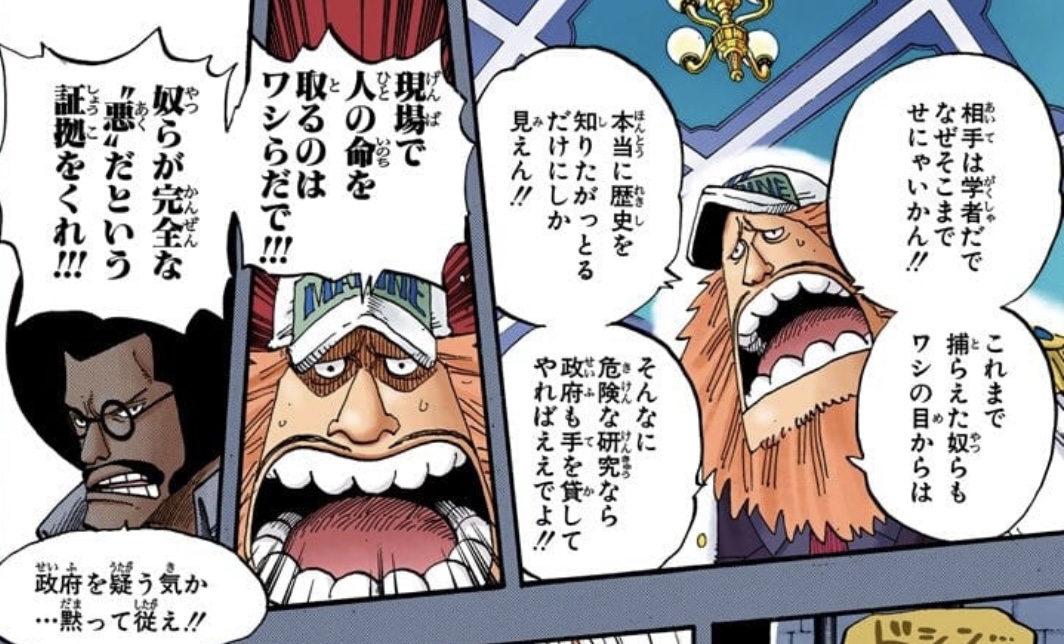
Saulo confronted Akainu: “Is this what justice looks like?!” — and Aokiji rejected Akainu’s methods, saying “I don’t intend to go as far as that fool.”
But what both Saulo and Aokiji rejected wasn’t Akainu personally — it was the World Government’s definition of “justice.”
Saulo deserted the Navy precisely because he questioned whether it’s truly right to take lives in the name of the government’s justice.
To summarize the positions at Ohara:
- Akainu — follows government justice without hesitation, even if it means killing potentially innocent people
- Saulo — rejected government justice and followed his own conscience
- Aokiji — felt that the government’s justice had gone too far
Justice Is a Personal Value
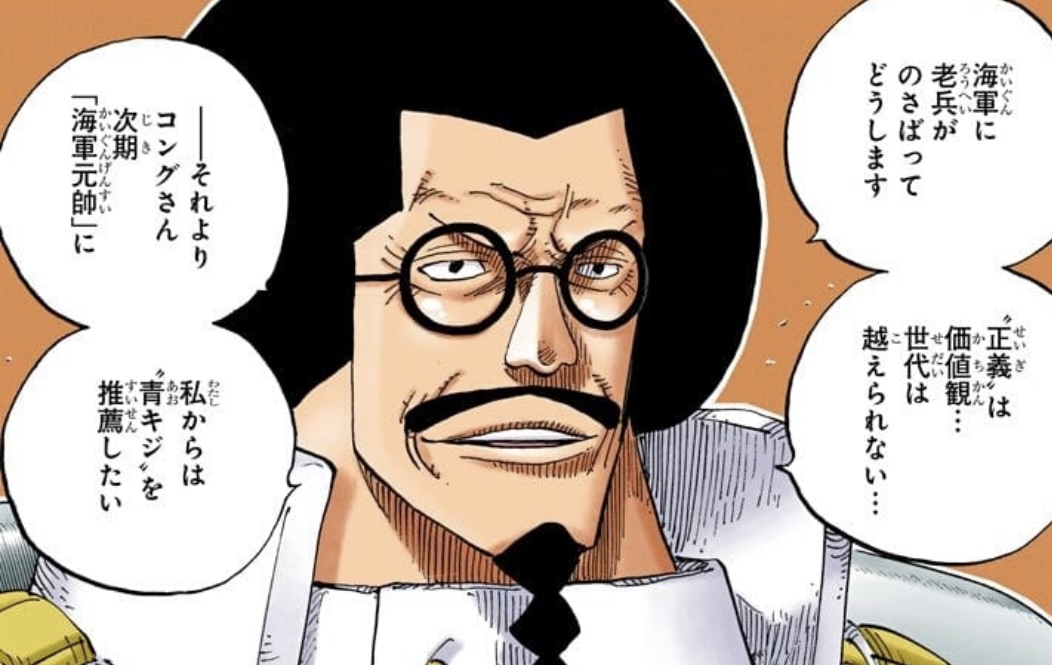
“Justice” in the Navy means personal values — Navy officers at the Commander rank and above can adopt their own personal justice motto, which shapes how they lead.
After the Ohara Incident, Aokiji changed his motto from “Blazing Justice” to “Lazy Justice.”
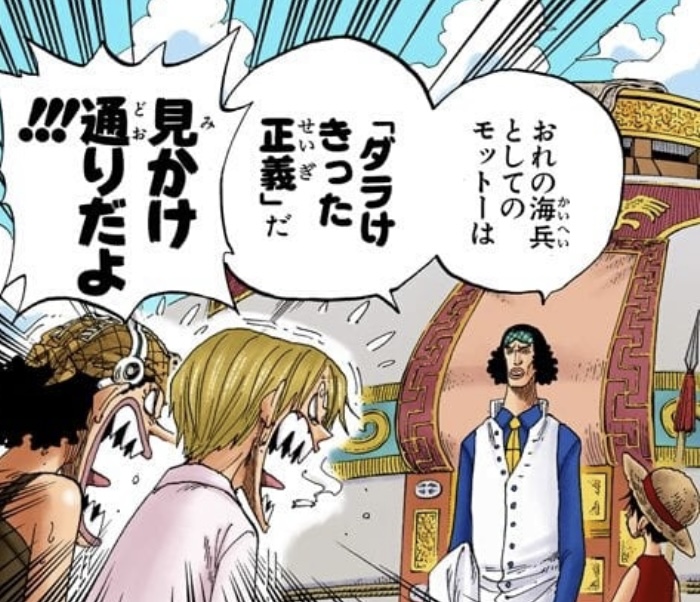
An officer’s motto cascades down through their ranks — the higher you go, the more people it influences. A Vice Admiral under an Admiral naturally drifts toward that Admiral’s values.
Most subordinates would choose Aokiji as a commander because he lets them be themselves. That’s why he had such strong loyalty from his troops.
The Navy’s Upper Echelons
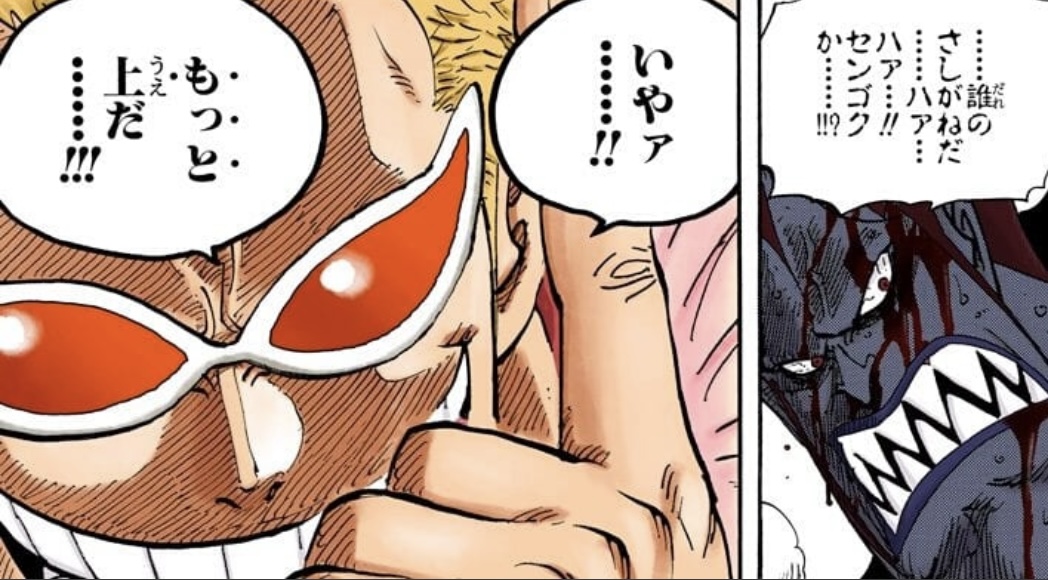
During the chaos of the Summit War, multiple Level 6 prisoners escaped from Impel Down.
“Even one Level 6 escapee infiltrating a country would pose catastrophic risk to civilians.” Sengoku moved to release wanted posters immediately — but upper management ordered: “Cover it up. It would damage the government’s credibility.”
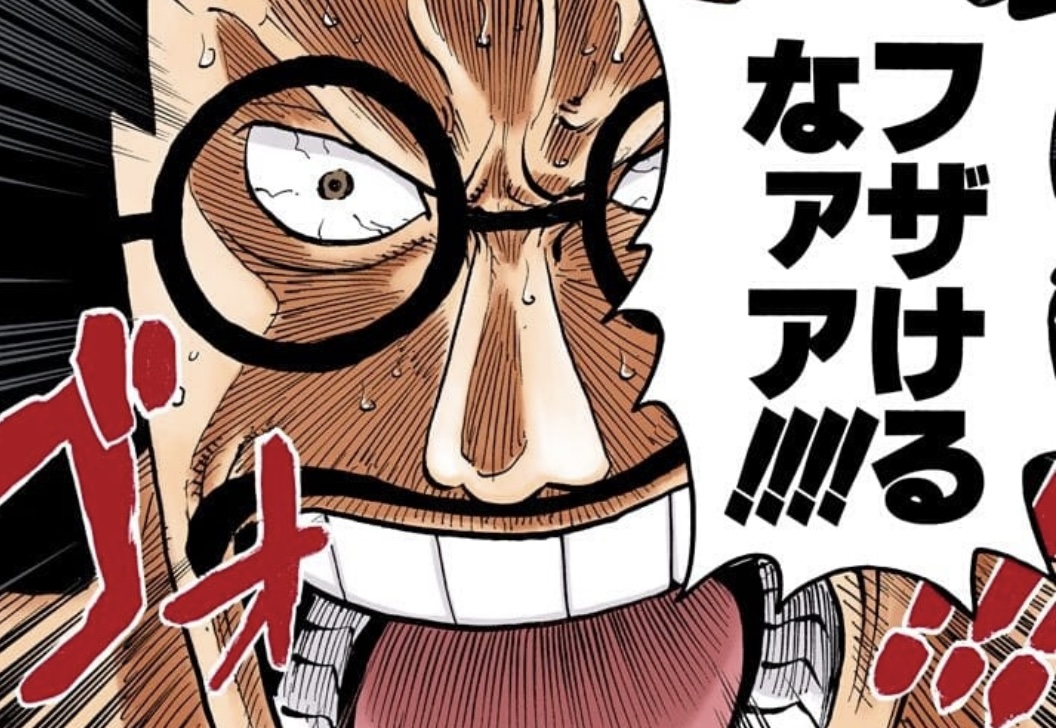
Sengoku’s resignation was largely the result of years of built-up frustration finally reaching its breaking point. The Impel Down cover-up was likely the last straw.
The Priority of Lives
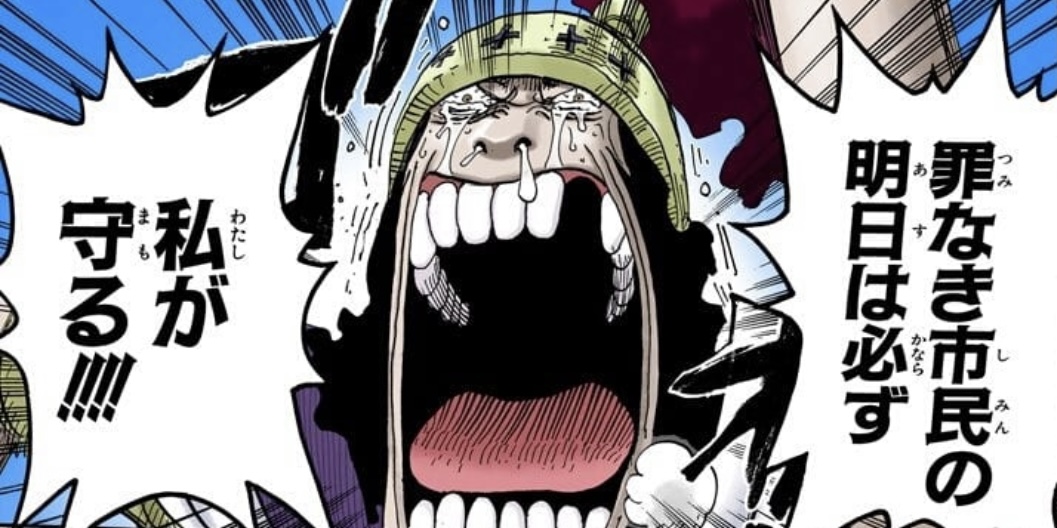
A Marine’s duties can be broken into three main obligations:
- Protect the Celestial Dragons
- Apprehend criminals
- Protect citizens of World Government member nations
Marines like T-Bone deeply value protecting citizens — yet those same citizens’ lives are treated as worthless by the Celestial Dragons they’re also obligated to serve.
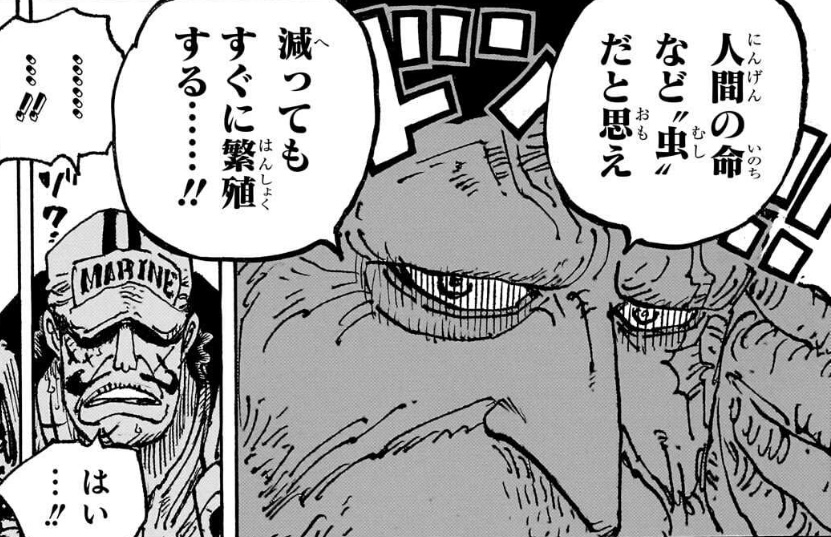
The hierarchy of life in this world was defined by the World Government, which also created the Navy — so marine orders are ultimately bound by government authority. Aokiji never stopped questioning this contradiction.
After Ohara he changed his motto, but he stayed in the Navy. As he rose to Admiral and dealt more closely with Celestial Dragons, he witnessed their contempt for life firsthand.

This is why Garp always refused his Admiral and Fleet Admiral promotions. Aokiji now understood exactly why.
Kuzan’s Purpose as a Pirate

Once the title changed from “Admiral Aokiji” to “Kuzan, Captain of Blackbeard’s 10th fleet,” we can call him Kuzan.
From his conversation with Smoker at Punk Hazard, several things are clear:
- He still cares about the Navy
- He left the Navy and became a pirate, but appears to be acting on the Navy’s behalf
- Blackbeard’s intelligence network — which can track anyone’s location — is genuinely useful
Now let’s analyze his motive based on Blackbeard’s recruitment pitch and the current story situation.

Alignment of Interests with Blackbeard

Blackbeard’s dream is to become the Pirate King.
More specifically: he wants to have Hachinosu — an island full of pirates — officially recognized as a World Government member nation, with himself as its king. He kidnapped Coby as a negotiating chip toward this goal.
If it worked, Hachinosu could become something like Dressrosa — a legitimized country.

The World Government might choose to attack rather than negotiate, of course. But consider: a Yonko title, a massive crew of Devil Fruit users, and a former Admiral in their ranks? The odds of a peaceful negotiation increase dramatically.
So what’s in it for Kuzan?
Kuzan likely has his own conditions he wants to put on the table — specifically, a restructuring of how the World Government relates to the Navy.
First Move: Failed

Coby had already submitted his resignation from the Navy (he’s a SWORD member) — and then Garp broke in and Coby escaped. Blackbeard’s plan collapsed.
What remained was a frozen Garp — who had also resigned. A weaker bargaining chip than Coby.
The plan needs to be reset. Perhaps next they’ll try to capture a Celestial Dragon?
Still, Blackbeard is surprisingly reasonable compared to someone like Hody.

Blackbeard’s approach — taking hostages to force negotiations — is technically terrorism. But compared to Hody’s blind destructiveness, it’s almost diplomatic.
That reasonableness is probably why Kuzan chose to team up with him.

The Hint to Kuzan’s Purpose: Film Z

In Film Z, Kuzan is shown in a state of uncertainty after losing to Akainu. He could have become a radical like Zephyr — trying to change the world by force.
But watching his mentor Zephyr go down that path, Kuzan rejected it.
Film Z is Oda’s way of showing that extremism is not the direction Kuzan is heading. Kuzan wants systemic change — not destruction.
Rewatching Film Z with this in mind makes it much more interesting.