“Marriage” Has Always Been Portrayed Negatively in One Piece
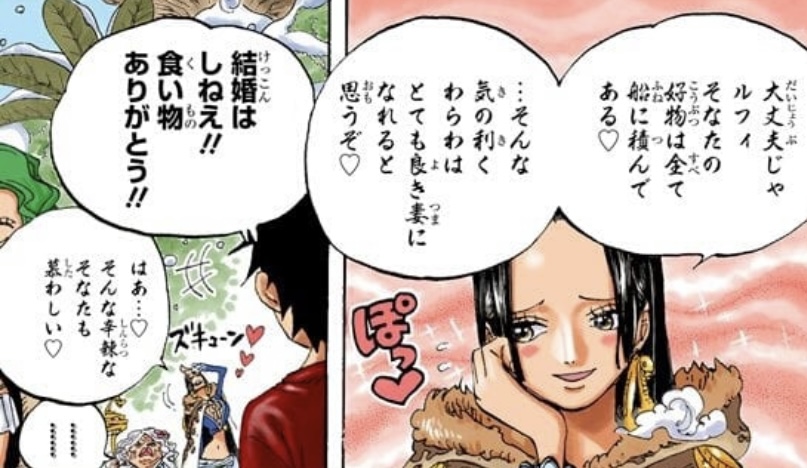
Luffy flatly rejects Hancock’s advances: “I’m not getting married!!”
But that’s not the only example. Throughout One Piece, every word associated with marriage is portrayed in an extremely negative light.
- A proposal as a greeting
- “Yes or Die” proposals
- Wedding invitations as threat letters
- Arranged marriages decided entirely by parents
- The Candle Service of Death
Let’s go through each one.
Proposals That Instantly Fall Through
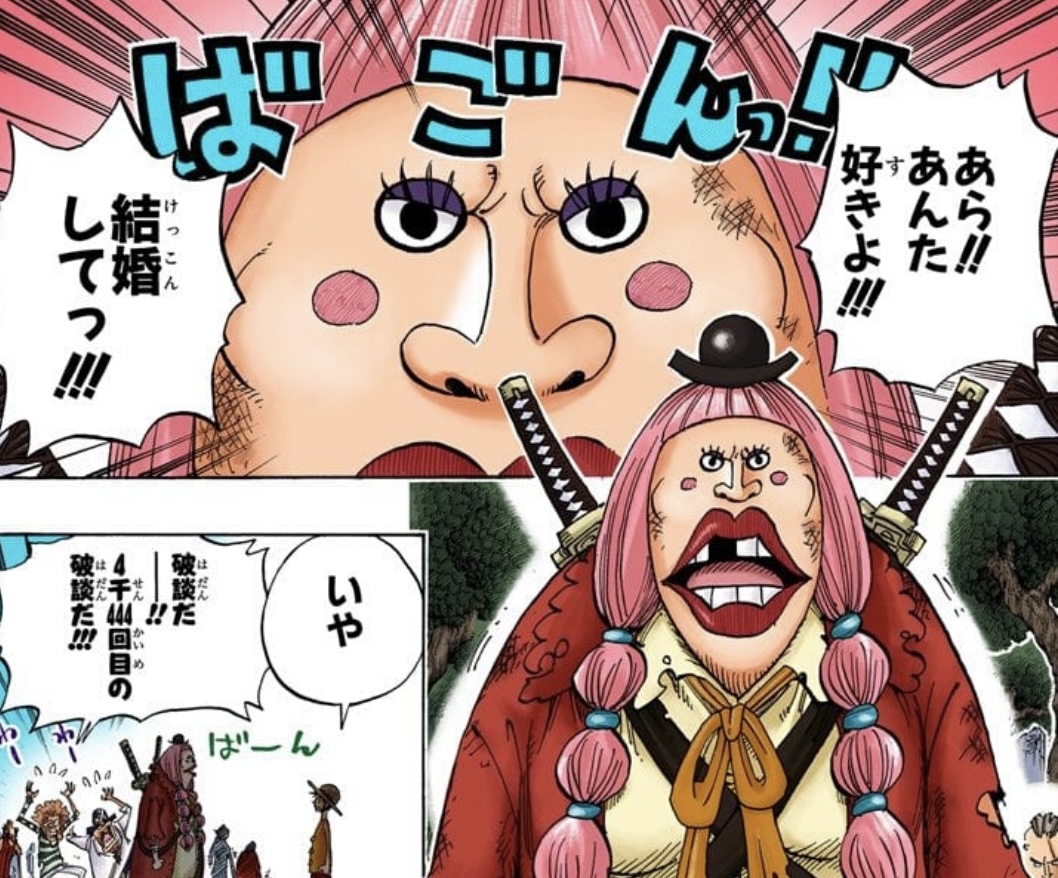
Lola, known as “the Proposer,” had been rejected by men she’d just met — Luffy becoming her 4,444th rejection.
Honestly, anyone would refuse a marriage proposal from a complete stranger before you’ve even said hello.
Nobody wants this kind of proposal.
“Yes or Die” — Proposals With a Death Sentence Attached
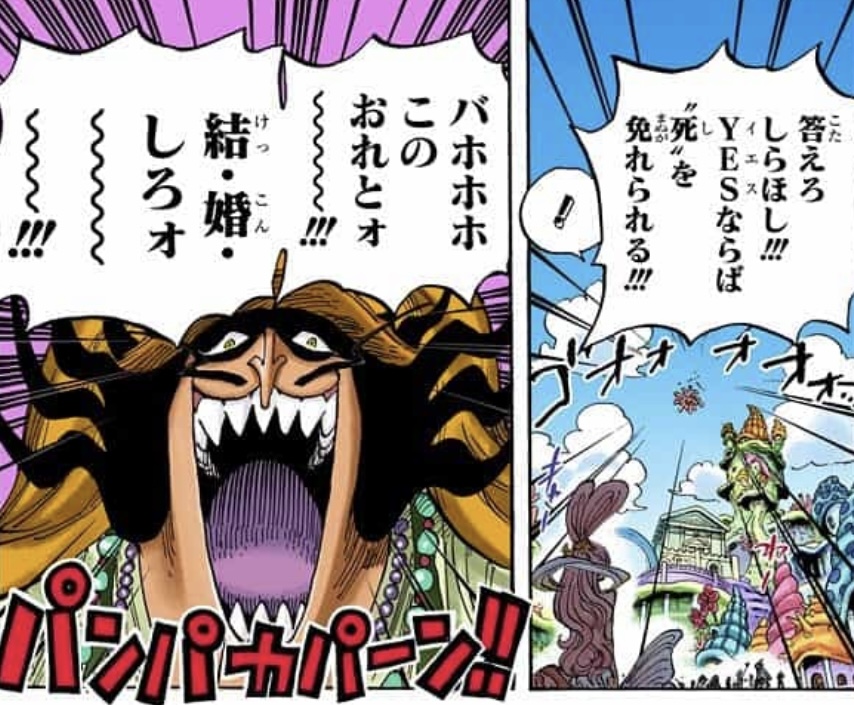
Vander Decken IX, upon discovering Shirahoshi’s Poseidon abilities, became convinced his only option was to marry her and claim that power for himself — eventually turning his “proposal” into a pure terror campaign: “Yes or you die.”
Nobody wants this kind of proposal.
Wedding Invitations as Threat Letters
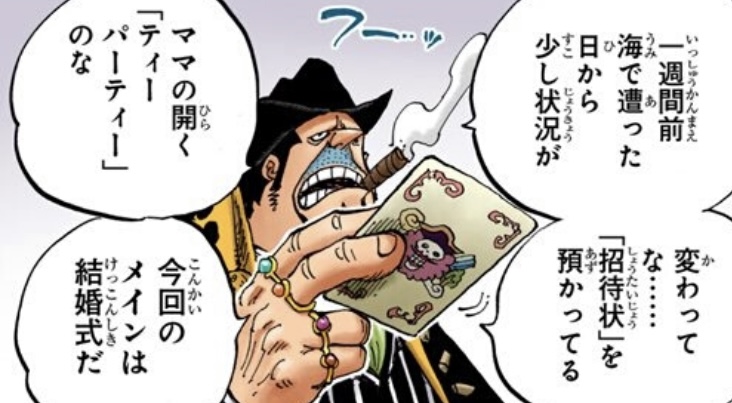
Wedding invitations normally come with elaborate etiquette — how to phrase your RSVP, what gifts to bring, and so on.
But Big Mom’s invitations require no deliberation at all.
Refuse to attend, and someone you love loses their life.
Nobody wants this kind of invitation.
Arranged Marriages Decided Entirely by Your Parents
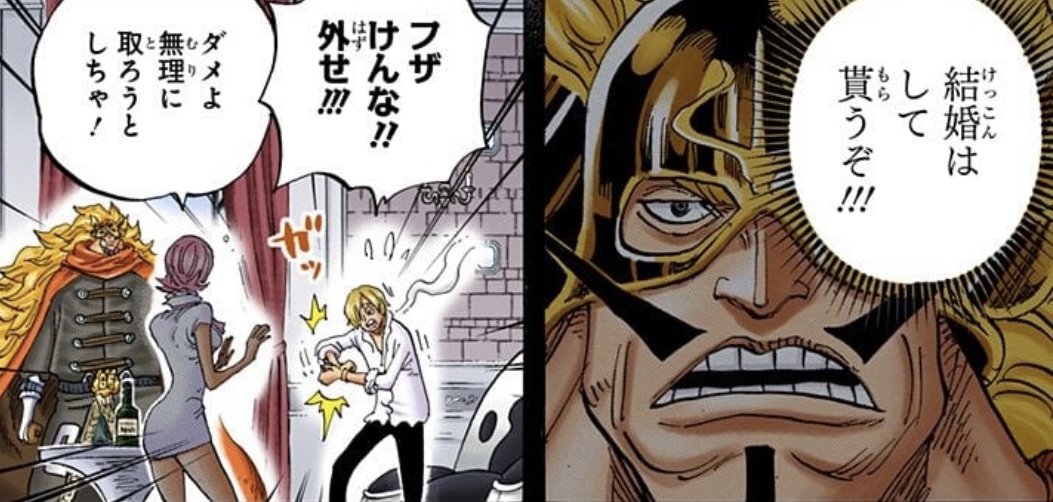
The venue, the date, the guests, even the partner — all decided by your parents. And if that weren’t enough, hostages are taken to ensure you can’t escape, and the person you’re meant to marry is trying to kill you.
Sanji’s wedding was the ultimate worst-case scenario checklist, all in one ceremony.
The Candle Service of Despair
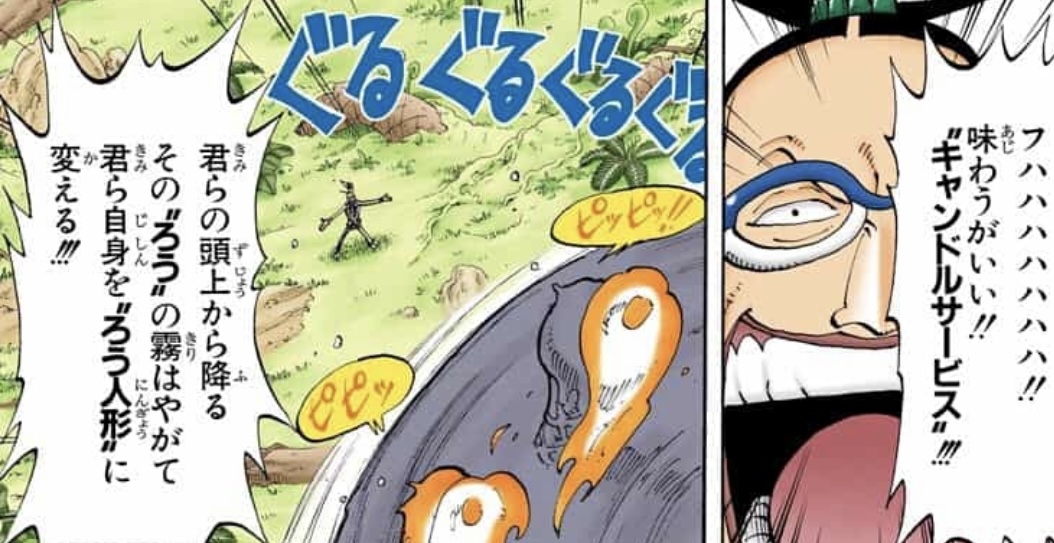
In a normal wedding, the candle service is a sweet ceremony where the couple lights the candles at guests’ tables. Here, it’s become a technique of death.
Being slowly turned into a wax statue by a creeping fog of wax…
Nobody wants this kind of candle service.
Vows Spoken by Someone Else
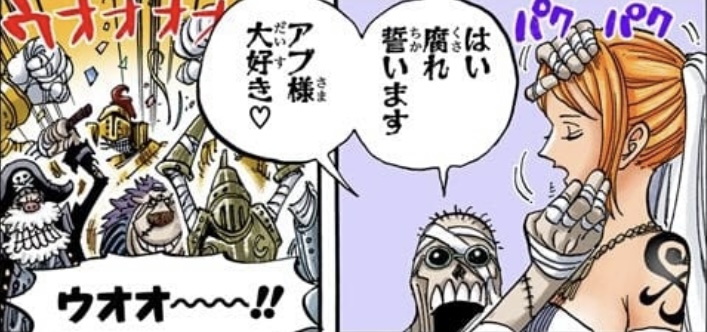
Kidnapped by Absalom and put through a wedding ceremony while completely unconscious, Nami’s will was entirely ignored. Her vows were spoken by a corpse.
These vows mean nothing.
As you can see, in One Piece, the word “marriage” is always attached to the word “death.”
Roger, Who Got Married Before He Died
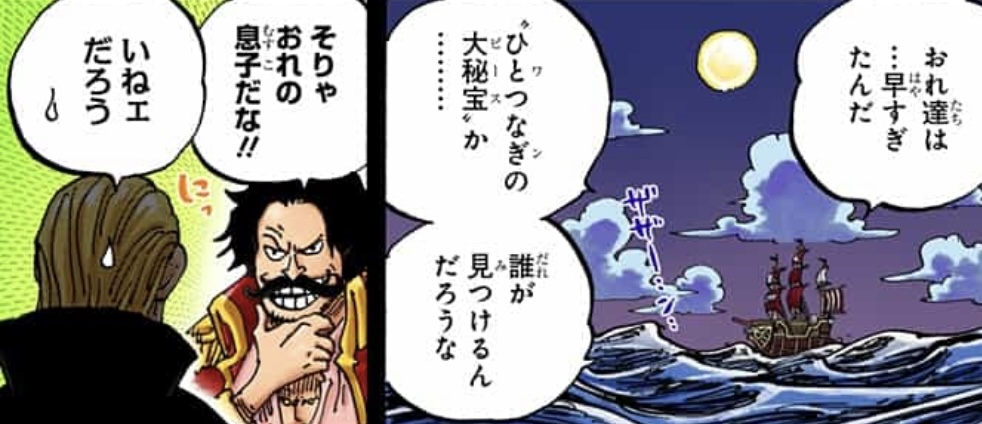
The One Piece treasure came a generation too early for Roger.
In all likelihood, finding the One Piece required Poseidon’s power — a power that doesn’t yet exist.
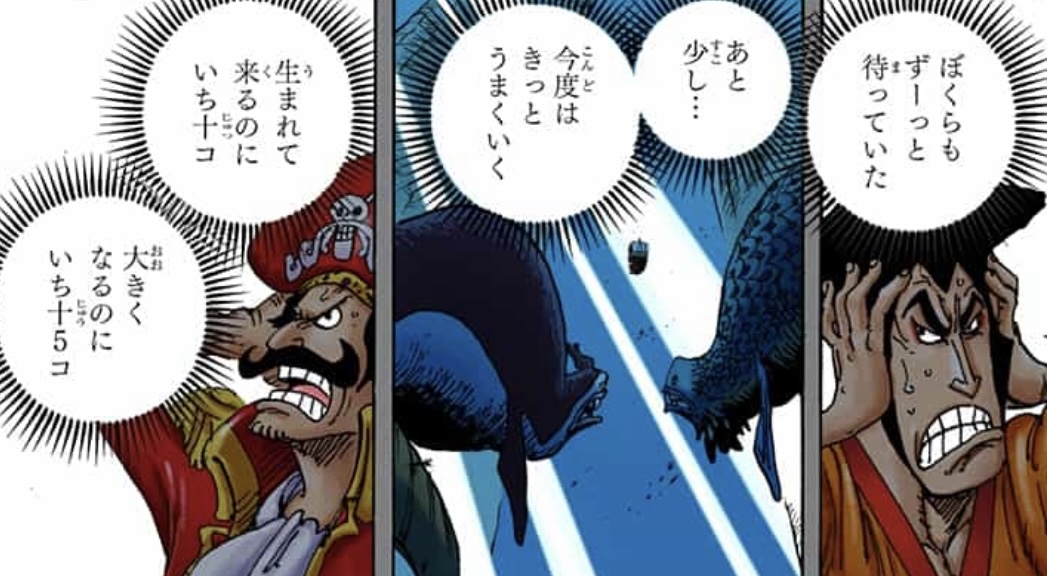
Realizing the treasure couldn’t be found for at least 25 more years, Roger suddenly declared he wanted a son.
Roger’s logic, reconstructed:
- Finding the One Piece requires Poseidon
- Poseidon needs 25 years to be born and awaken
- No one can find the One Piece for 25 years
- A child born now would still have enough time
- Wouldn’t it be something if my own child found the One Piece?
- I’d better get married while I still have time left!
That’s the most natural interpretation.
But this alone doesn’t explain why Luffy would want to get married. So here’s a second theory.
What Truly Made Roger Decide to Marry
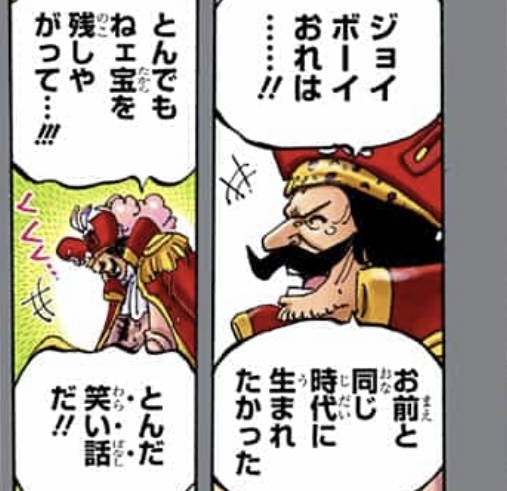
Roger didn’t find the One Piece on Laugh Tale.
Whatever made Roger’s entire crew cry and laugh at the same time had nothing to do with any material treasure.
Something bearing Joy Boy’s traces — something that makes you laugh, fills you with happiness, and makes you want to get married.
Roger’s sudden declaration to have a son after returning from Laugh Tale was likely heavily influenced by that something.
And the concept of this article is: even Luffy, upon seeing that, would want to get married.
All that negative marriage imagery throughout the story? It was to prevent readers from predicting a marriage-based happy ending.
Having Luffy reject the world’s most beautiful woman? It was to make readers think Luffy would never marry.
Both were actually foreshadowing for a happy ending where Luffy gets married.
Why am I so confident? Let me explain.
The Classic Happy Ending Formula

As many theory YouTubers have noted at length, One Piece is famous for its Disney homage.
And why are Disney movies loved worldwide? Because they end happily.
- Cinderella
- The Little Mermaid
- Beauty and the Beast
- Aladdin
The common thread in all these classics: Happy Ending = Marriage.
And as I’ve discussed in a previous article: Nika = Marriage.
“Nika” Means “Marriage” in 5 Languages

If you Google “What is Nika?” you’ll get results confusing it with Nike — the Greek goddess of victory.
As someone who has read through Greek mythology in its entirety, I’m certain Oda wouldn’t use such a minor deity as his model.
And that deity happens to be the origin of the sneaker brand NIKE.
Oda once changed Whitebeard’s jolly roger out of consideration for the world. He would never use a word that commercially benefits a single company as the name for his protagonist’s ultimate power.
So I did my own research. I translated both “NIKA” and “NICA” into all 130 languages available on Google Translate.
And I found…
- Uyghur
- Tatar
- Turkmen
- Odia
- Kinyarwanda
In these 5 languages, the word means “marriage.”
If you’ve read my “Model Countries” articles, this might click for you.
- Uyghur is the language of the Uyghur people → Punk Hazard’s model is Xinjiang, Uyghur Autonomous Region
- Tatar has Mongol roots → Long Ring Long Land’s model is Mongolia
- Turkmen is a Turkic/Iranian language → Baltigo’s model is Turkey, Zou’s model is Iran
- Odia is an Indian language → Goa Kingdom’s model is India
All countries that Luffy has passed through.
The remaining language, Kinyarwanda, is spoken in Rwanda — an African country. No One Piece arc has used Africa, Australia, or South America as a model yet, meaning Rwanda and Africa remain strong candidates for Laugh Tale’s real-world basis.
Furthermore, Africa is the birthplace of humanity, the filming location of the Netflix live-action One Piece, and a place Oda has officially stated he is dying to visit.

Summary So Far
- Every marriage-related word in One Piece has been portrayed negatively
- The universal happy ending, worldwide, is marriage
- Even Roger — with one year left to live — came back from Laugh Tale wanting to get married
- “Nika” means “marriage” in 5 languages
- Luffy became Nika
Thinking about all of this in reverse:
- Every marriage scenario except Luffy’s own was made to seem negative
- It was foreshadowing, setting up a happy ending via Luffy’s marriage
- Luffy, too, will want to get married after visiting Laugh Tale
We can draw all three of these conclusions.
And thinking along these lines, several moments from the Skypiea arc suddenly look like deliberate foreshadowing.
The Hidden Wedding Foreshadowing in the Skypiea Arc
“I Will Be Welcomed by the Sun God”

The ritual of offering the most beautiful maiden in the village to the Sun God.
Something about Mousse’s dialogue struck me as odd.
“From here, I will be welcomed by the Sun God.”
I couldn’t help but read this as the dialogue of a bride in her dressing room, moments before the ceremony begins.
At the time of volume 31, I accepted it as a sacrifice ritual — but knowing now that the true Sun God is Nika, and that Nika means “marriage,” everything suddenly connects.
Here’s my hypothesis for Shandora 800 years ago, when the true Sun God was still being worshipped:
Shandora was already destroyed once, 800 years ago.

Norland and Calgara met 400 years ago.
The enemy that destroyed Shandora 800 years ago likely erased the existence of the inconvenient Sun God and replaced him with a serpent deity slithering on the ground.
The corrupted belief, overwritten by the enemy and built around the serpent god, was what survived into Calgara’s era.
This pattern appears constantly in mythology.
Imagine country A (worshipping God A) defeats country B (worshipping God B) in war. God B becomes a servant of God A — or a demon that God A defeated. Country B’s people are then enslaved, labeled as “lowly folk who worshipped demons.”
So in Shandora, 800 years ago, they very likely worshipped Nika — the true Sun God.
And the sacrifice altar was probably meant for a very different, joyful ritual.
For example: the maiden who danced most joyfully to the music could become the Sun God’s bride.
Thinking about it that way… “that thing” in Shandora starts to look exactly like “that thing” that’s essential to every wedding ceremony.
The Great Bell Tower Rings in the Final Chapter

The golden bell is a wedding bell.
The golden pyramid beside it is a massive cake-like stage — exactly the kind used for Sanji and Pudding’s wedding ceremony.
Looking back now, the entire Skypiea arc had “marriage” as its hidden underlying theme.
The Meaning of a Bell

Two rings for misfortune. Eight rings to thank the departing year. Eight rings to welcome the new year. Ringing the sacred Ox Bell at the Navy’s headquarters is a Marine tradition.
In Japan, 108 rings — joya no kane — are sounded at year’s end to expel the 108 worldly desires.
The Meaning of a Wedding Bell

Wedding bells are said to have originated as a way to notify those unable to attend the wedding that the ceremony had been successfully completed — three rings to convey the happy news.
One of the things Calgara wanted to tell Norland was about his daughter’s marriage.
Here, the Sun God, Nika, marriage, and Shandora all converge into one.
So in the end: Nami and Luffy get married, surrounded by everyone who loves them, in the happiest of endings.
The Great Golden Bell Tower rings as a wedding bell.
That is the final panel of One Piece.
