Japanese Family Crests
In Japan, family crests (kamon) are hereditary symbols used to identify a clan or household. They appear on formal clothing, household items, and graves.
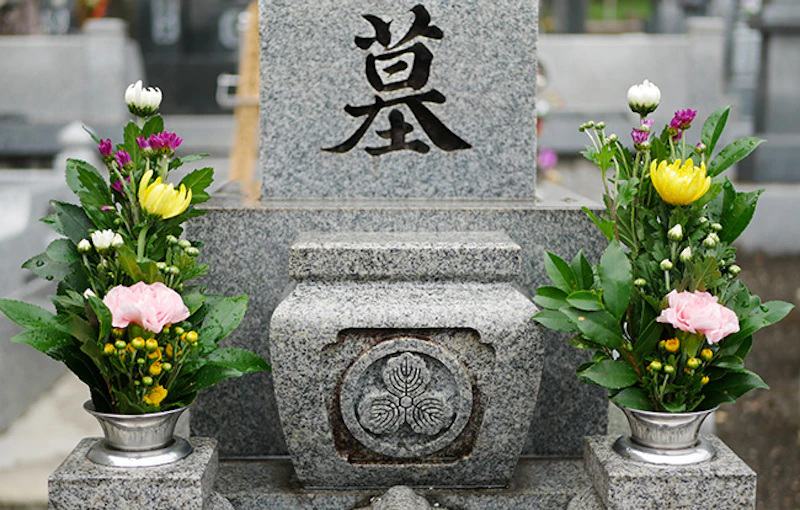
The Kozuki family crest appears on their tombstone in the Wano Country arc, cementing their identity as the ruling bloodline of Wano.
Breaking Down the Kozuki Family Crest
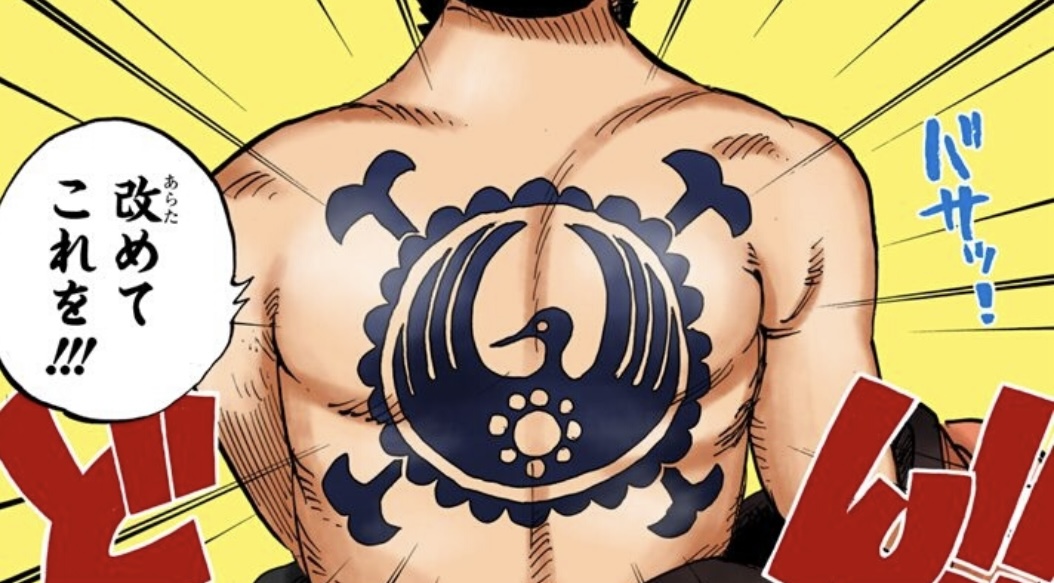
The Kozuki crest is layered with four distinct elements, each referencing a real Japanese historical clan:
- Triple Kuwagata (三つ鍬形) — antler-shaped helmet ornament
- Chrysanthemum Ring (菊輪 Kikuwa) — imperial chrysanthemum derived design
- Crane (鶴 Tsuru) — Mori crane crest
- Nine Stars (九曜 Kuyou) — Hosokawa nine-star crest
Let’s examine each one in detail.
Triple Kuwagata Crest
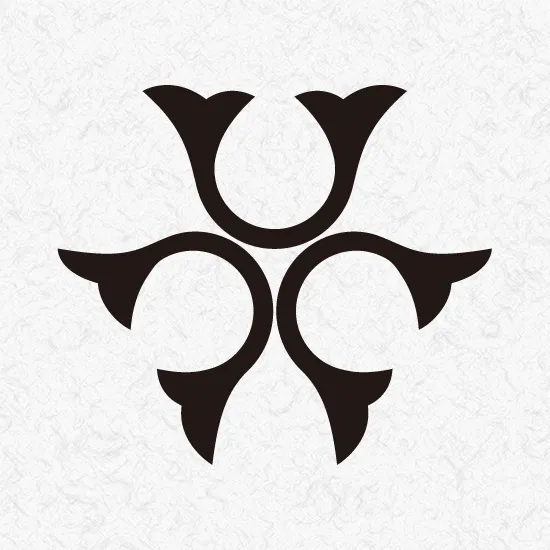
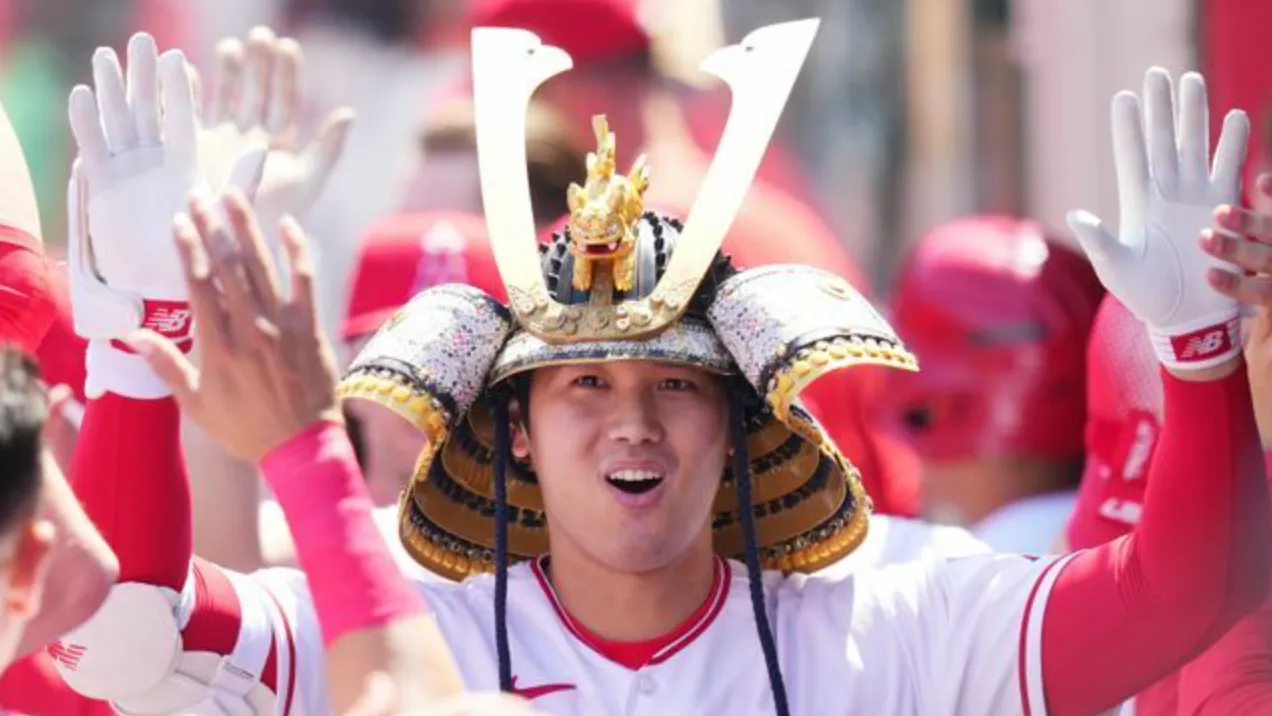
The outermost element of the Kozuki crest is the Triple Kuwagata (三つ鍬形紋). Kuwagata refers to the antler-shaped decorative ornaments attached to samurai helmets during the Sengoku era. These ornaments later became family crests.
This specific three-antler design was used by the Kishu Tokugawa clan — one of the Tokugawa Gosanke (Three Gosanke Houses).
The Tokugawa Gosanke
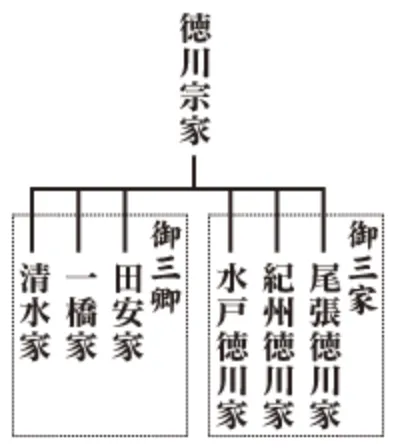
The Tokugawa Gosanke (Three Great Houses) were branches of the Tokugawa family created by Ieyasu to provide a successor if the shogun produced no heirs. The Kishu Tokugawa branch used the triple kuwagata crest shown above.
The three branches were: Owari Tokugawa, Kii (Kishu) Tokugawa, and Mito Tokugawa — all direct descendants of Ieyasu. Later, three additional branches (Gosankyo) were created carrying the bloodline of the 8th shogun Yoshimune.
This exact system appeared in the Wano Country arc.
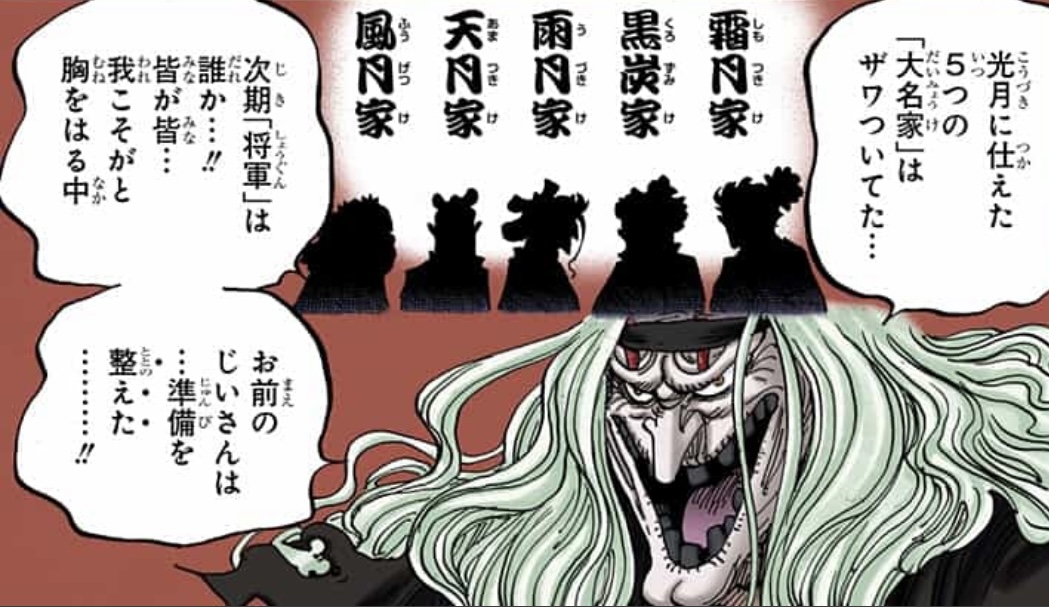
The Kozuki family had a similar succession system — if no direct heir was born, a successor would come from among the daimyo families. Just like the Tokugawa Gosanke, this safeguarded the Kozuki bloodline.
Chrysanthemum Ring Crest
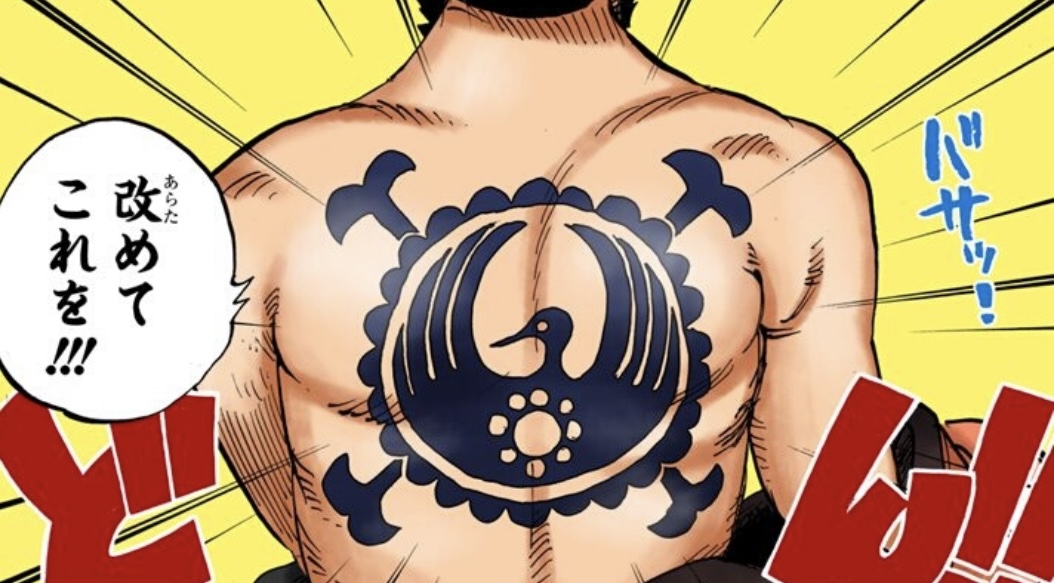
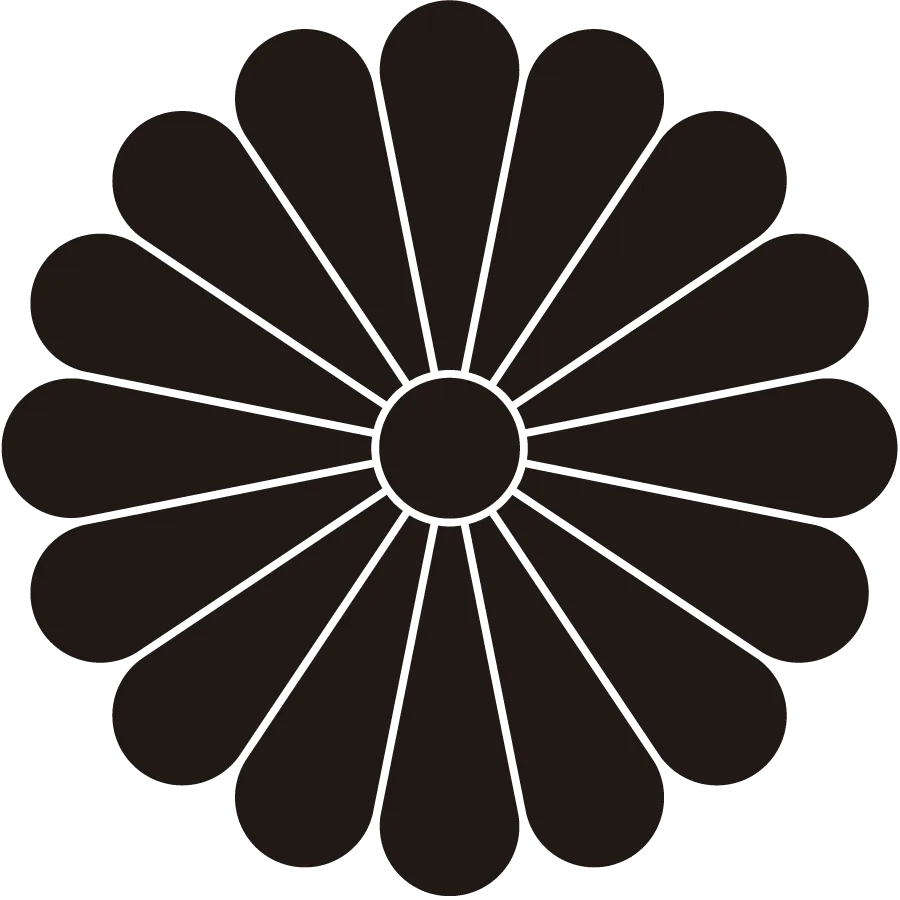

The second ring from the outside is the Chrysanthemum Ring (Kikuwa, 菊輪). It derives from the chrysanthemum crest used by Japan’s Imperial family.
In Japan, the chrysanthemum crest belongs exclusively to the Emperor. In 1871 (Meiji 4), a decree prohibited non-royals from using chrysanthemum designs.
By incorporating the chrysanthemum ring into the Kozuki crest, Oda Eiichiro signals that the Kozuki family are the true kings of Wano — just as the Emperor is the sovereign of Japan.
Mori Tsuru no Maru Crest
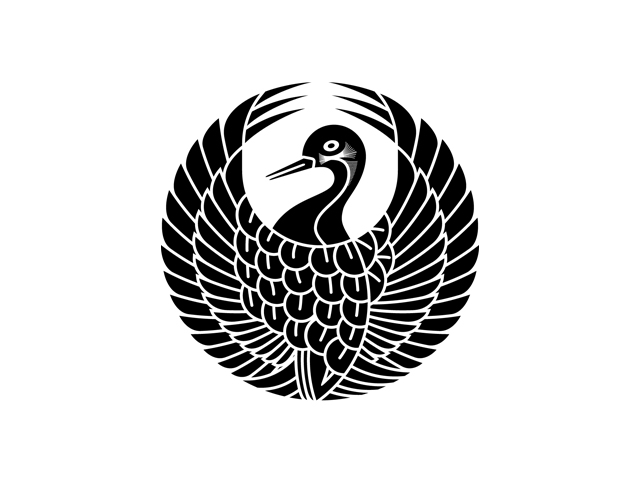
Inside the chrysanthemum ring sits the crane — specifically, the Mori Tsuru no Maru (森鶴の丸). There are two types of crane crests; the Mori Tsuru no Maru is the more complex version, originally belonging to the Mori clan (森氏).
Mori Ranmaru

Mori Ranmaru (also known as Mori Naritoshi) was a page boy who served Oda Nobunaga faithfully, dying alongside his lord and two brothers at the Honnoji Incident.
Searching for Ranmaru’s portrait reveals two completely different depictions: one as a mature warrior, and another as a beautiful, delicate youth.

At the climax of the Wano arc, two of Oden’s retainers died in a burning castle — just like the Honnoji Incident. One had a mature warrior image; the other was beautiful and androgynous.

These two retainers were Dogstorm (Inuarashi/Ashura) and Izou. They were Oden’s men.
Mori Ranmaru served Oda — and “Oda” (織田) is another reading of “Oden” (おでん). The name connection is intentional.
Ashura and Izou, destined to die avenging their lord in a burning castle, appear to be modeled after Mori Ranmaru. As Oda’s tribute to these characters, he embedded the Mori crest into the Kozuki family emblem.
Hosokawa Nine Stars


Inside the crane at the center of the Kozuki crest is the Hosokawa Kuyou (細川九曜) — the Hosokawa Nine Stars. Among many nine-star crest variations, this specific one was identified by looking at the clan’s head and his wife.
Hosokawa Tadaoki
Hosokawa Tadaoki served four successive rulers — Ashikaga Yoshiaki, Oda Nobunaga, Toyotomi Hideyoshi, and Tokugawa Ieyasu — skillfully reading who held true power and always siding with the victor.
His most famous act came after the Honnoji Incident. His father-in-law, Akechi Mitsuhide, invited Tadaoki to join his rebellion, but Tadaoki refused — abandoning his wife’s father.
He sensed that Mitsuhide did not have the qualities of a true ruler, so he chose Toyotomi Hideyoshi instead. He successfully “bet on the winning horse” with Hideyoshi and then Ieyasu.
Akechi Tama (Hosokawa Gracia)

Akechi Tama (also written Tamako or Tamako/Tamaho) was the daughter of Akechi Mitsuhide. After marrying Tadaoki she became Hosokawa Tama, and upon converting to Christianity, she took the baptismal name Gracia.

Otama’s model is Akechi Tama/Hosokawa Gracia. Just as Gracia was the daughter of the man who killed Nobunaga, Otama is of the Kurozumi bloodline — the same clan as Orochi who killed Oden.

Daughter of Nobunaga’s killer (Akechi Mitsuhide) → Akechi Tama. Same clan as Oden’s killer (Orochi) → Otama. The parallel is clear.
This is a complex setup, but One Piece itself shows how to process it.

Summary

Breaking down the Kozuki family crest reveals the real historical models behind Wano — and confirms that Oden was modeled after Oda Nobunaga. It’s also a fantastic lesson in Japanese history.
Every symbol in One Piece has multiple layers of meaning packed in by Oda Eiichiro. The Kozuki crest encodes four historical clans, each contributing to the story of Wano.

Bonus: The Mystery of Kings and the Chrysanthemum

The chrysanthemum crest of Japan’s Imperial family always has exactly 16 petals. Interestingly, the same 16-petal chrysanthemum appears at Jerusalem’s Herod’s Gate — as a royal symbol.

From this, some proponents of the Japanese-Israelite Common Ancestry Theory (Nihonjin to Isuraeru Dōso Ron) suggest that Japanese people may descend from the lost Ten Tribes of Israel, who were exiled by the Assyrians 2,700 years ago.
Taking this further, they speculate that Takamagahara — the realm of the gods in Japanese mythology (the Kojiki) — might actually be Israel.
Mixing fiction, non-fiction, mythology, history, and imagination freely is something this author loves — and it’s probably something Oda Eiichiro loves too.

The more trivia you absorb, the more dots connect into lines — and new stories and characters are born. Knowledge makes life richer and more enjoyable.