The Straw Hat Grand Fleet was technically formed because of Usopp. He freed the Corrida Colosseum fighters from Doflamingo’s toy curse, which brought them all to the same battlefield, which led to them swearing loyalty to Luffy. Usopp’s lie from East Blue — “I have 8,000 followers!” — was already becoming true by Dressrosa. The seven captains who joined all have real-world models, and some of them reach into corners of history and culture that are almost completely invisible to readers outside Japan.
Cavendish: The Third Man to Circumnavigate the Globe, Plus Jekyll and Hyde
Cavendish’s model is Thomas Cavendish, an English navigator who in 1586 became the third person in history to sail around the entire world — after Magellan and Francis Drake. He seized Spanish vessels along the way and presented the plunder to Queen Elizabeth I, who rewarded him with a knighthood. The Spanish called him a pirate. The English called him a hero. He is the model for a man so beautiful that women in his home country stopped marrying anyone else.
Hakuba — Cavendish’s alternate personality who appears without warning and cuts down everyone around him — comes from Robert Louis Stevenson’s Strange Case of Dr Jekyll and Mr Hyde. The background of the scene where Hakuba’s alias “the Kamaitachi of Rommel” is discussed is the London skyline with Big Ben visible. Rommel is London. London plus split personality equals the most famous London story about a split personality.
Bartolomeo: The Man Who Found the Bottom of Africa
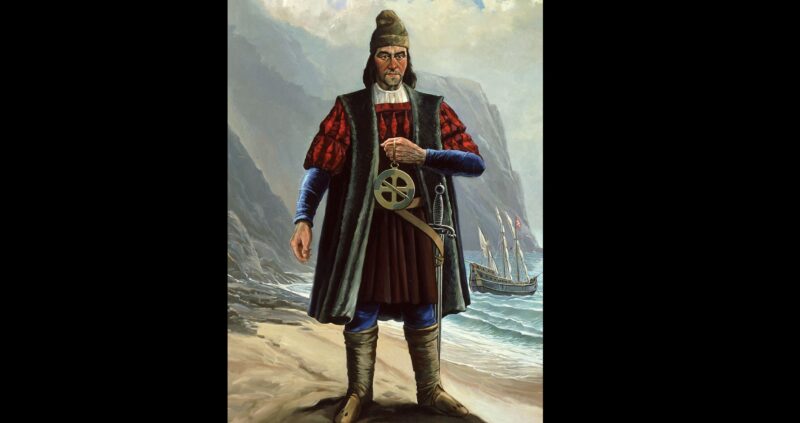
Bartolomeo’s model is Bartolomeu Dias, the Portuguese explorer who in 1488 sailed around the southernmost tip of Africa — disproving the belief that Africa extended all the way to the Antarctic and that sailing from Europe to India was impossible. His voyage opened the route that Vasco da Gama would later use to reach India. Bartolomeo became Luffy’s biggest fan after watching him survive execution at Loguetown — the same port where the story of Gold Roger ended and began. A man whose defining moment involved watching someone survive what should have been death.
Sai: An Ancient Japanese Emperor, Recorded by China
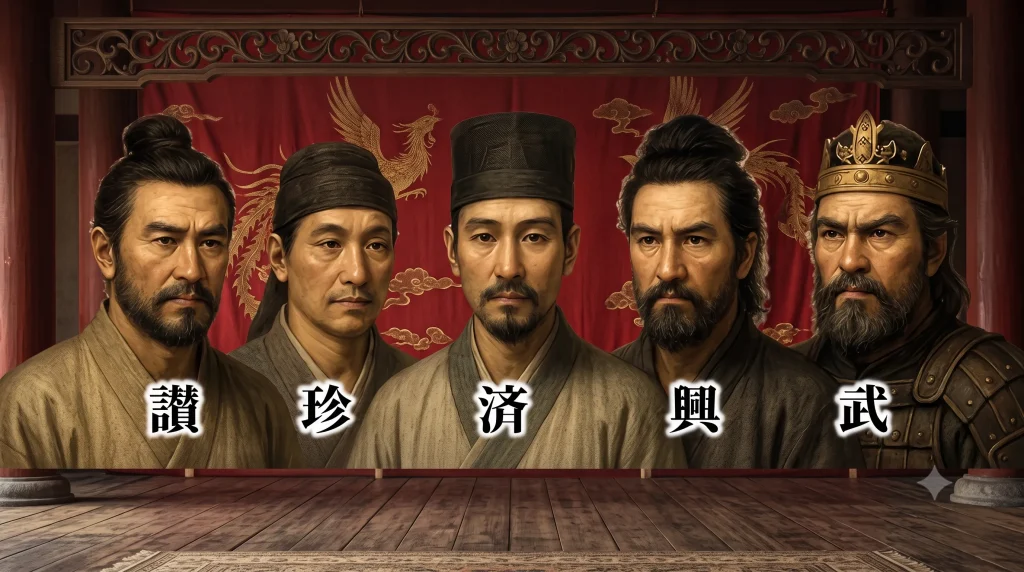
This one requires some Japanese history. In the 5th century, the rulers of Japan sent regular tribute missions to China. The Chinese imperial court recorded the names of these Japanese kings in their own records — not using the Japanese throne names, but nicknames assigned by the Chinese. Five rulers appear in these records, known collectively in Japanese history as the “Wa no Go-O” (the Five Kings of Wa, where Wa is an old name for Japan): San, Chin, Sai, Ko, and Bu.
These five names correspond to historical Japanese emperors: San is believed to be Emperor Nintoku or Ojin; Chin is Emperor Hansei; Sai is Emperor Ingyō; Ko is Emperor Ankō; Bu is Emperor Yūryaku. The reason Ko was skipped in naming the One Piece characters is reportedly that Emperor Ankō’s historical record includes accounts of dishonesty and poor conduct — not a good name to give a hero.
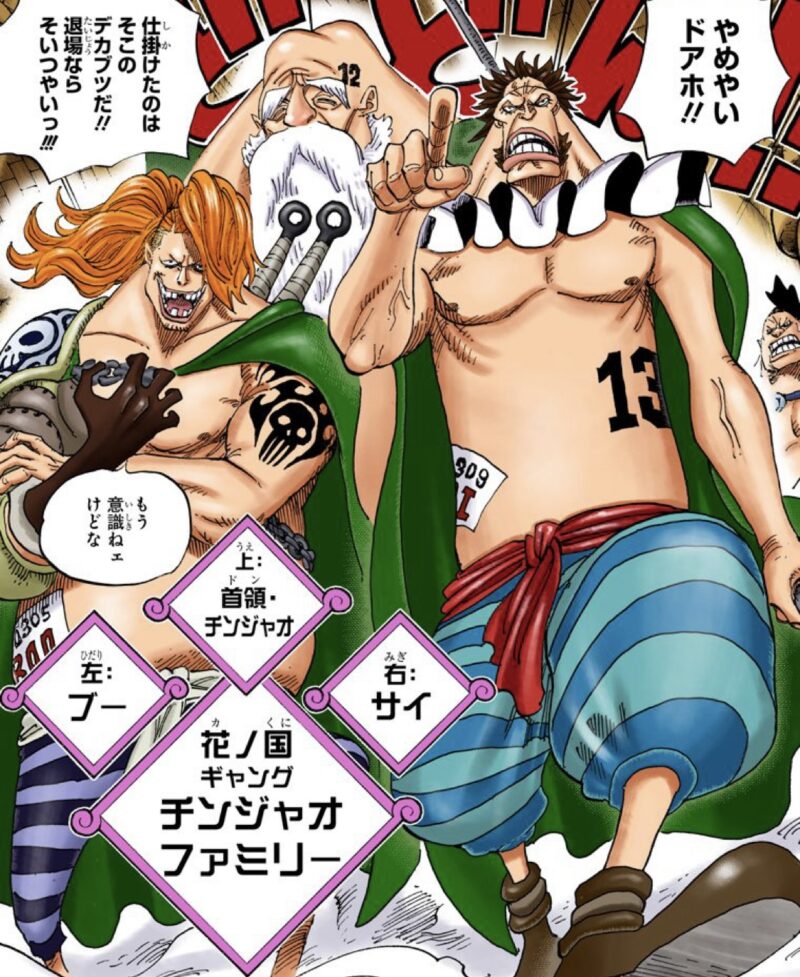
Don Chinjao, Sai, and Boo — three members of the Happo Navy — take their names from Chin, Sai, and Bu. Sai the pirate captain is named after a real ancient Japanese emperor whose name survives only because a foreign empire wrote it down.
Ideo: Oda’s First Plastic Model
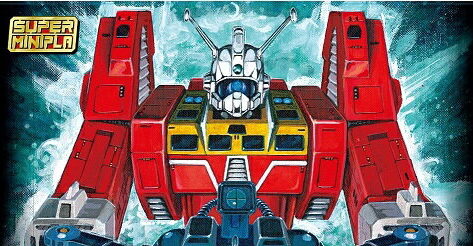
Ideo’s model is the Ideon, the giant robot from the 1980 anime Space Runaway Ideon — and specifically from the plastic model kit that Oda has said was the first he ever owned as a child. The series is set in the year 2300, follows a war between humans and an alien species over an ancient energy source called Ide, and ends with that energy destroying both civilizations completely. Space war, ancient weapons, and mutual annihilation: the thematic DNA of One Piece’s endgame was sitting in Oda’s hands as a toy when he was a child.
Leo: Totoro, Whose Name Comes from a Norwegian Fairy
The Tontatta tribe — tiny people with fox tails who are easily tricked because they cannot conceive of lying — are modeled on the Lilliputians from Gulliver’s Travels. Leo, their captain, carries that model. But there is a second layer. The word “Totoro,” from Studio Ghibli’s My Neighbor Totoro, comes from the Norwegian word “troll” — a fairy creature from Nordic folklore. The Tontatta are modeled on the smaller Totoro specifically.
The Ghibli connections in One Piece run wider than this single case. The Little Mermaid is the shared source for both Ponyo and Shirahoshi. Nausicaä’s Giant Warriors map onto the Pacifista. Howl’s Moving Castle maps onto Bege’s Big Father ability. Princess Mononoke and its treatment of Japanese animism runs underneath Wano. Oda and Miyazaki have been drawing from the same wells for decades.
Hajrudin: The Younger Barbarossa Brother
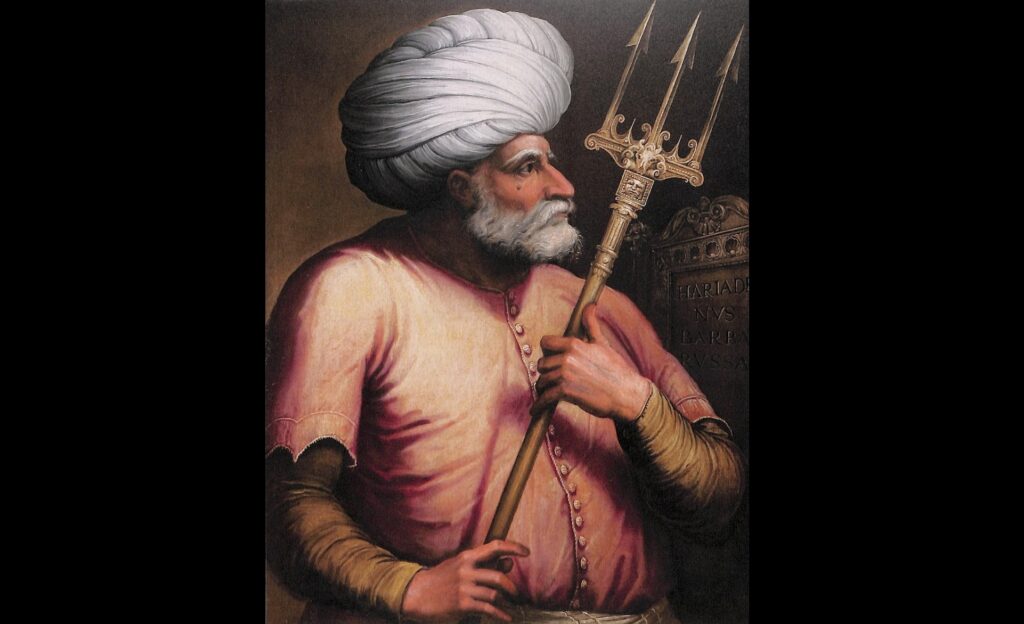
Hajrudin’s model is Barbarossa Hayreddin — the younger of the two Barbarossa brothers who dominated the Mediterranean under the Ottoman Empire. Where his older brother Aruj (the model for Urogue) was killed after overreaching in Algeria, Hayreddin navigated the politics more carefully, serving as Admiral of the Ottoman fleet and extending Ottoman naval power across the entire Mediterranean. The name Barbarossa means “red beard” in Italian. Hajrudin is a giant with red hair.
Orlumbus: Columbus, Given Two Accurate Nicknames
Orlumbus carries two epithets: “Massacre Ruler” and “Fraudulent Adventurer.” Both come directly from his model: Christopher Columbus.
“Fraudulent Adventurer” refers to the fact that Columbus was not the first person from outside the Americas to reach the continent. As covered elsewhere on this site, the Norse explorer Leif Erikson — son of Erik the Red, the model for Shanks — reached the coast of Canada more than 500 years before Columbus sailed. The “discovery” was already discovered.
“Massacre Ruler” refers to what followed Columbus’s voyage. The Spanish colonization of the Americas that his expedition made possible led directly to the destruction of the indigenous civilizations of the continent — including Francisco Pizarro‘s conquest of the Inca Empire, which wiped out one of the most sophisticated societies in the Western Hemisphere. Columbus did not do this himself, but he opened the door. Oda chose to name his character for both facts simultaneously.