Bon Kurei saved Luffy twice. Once in Alabasta, once in Impel Down. Both times he did it by giving everything he had and walking away with nothing. His full name is Bon Kurei — written as 盆暮れ in Japanese, meaning Bon Festival and year-end, the two periods when the Japanese visit family graves. His real name is Bentham, and that name contains the argument for why he matters to the story’s ending.
Jeremy Bentham: The Philosopher Who Refused to Stay Dead
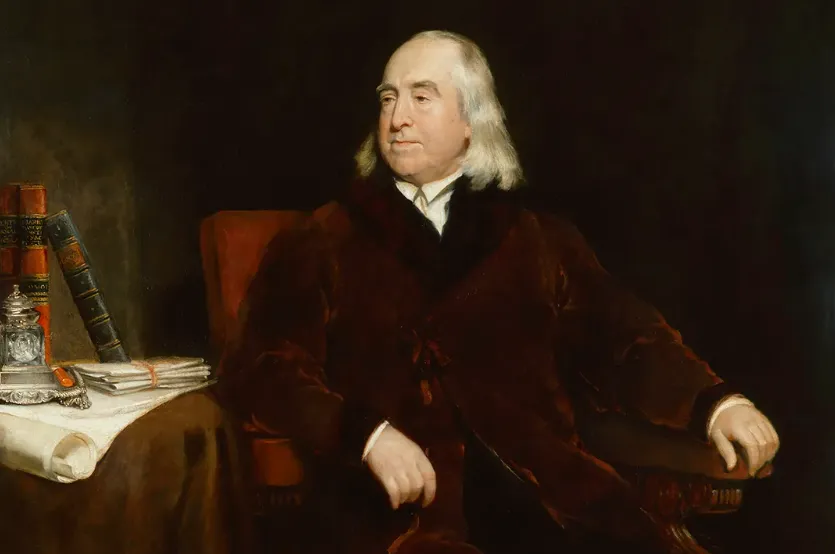
Jeremy Bentham was an 18th and 19th century British philosopher and legal scholar whose utilitarian philosophy — the idea that the correct action is whatever produces the greatest happiness for the greatest number of people, regardless of who they are — was radical for its time and remains foundational to modern ethics.
What makes him directly relevant to Bon Kurei is what he did with that philosophy in practice. At a time when homosexuality was a capital offense in Britain — punishable by hanging — Bentham wrote arguments for its decriminalization. He did not publish them in his lifetime, knowing what it would cost him, but he wrote them. The idea that a person’s gender or sexuality should not determine their standing, their happiness, or their right to exist: that is Bentham’s core argument, and it is also the Okama Way.
Bentham also left instructions that after his death, his body should be preserved and displayed publicly — dressed in his own clothes, seated in a wooden cabinet, visible to anyone who visited University College London. He called it his “auto-icon.” His reasoning was a deliberate act of defiance against the taboo surrounding dead bodies, against the idea that death should hide you. He is still there. He has been on display at UCL for nearly 200 years.
Bon Kurei’s defining line — “An okama never dies!” — and his pattern of apparent death followed by survival, maps directly onto a man who arranged to remain visible long after his body stopped working.
The Im-sama Theory Hidden in a Chapter Title
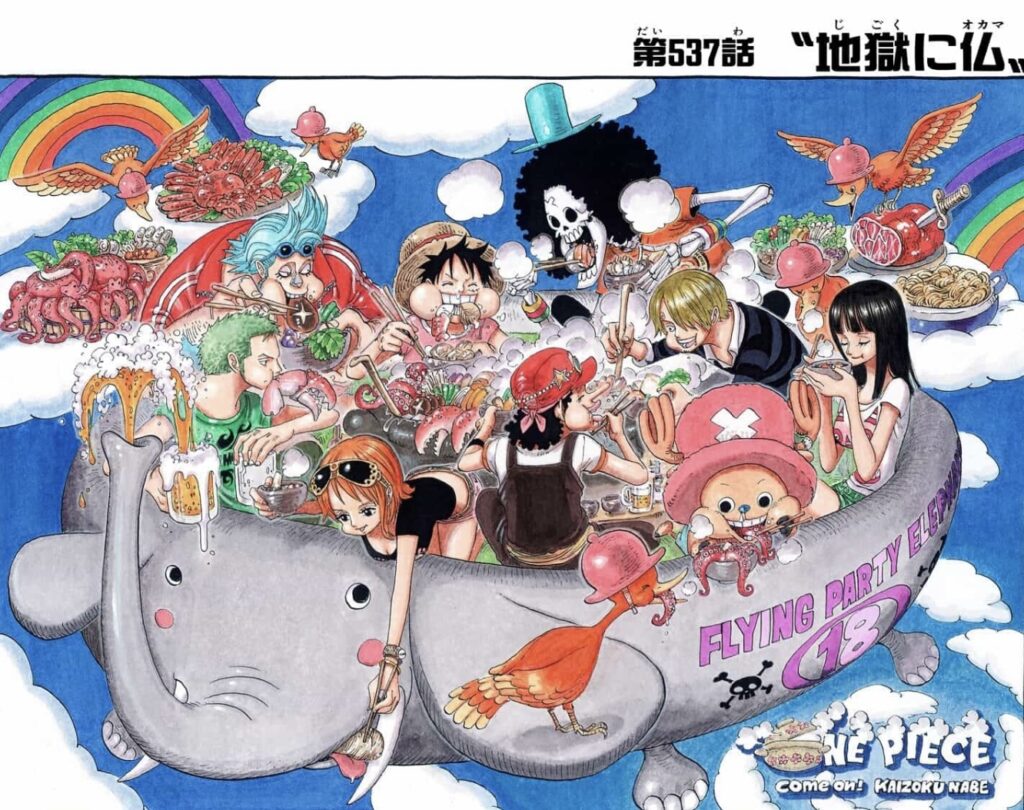
Chapter 537 of One Piece is titled 地獄に仏 — “Buddha in Hell” — with the furigana reading オカマ, “Okama,” written above the kanji for Buddha. The title refers to Luffy finding Bon Kurei in the hell of Impel Down. But the kanji for 仏 (Buddha) is composed of two characters: イ and ム. In Japanese, those two characters together read “Im.”
The equation the chapter encodes: Buddha = Okama = Im. Meaning Im-sama may be an okama.
The structural parallels support it. Bon Kurei rules New Kama Land, a hidden floor of Impel Down whose existence is unknown to the guards — a secret sanctuary inside a prison. Im-sama occupies a flower room inside Pangaea Castle whose existence is unknown to the guards of Mary Geoise. Both figures rule a hidden space that officially does not exist.
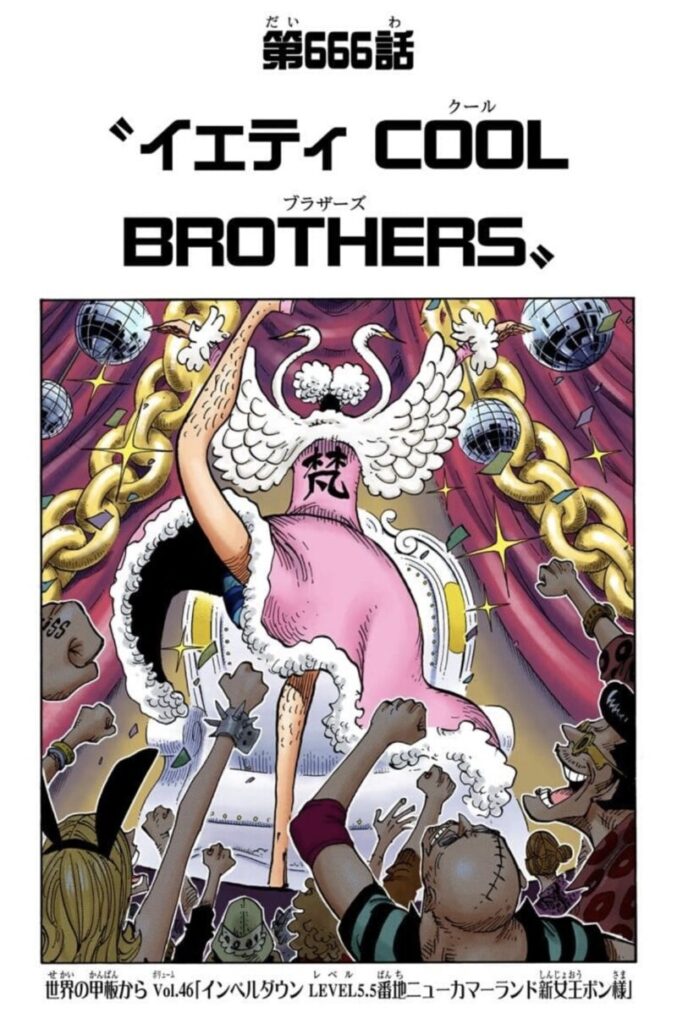
Bon Kurei’s survival was confirmed in the cover story of chapter 666 — the number of the devil, in the same arc where Im-sama’s demon form was revealed. The chapter 1172 cover page shows two swans reflected in a mirror, one wearing a pompom decoration associated with Bon, the other’s reflection unclear. The image could be read as Bon Kurei and Im-sama sharing the same face.

Both characters are also fixated on Vivi. Bon Kurei, seconds after being rescued from drowning, immediately approached her. Im-sama has targeted Nefertari Vivi specifically and personally.
Netflix’s live-action adaptation cast Cole Escola — a non-binary performer who publicly identifies as neither male nor female — to play Bon Kurei in Season 3. The casting was received internationally as exactly right. For a character whose entire philosophy is that identity is not a cage, there may be no better choice.