The Five Elders are the supreme authority of the World Government — five figures who have held absolute power across centuries. Their faces are drawn from real historical people, and in one case the connection extends into the character’s name. Once you see the matches, they are hard to unsee.
Abraham Lincoln
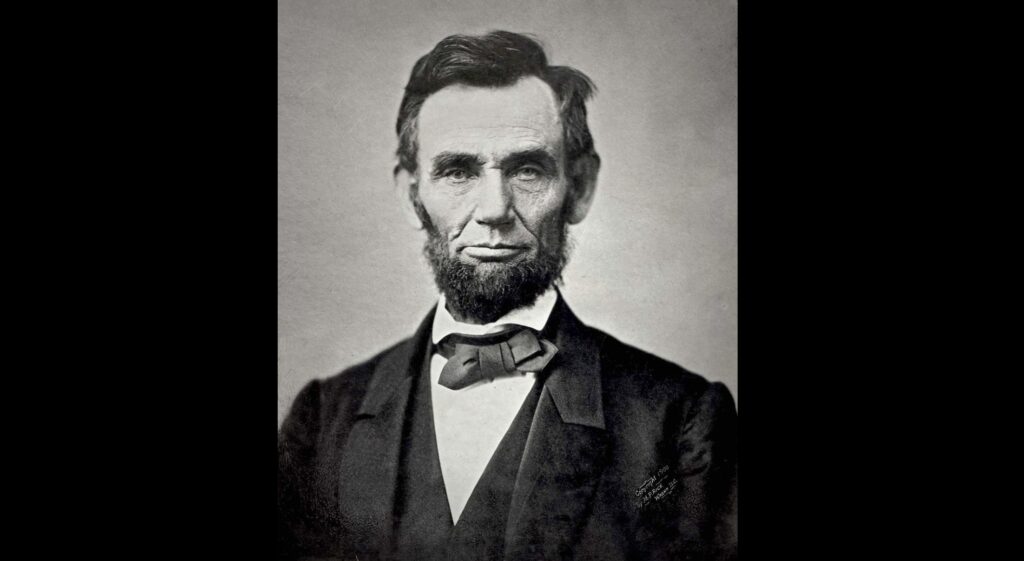
The tallest of the five is modeled on Abraham Lincoln — the 16th President of the United States, known as the Great Emancipator. His defining act was the Emancipation Proclamation of 1863, which declared enslaved people free, drained the Confederacy of its labor and military force, and turned the Civil War into a war explicitly over slavery. The irony writes itself: the man who ended slavery becomes the face of an organization that runs a global tribute system built on enslaved people.
Itagaki Taisuke (Saint Marcus Mars)
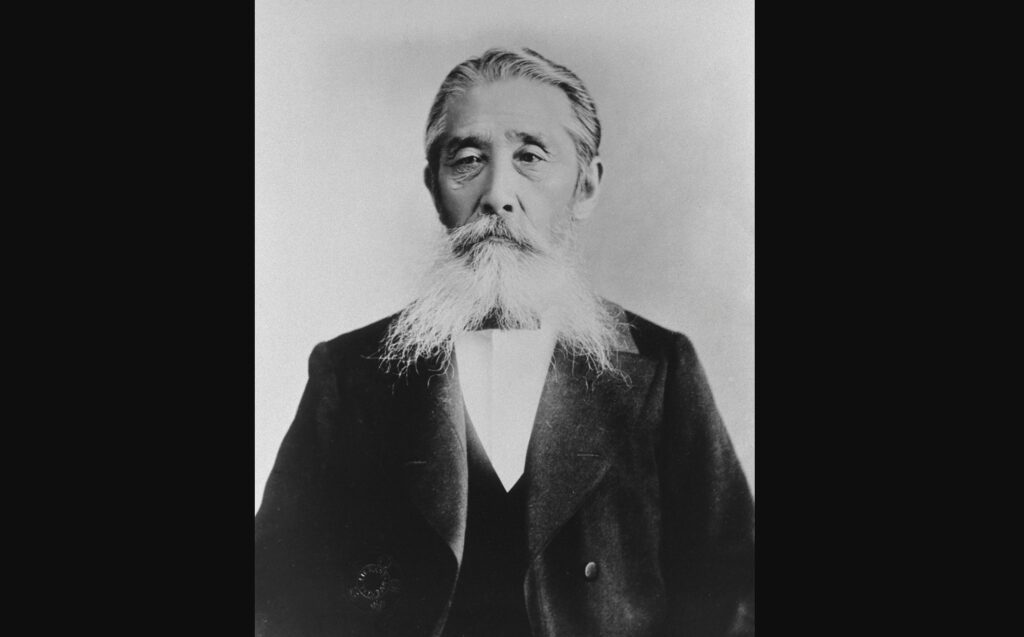
The tall Elder with the long beard split to either side — reminiscent of a samurai — is modeled on Itagaki Taisuke, the Japanese statesman who became the driving force behind popular democracy in the Meiji era. A former samurai of the Tosa domain, Itagaki fought in the Boshin War that ended the Tokugawa shogunate. After the Meiji government was established, he was offered a hereditary title — and refused it, on the grounds that he had not fought to create a new class of aristocrats. He went on to found Japan’s first political party, the Jiyuto (Liberal Party), and to demand a national assembly that would allow ordinary citizens to participate in government. He is remembered as the father of Japanese constitutionalism.
The irony is the same as Lincoln’s: the man who spent his life dismantling class privilege and demanding equal political rights becomes the face of the most hereditary, unaccountable ruling class in the world of One Piece.
Mahatma Gandhi
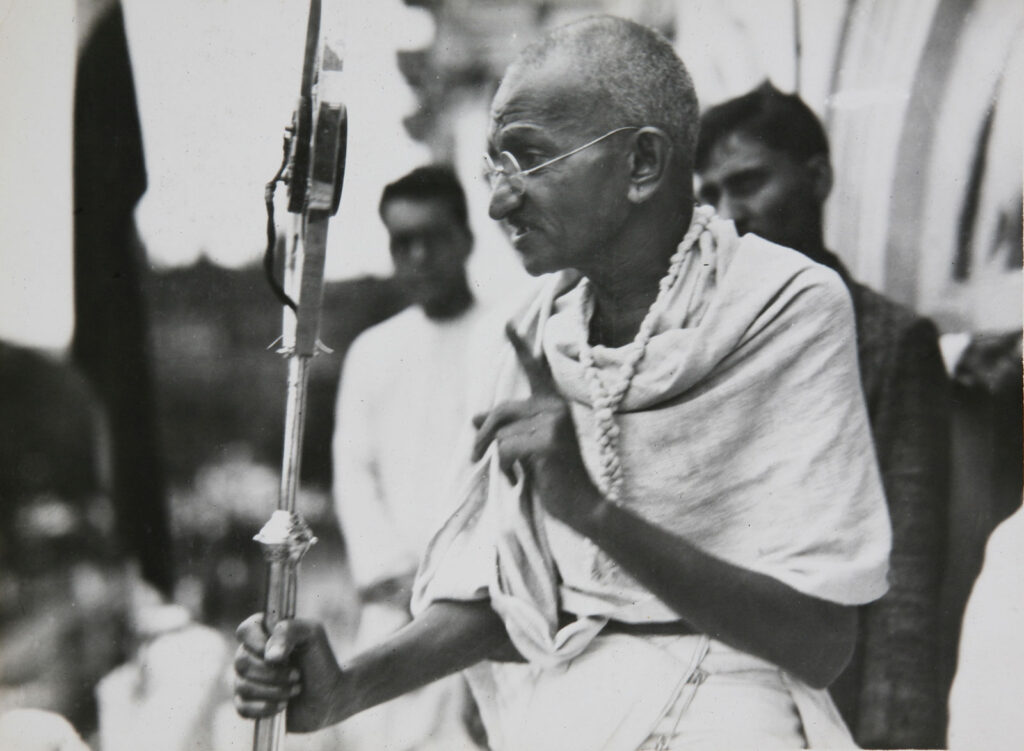
The Elder in white robes with round glasses and a long blade is modeled on Mahatma Gandhi — the political and spiritual leader who won Indian independence from British colonial rule through nonviolent resistance. Gandhi’s philosophy of ahimsa (non-violence) became a blueprint for civil rights movements worldwide. He was assassinated in 1948. The visual match is precise: the white garments, the round glasses, the lean frame, the sharp eyes. The long sword he carries is the deliberate contrast — the symbol of nonviolence holding a weapon.
Mikhail Gorbachev
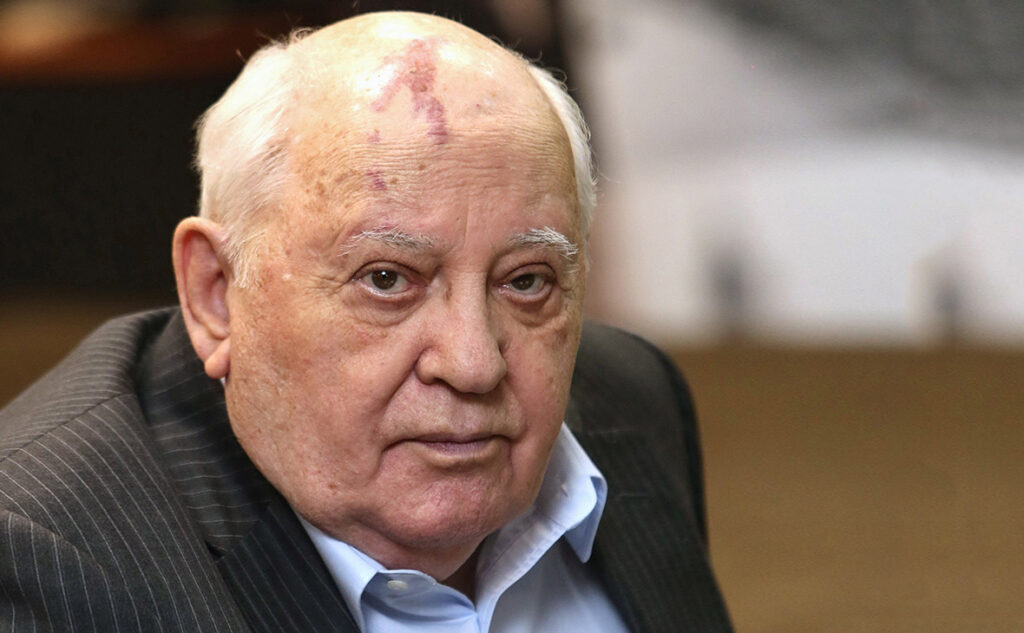
The Elder who often appears at the center of the group — the one with the birthmark on his forehead and a full beard — is modeled on Mikhail Gorbachev, the final leader of the Soviet Union. Gorbachev ended the Cold War: he dramatically cut Soviet military spending, initiated political openness (glasnost), and negotiated arms reduction with the United States. The Soviet Union dissolved in 1991. His large forehead birthmark — a port-wine stain — is one of the most recognizable features of any twentieth-century leader. Oda reproduced it directly.
Saint Jay Garcia Saturn — Part 1: Before Egghead (Karl Marx)
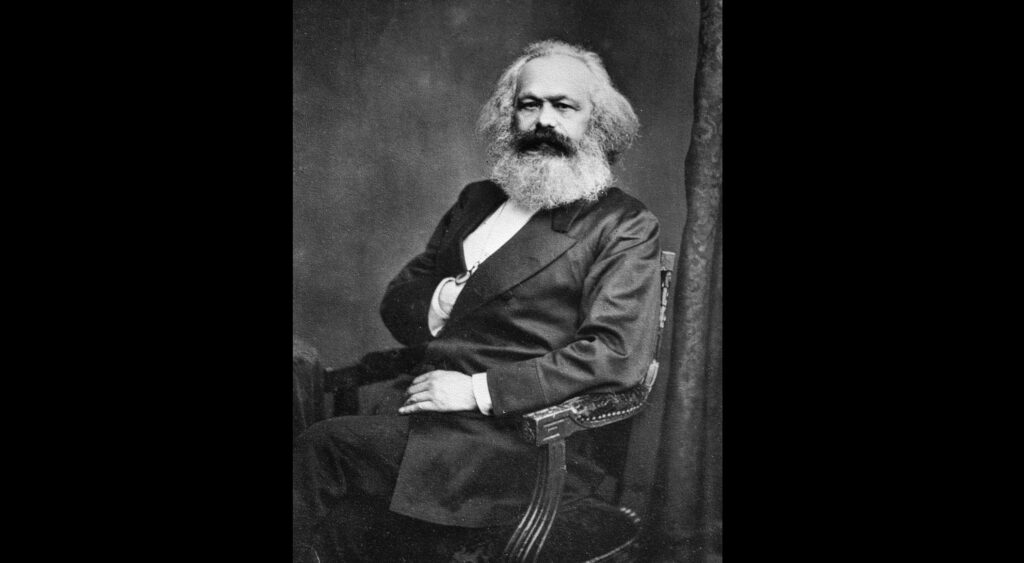
Before the Egghead arc, Saturn’s full name was unknown. His visual design — the thick, wild hair, the heavy beard, the intense expression — matches Karl Marx, the Prussian philosopher and economist whose work became the theoretical foundation for socialist and communist movements worldwide. Marx argued that history was driven by class conflict, and that the concentration of capital in a ruling class was the central problem of modern society. His image is one of the most reproduced in political history.
The irony is consistent with the other four: the theorist of class liberation and the abolition of ruling elites becomes the face of the most entrenched ruling class in the One Piece world.
Saint Jay Garcia Saturn — Part 2: After Egghead (The Grateful Dead)
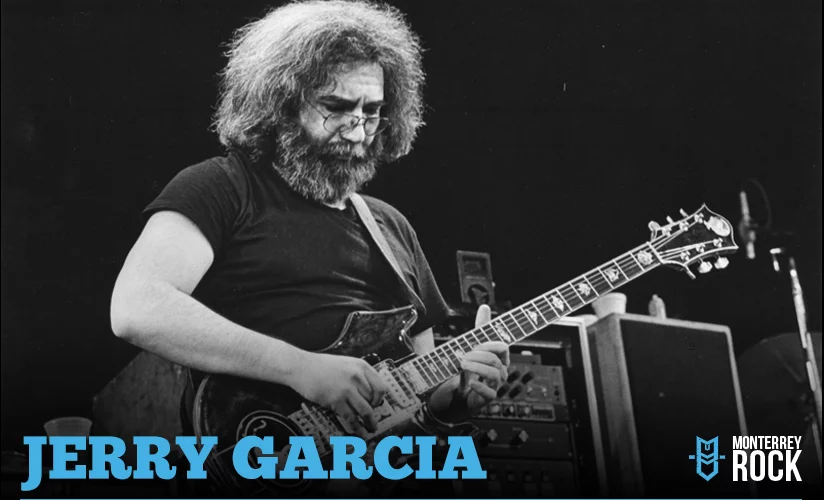
When Saturn’s full name was revealed in the Egghead arc — Jay Garcia Saturn — a second layer of reference came into view. Jerome John “Jerry” Garcia was the guitarist and co-founder of the Grateful Dead. The name correspondence is direct: Jay Garcia → Jerry Garcia.
The thematic connections are what make it land. The Grateful Dead’s name translates literally as “the great dead” — and Saturn, as of the story’s current events, is dead. He appeared invincible. He is gone. The band’s most famous secondary image is the Dancing Bear — a sequence of colorful bears caught mid-dance. When Saturn used his abilities on Bartholomew Kuma, Kuma danced. The man who made Kuma dance is named after the band whose logo is a dancing bear.
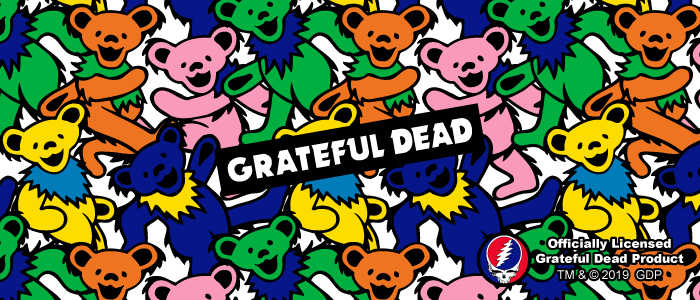
The Grateful Dead’s classic video for “Touch of Grey” features five skeleton versions of the band performing together. Five skeletons. Five Elders. The band’s skull-heavy visual identity reads like a pirate flag throughout. And the Grand Line itself — 偉大なる航路, “the great route” — shares its first word with the band’s Japanese rendering: 偉大なる, “the great.” The face came from Marx. The name and the role came from Garcia.
For the complete character model guide, see Every One Piece Character and Their Real-Life Model. For the historical events behind the story, see One Piece History is Real History.