Fishman Island begins as a Urashima Taro parody — the Japanese folk tale where a fisherman is taken to a Dragon Palace beneath the sea. That framing is deliberate, because what comes after is not the folk tale. The actual models for Ryugu Kingdom’s palace and its central plaza are specific real-world sites, and knowing them reframes the arc’s central conflict entirely.
Ryugu Palace = The Temple of Heaven, Beijing
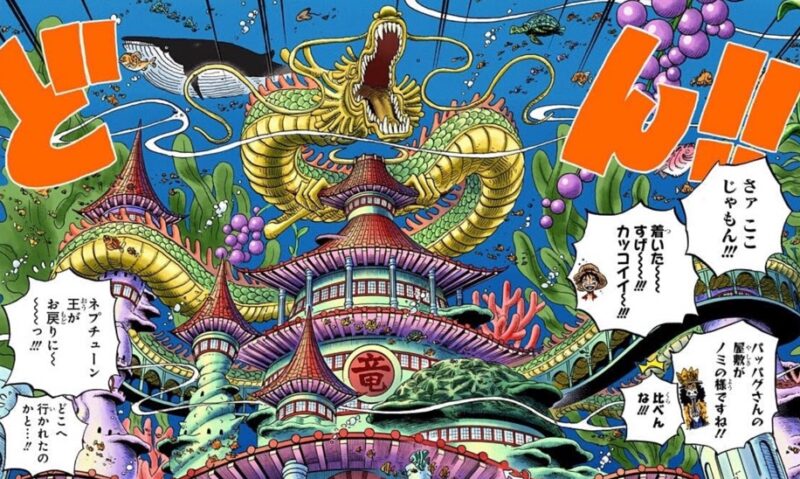
The royal palace of Ryugu Kingdom is modeled on the Temple of Heaven (Tiantan) in Beijing, China — a UNESCO World Heritage Site. The Temple of Heaven was the sacred complex where Chinese emperors performed ceremonies to worship the sky and pray for good harvests. The architectural signature — circular rooftops in deep blue, elevated on stone platforms — is the direct visual source for Ryugu Palace.
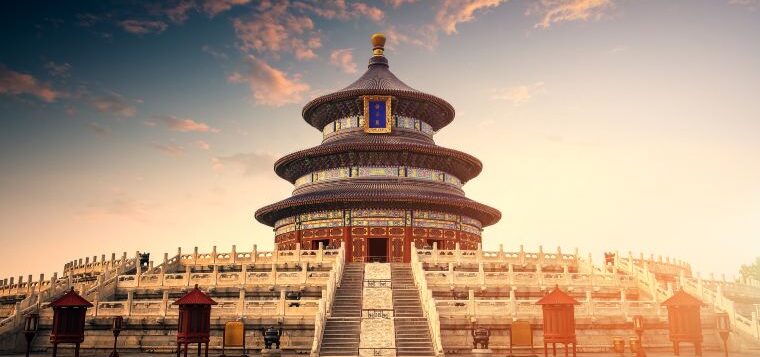
The choice is not aesthetic. Shirahoshi’s defining wish throughout the arc is to see the real sun — something she has never seen from the bottom of the ocean. The imperial palace of a people who live beneath the sea, who can never reach the sky, is modeled on the building where the most powerful ruler in the world came to worship the sky. That is the kind of layered detail Oda puts into every location.
Gyoncorde Plaza = Place de la Concorde, Paris
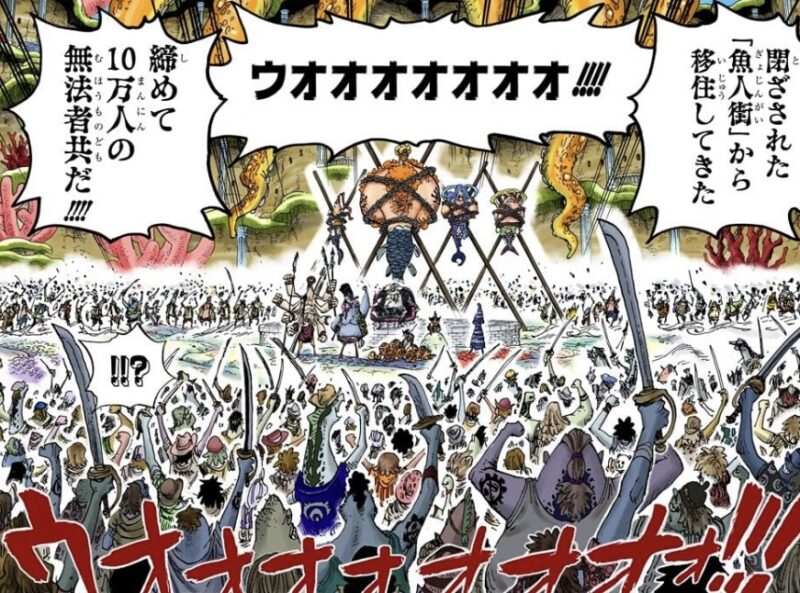
Hody Jones chooses Gyoncorde Plaza as the stage for King Neptune’s public execution. The name decodes immediately: Gyon (fishman) + Concorde.
The Place de la Concorde in Paris is one of the most famous public squares in the world. Between 1793 and 1795, during the French Revolution‘s Reign of Terror, it was the site of approximately 1,400 public executions by guillotine — including King Louis XVI and Marie Antoinette.
Hody’s plan for a public royal execution in the central plaza of Fishman Island is this history exactly. A revolutionary faction, claiming to represent the oppressed majority, stages a public execution of the existing ruler to demonstrate that the old order is over.
The word Concorde means “harmony” or “agreement” in French. After the bloodshed of the Revolution, the square was given this name as a statement of national reconciliation — the hope that the violence was over and a unified France could emerge. The fishman-human coexistence theme that runs through the entire arc — the hope that historical enmity can be resolved — is encoded in the name of the plaza where the arc’s crisis takes place.
Hyouzou’s Drunken Sword Style = Jackie Chan
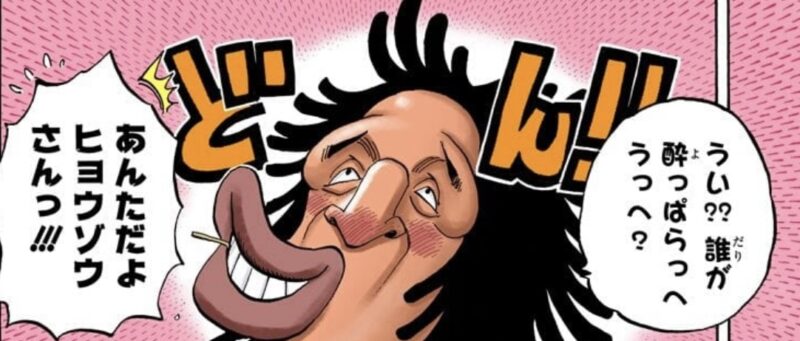
Hyouzou, the strongest swordsman on Fishman Island, fights with a style that gets stronger the more drunk he is. The direct reference is Jackie Chan’s Drunken Master — the 1978 kung fu film that defined the drunken boxing style for global audiences. Given that the palace is modeled on Chinese architecture and the strongest warrior uses a Chinese film martial arts style, the Chinese cultural layer of Fishman Island is consistent throughout.
Two Countries, One Island
China and France seem like an unlikely combination. But the logic is precise. China provides the royal architecture — a palace built for a ruler who worships what his people can never reach. France provides the revolutionary plaza — the place where the question of who rules, and at what cost, gets answered in blood.
An oppressed people living in isolation from the world above. A royal family trying to hold things together. A radical faction using the rhetoric of liberation to pursue revenge. A central question about whether coexistence is possible. These are not generic fantasy themes. They are the specific dynamics of the French Revolution, set inside a palace built for Chinese imperial ceremony.
For the broader historical pattern across all arcs, see One Piece History is Real History: Every Arc Mirrors an Actual Historical Event. For where Fishman Island sits on the actual global route, see The Real Grand Line.