The six Vegapunk satellites are named after real scientists — Shaka, Lilith, Edison, Pythagoras, Atlas, York. Their designs, though, come from somewhere else entirely: a specific generation of Japanese anime that most readers outside Japan have never encountered. Once you trace each one back to its source, you are looking at a portrait of the creative lineage that shaped Oda himself.
Shaka (01 — Justice): Daft Punk
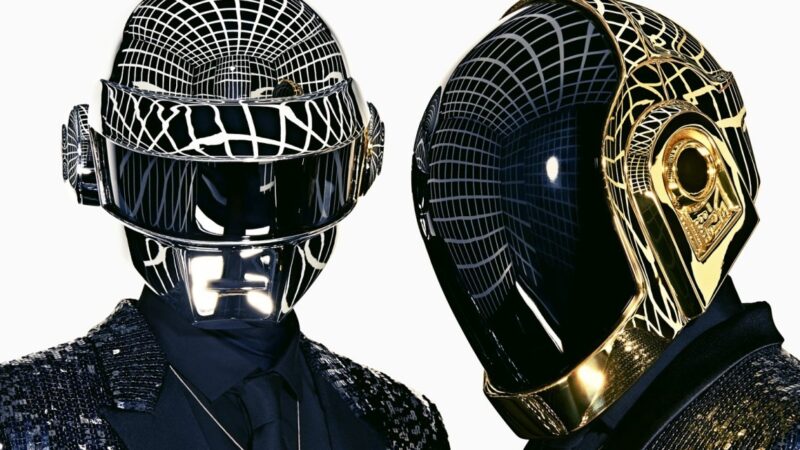
Shaka wears a full helmet at all times and never shows his face. The design is Daft Punk, the French electronic music duo who spent their entire career performing and appearing publicly in robot helmets, their real identities deliberately concealed. The name connection is also there: Vegapunk and Daft Punk share the same rhythm and ending.
Lilith (02 — Evil): Uta from Film Red

The three female satellites — Lilith, Atlas, and York — each carry a fragment of Uta, the singer protagonist of ONE PIECE FILM RED. Lilith’s overall silhouette matches Uta almost exactly. Atlas takes Uta’s two-tone hair and braided styling. The three of them together form a distributed version of the same base design, which also suggests all three may carry elements of Jinny, Vegapunk’s assistant from Kuma’s backstory.
Edison (03 — Imagination): Robokko Beaton and the Man Who Made Lupin III Possible
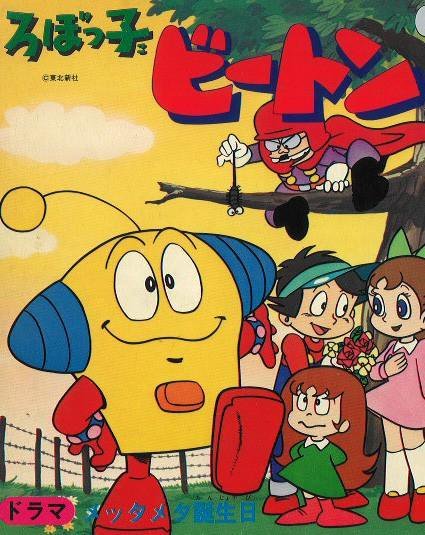
Edison’s rugby-ball head and compact robot body come from Robokko Beaton, a 1976 Japanese children’s anime. To understand why Oda chose it, you have to follow the lineage.
Robokko Beaton was created by Osumi Masaaki. Osumi directed nearly all of the original Fujiko Fujio anime adaptations — Obake no Q-taro, Perman, Kaibutsu-kun — making him the person most responsible for bringing Doraemon’s creative universe to the screen. He was Fujiko Fujio’s most important collaborator.
But Osumi also did something else. When Monkey Punch was reluctant to allow Lupin III to be adapted into anime — skeptical that its hardboiled adult tone could work in animation — Osumi produced a sample episode and showed it to him. Monkey Punch watched it and immediately said yes. Without Osumi Masaaki, the Lupin III anime does not exist.
Egghead Island is explicitly modeled on Lupin III vs. The Clone. Edison’s design is a tribute to the man who made both of those things possible.
Pythagoras (04 — Knowledge): Ganbare!! Robocon
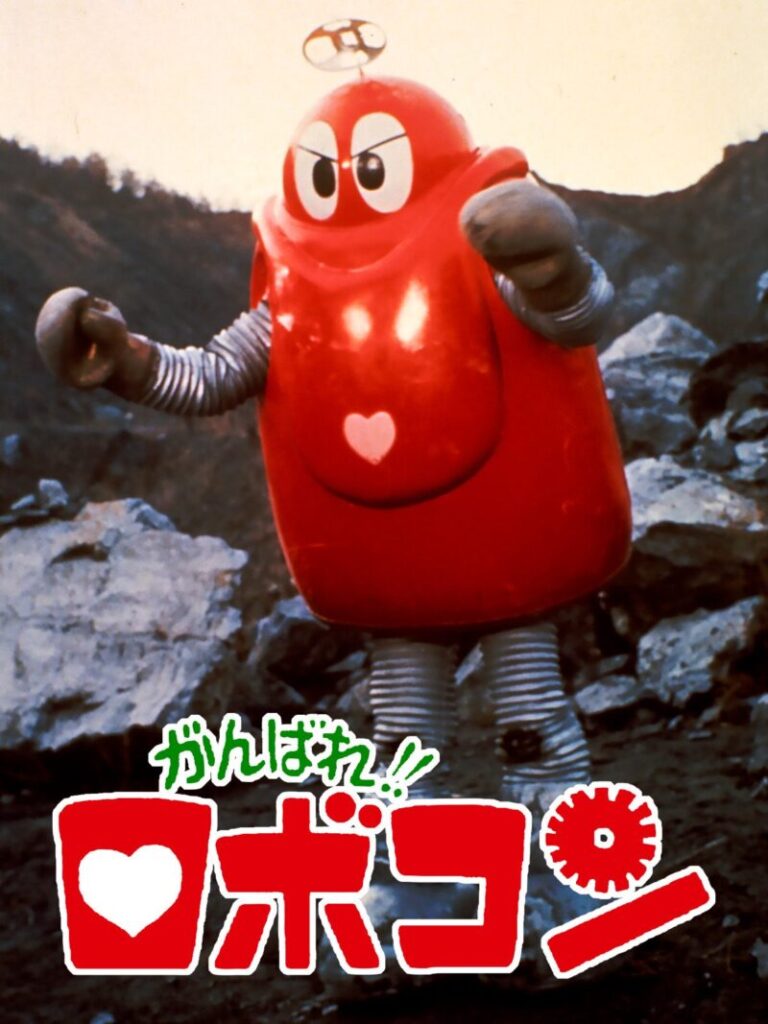
Pythagoras has a wind-up key on his head and the proportions of a vintage toy robot. The design comes from Ganbare!! Robocon, the 1974 live-action tokusatsu series created by Shotaro Ishinomori — the same creator behind Cyborg 009, which is the confirmed model for the Vinsmoke family and Germa 66. Oda’s respect for Ishinomori appears twice in the same arc.
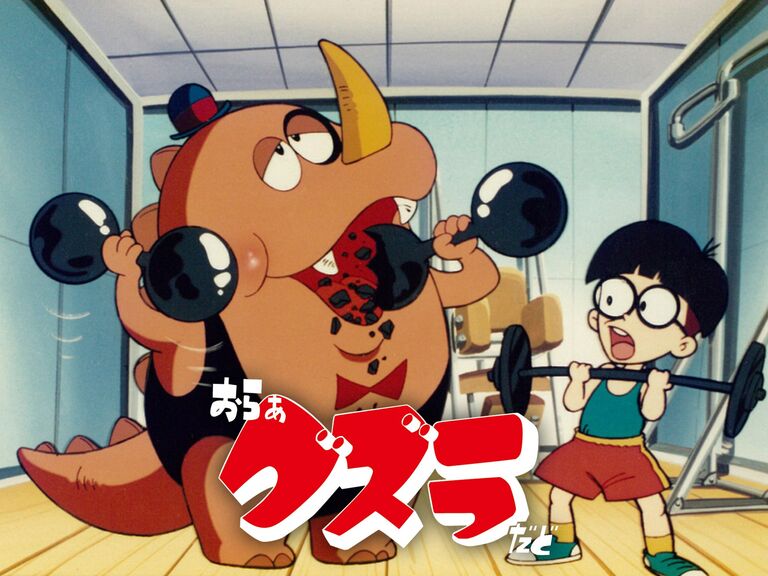
York (06 — Greed): Guzura, the Monster Nobody Remembers
York presented two candidates. The first — Hatsune Miku — seemed reasonable on the surface: a future island, hologram monsters, earphone-connected satellites, female singers. The arm numbering even fit.
But York’s most distinctive trait is that she is always eating. In every group scene, she is visibly fatter than her baseline. Combined with the hologram monster on Egghead — horned, fire-breathing — the actual model is Guzura, the protagonist of the 1967 Showa children’s anime Oraa Guzura Dado. Guzura is a small, gluttonous fire-breathing monster. The series was created by Sasagawa Hiroshi, who also directed Speed Racer, Yatterman, and Time Bokan — a giant of the same Showa anime era as Osumi Masaaki.
Edison and York both trace back to the same generation of Showa anime creators. The satellites are not just character designs — they are a map of the animation history that ran underneath Oda’s childhood.