If you ask One Piece fans what Tony Tony Chopper’s Devil Fruit model is, most will say “the Yeti” — the mythical abominable snowman of the Himalayas. It seems obvious. Chopper is a large, fur-covered creature with tremendous strength. But there is a problem. In his Monster Point, Chopper has horns. Yetis don’t have horns. Something else is going on.
Devil Fruits Are the Possibilities of Human Evolution
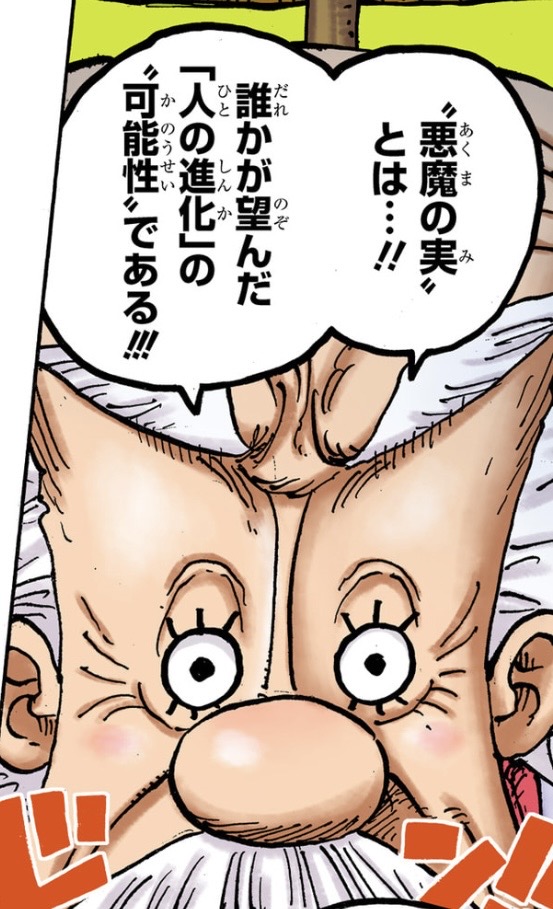
Vegapunk gave us the key when he first witnessed Luffy’s awakening — the moment Nika appeared before the crew. His theory: Devil Fruits are not random inventions of nature. They are the possibilities of human evolution — someone once wished “I want to be like that,” “I want to become that,” and over centuries those wishes took physical form as fruits. The range of human imagination became the range of Devil Fruits.
He adds a crucial line: “Whether god exists is not even worth pondering.” What he means is that the gods and mythical creatures that became Devil Fruit models were not real beings who happened to exist — they were imagined by humans first, and the act of imagining them was what made them real. The Dream Fruit, the Flame Fruit, the Human-Human Fruit — all of them are echoes of what someone once dreamed of becoming.
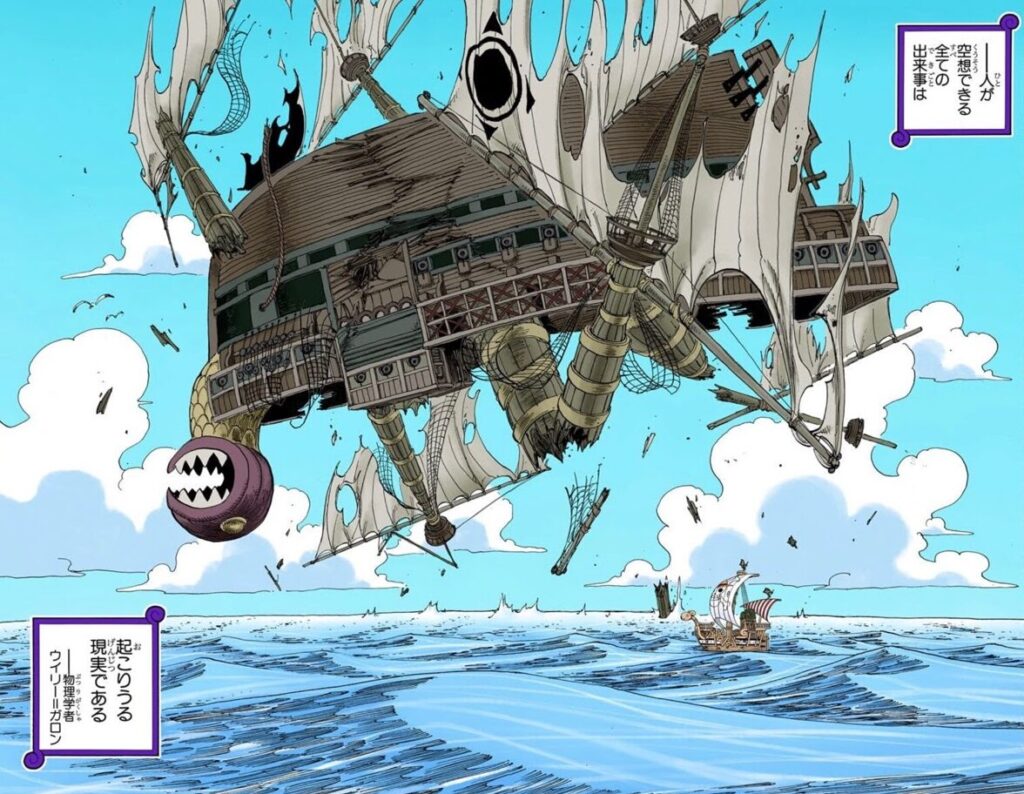
This idea has an older source. Jules Verne, the father of science fiction, wrote: “Everything a man is capable of imagining, other men will be capable of realizing.” Oda pays tribute to this idea through the fictional physicist Willie Gallon, whose dialogue echoes Verne’s words almost exactly.
The Awakening Clue: Chopper’s Monster Point Has Horns
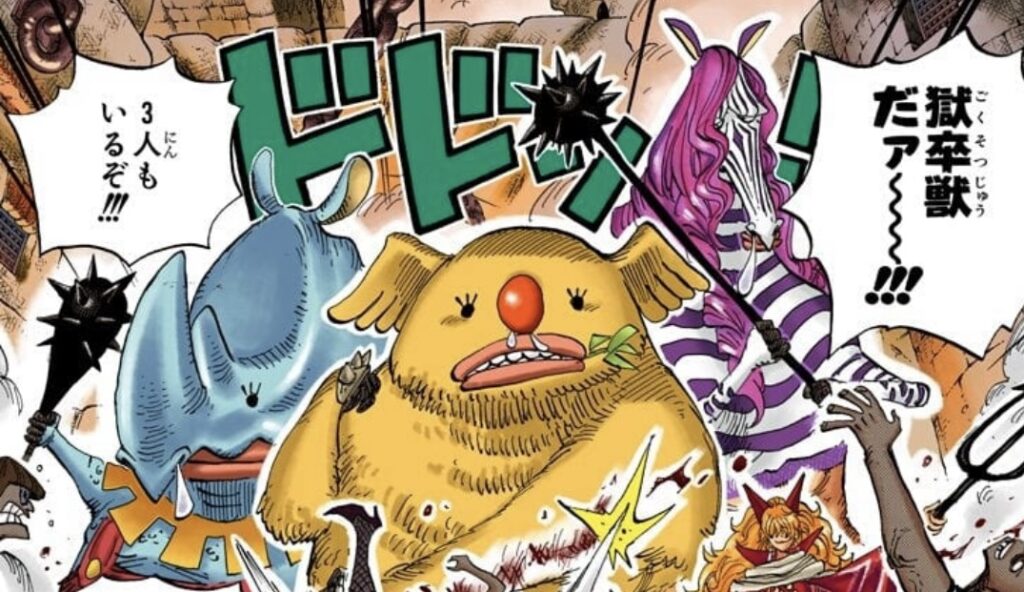
Crocodile revealed in Impel Down that the prison guards — the Jailer Beasts — are awakened Zoan users. Vegapunk confirmed the pattern: Zoan awakening frequently causes the user’s personality to be consumed by the model creature. Lucci awakened without losing his personality. The Jailer Beasts awakened and were consumed. In both cases, the shared trait is the same: the upper body is dominated by the Zoan’s mythical creature form.

Apply this to Chopper’s Monster Point. When he loses control of his Rumble Ball transformations, the form that emerges has enormous antlers, thick fur, and overwhelming physical power. That is not the base form of a reindeer — it is the mythical creature model of his Devil Fruit, breaking through. The Yeti has no horns. The Yeti does not fit. Something with antlers and fur must be the real model.
Five Conditions for Chopper’s True Model
To identify the correct mythical beast, five conditions must all be satisfied:
- Has deer- or reindeer-like antlers
- Has fur, or is associated with fur-wearing
- Appears in mythology or legend as a recognized mythical figure
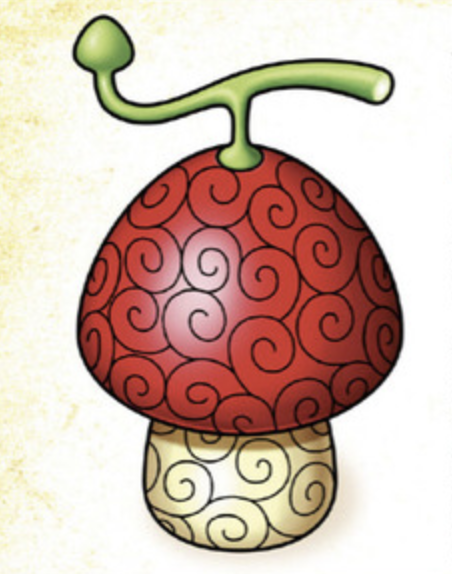
- Can explain the mushroom shape of Chopper’s Devil Fruit
- Is connected to medicine, healing, or the power over life and death
The Yeti fails on antlers and medicine. The answer that passes all five is Cernunnos.
Cernunnos: The Celtic Horned God
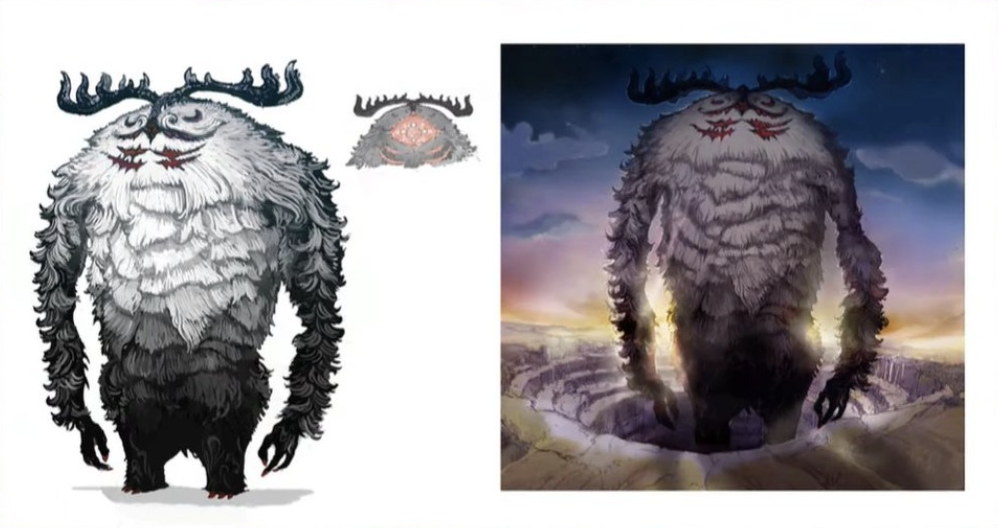
Cernunnos is a deity from Celtic mythology — the strand of Norse and European mythology that covers ancient Britain, Gaul, and Ireland. His appearance is specific and unmistakable: a humanoid figure with large stag antlers growing from his head, often depicted seated in a cross-legged position, surrounded by animals. He is the god of hunting, the god of the forest, the lord of beasts, and the king of all animals.
Check the conditions. Hunting god → hunters wear the fur of their prey → the fur condition is met. Forest god → in Japanese, mushrooms are ki-no-ko, literally “child of the tree” → a forest god’s fruit would be mushroom-shaped → the Devil Fruit shape condition is met. Antlers → the horns condition is met. Mythology → condition met.
Cernunnos also appears as an enemy character in the game Fate/Grand Order, where his design is rendered as an antlered, fur-bearing monster — a visualization that sits very close to Chopper’s Monster Point.
The Shishigami Connection: Princess Mononoke and the Fifth Condition
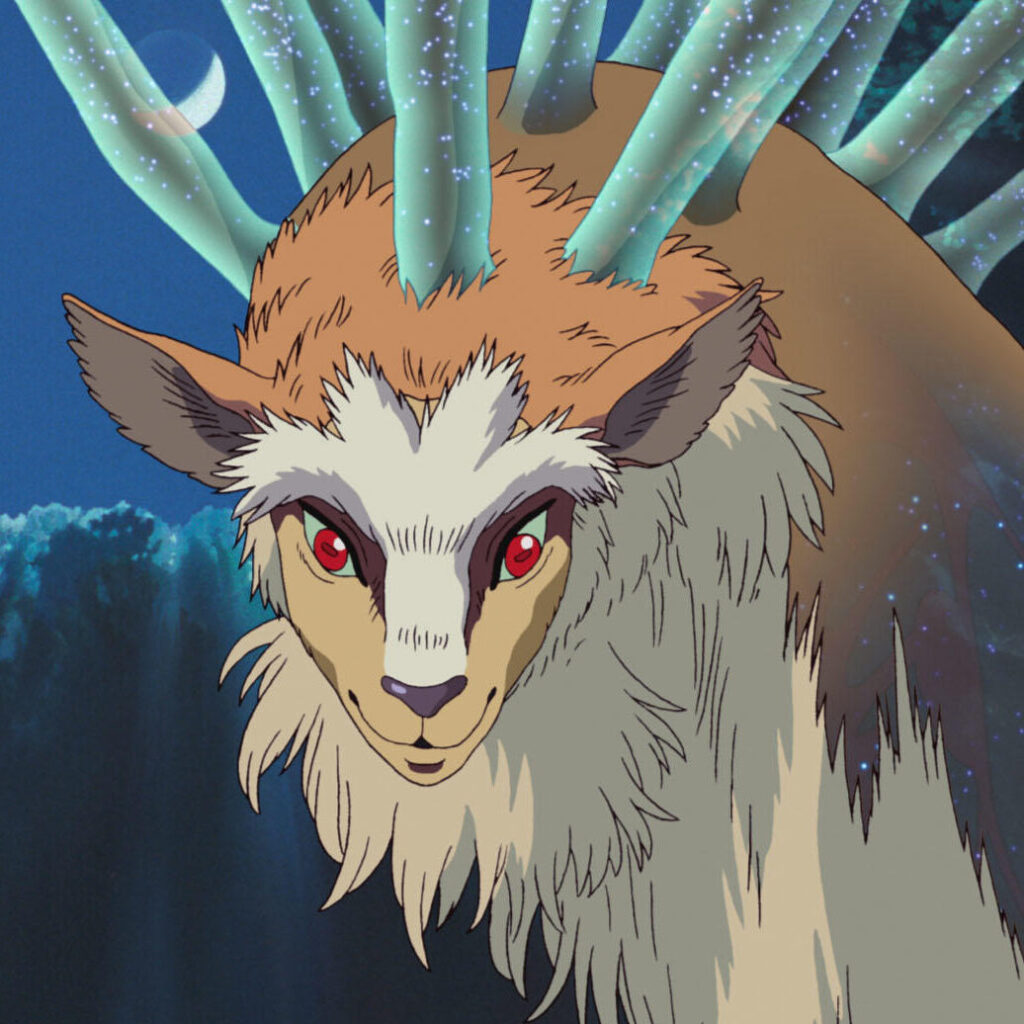
The fifth condition — medicine and the power over life — is answered through a film. The Shishigami (Forest Spirit) in Hayao Miyazaki’s Princess Mononoke is also modeled on Cernunnos. The Shishigami walks as a great deer with antlers, and it holds dominion over life itself in the forest: it can absorb a creature’s life or restore it. It decides who lives and who dies. That power — the ability to determine life and death — maps directly to medicine. A doctor who can save lives others have given up on. Chopper.
This is not a coincidence. Both Oda and Miyazaki draw from the same mythological tradition. One Piece and Studio Ghibli share deep roots in Norse and Celtic mythology — Oda has referenced Ghibli throughout the series, from the visual geography of Skypiea to the visual language of Wano. The Shishigami is the bridge that connects Cernunnos to Chopper’s role as the crew’s doctor.
Why the Secret Was Kept
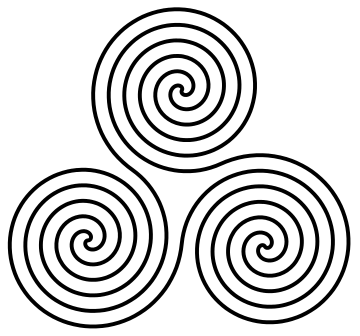
The triple spiral above is the triskelion — one of the oldest symbols in Celtic art, found carved into megalithic sites across Ireland and the British Isles. It is associated with cycles: birth, life, and death. Movement, continuity, the turning of time. It appears on the cover art of Celtic-rooted mythological traditions and as a recurring symbol in works that draw from that tradition.
The Mythical Zoan type is defined as rarer than Logia. Chopper’s Human-Human Fruit is classified as a standard Zoan — but Vegapunk’s theory implies the distinction between a “Mythical” Zoan and a standard one may be less clear than it looks. If the human imagination gives a fruit its model, and humans imagined Cernunnos as a god, what does that make Chopper’s fruit, really?
The answer to that question may not arrive until the final arc. Zoan awakenings have been presented as one of the story’s unresolved threads. When Chopper’s awakening comes — if it comes — the form it takes will tell us whether the model is a yeti from folklore, or a horned god older than writing.
For more on how One Piece mythological models connect, see Every One Piece Character and Their Real-Life Model and One Piece History is Real History.