What Makes Rakugo Interesting?
In a world of hyper-realistic CGI animation, what’s so entertaining about a man in a kimono sitting alone and telling stories? Every rakugo newcomer asks the same question. And a rakugo performer responds like this:
“Everyone, close your eyes and picture the most beautiful person in the world.”
“Did the two of you imagine the same face? Of course not. That’s what rakugo can do that movies cannot.”
“When you only have the voice, you can picture ‘the best possible scene’ entirely in your own mind.”
“Rakugo is ‘completed through collaboration’ between the performer and the audience.”
“That’s why the richer your knowledge and imagination — the smarter you are — the more you enjoy it.”
“Conversely, rakugo is something that fools simply cannot enjoy.”
“You can enjoy rakugo, can’t you?”
Introduction to Rakugo
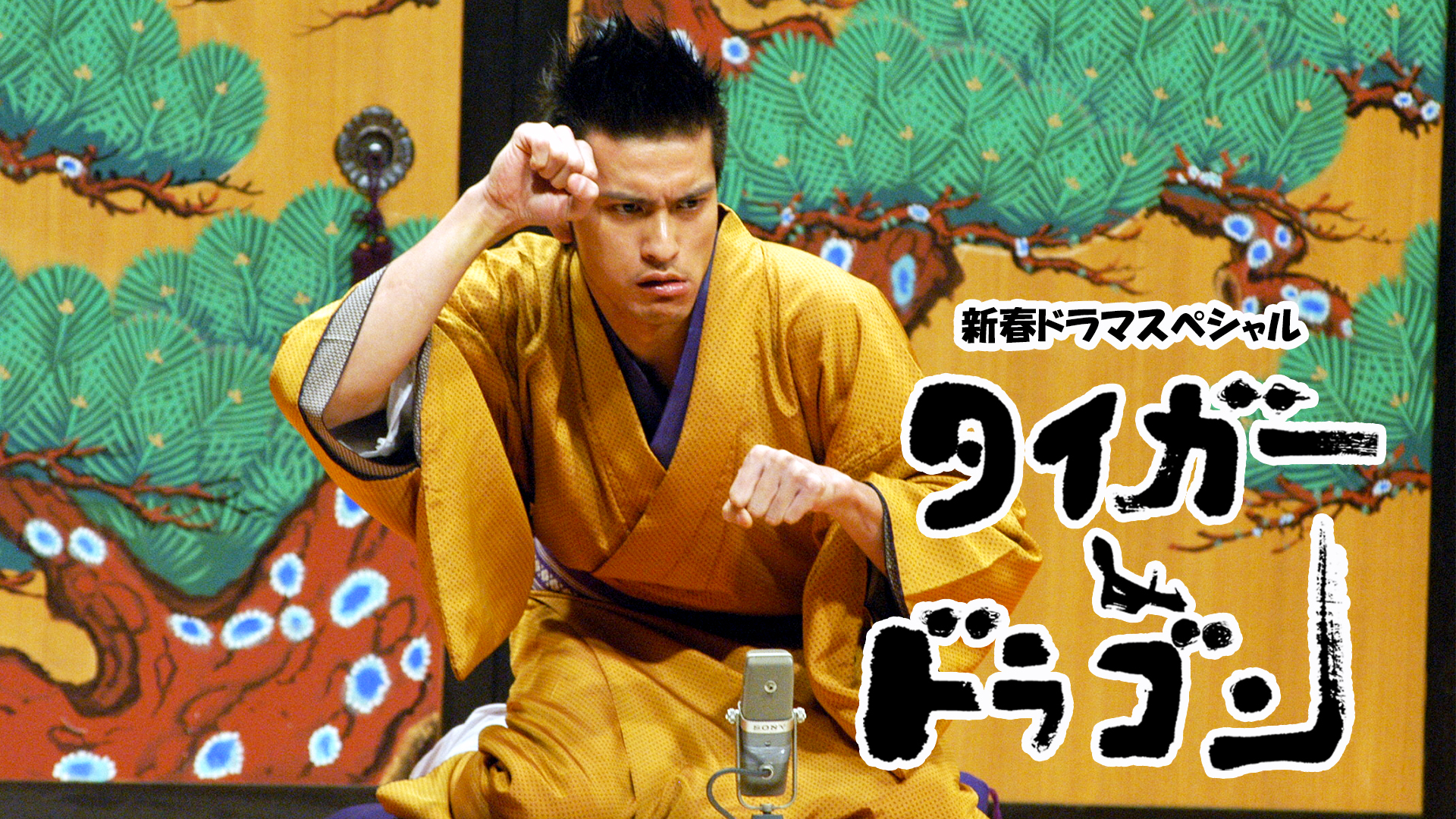
Imagine telling someone you hate their favorite game when you’ve never even played the tutorial. Every art form needs the cycle of interest → first experience → familiarity → practice → improvement → enjoyment.
The best entry point for rakugo is the Japanese TV drama “Tiger & Dragon” (2005). Written by Kudo Kankuro and starring Nagase Tomoya as a yakuza who knows nothing about rakugo but becomes apprenticed to a master. The Kudo × Nagase combination is infallible. Incidentally, a young Gen Hoshino appears in a supporting role with a shaved head.
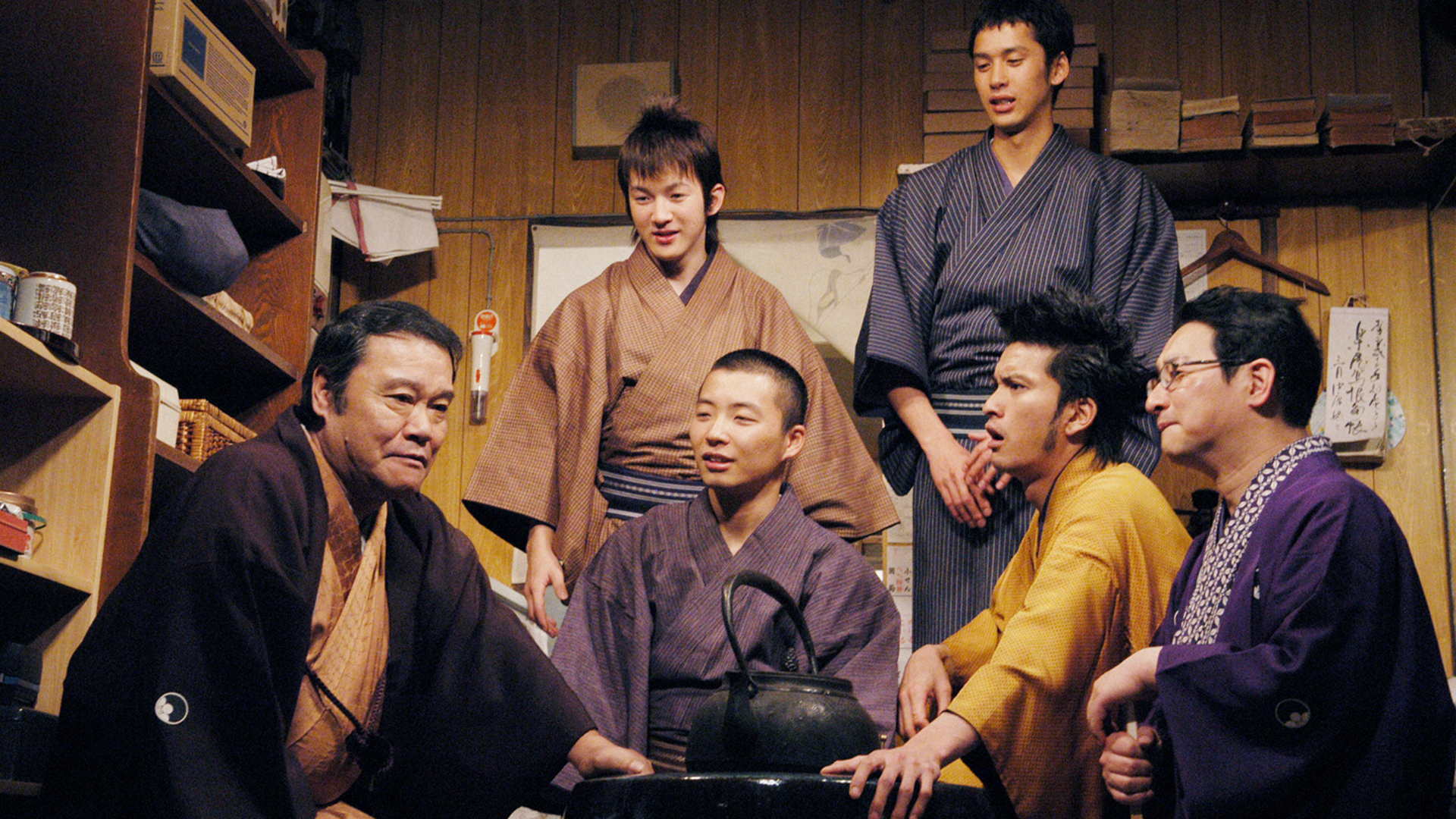
The drama is available on Netflix internationally.
Genres of Rakugo
When people say “rakugo,” they usually mean classical rakugo (古典落語). There’s also modern rakugo (新作落語), but it rarely penetrates mainstream culture.
Classical rakugo divides into three main genres:
- Funny stories (Kokkei-banashi 漆穏話)
- Tearjerker stories (Ninjōbanashi 人情呿)
- Ghost stories (Kaidan-banashi 怪話話)
So if you’re in the mood for laughs, make sure you don’t end up at a yose performance by someone who specializes in ghost stories!
Rakugo References in One Piece
“Hanauta Sanchome Yabatsu Kiri” → Kubidōchin (The Head Lantern)
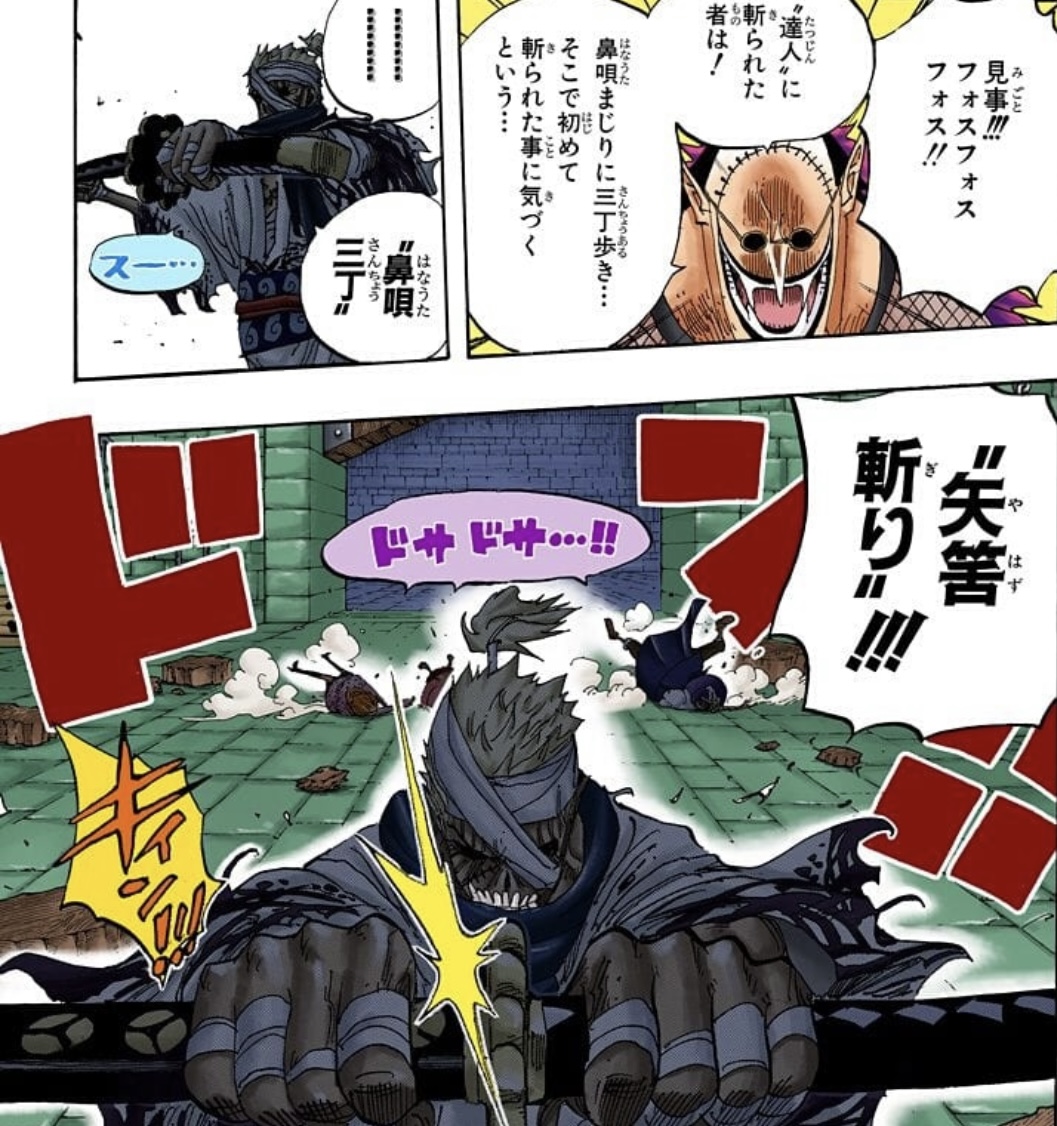
The source material is the rakugo story “Kubidōchin” (首提浸) — “The Head Lantern.”
Synopsis: A drunken man encounters a samurai on a dark road. He insults the samurai’s dialect, calling him a “country bumpkin,” and even spits on him — enraging the samurai completely. The furious samurai draws his sword in an instant and slices off the drunk’s head, then walks away.
The drunk doesn’t realize he’s been decapitated and starts walking toward the sake shop. After a while, air leaks from his throat, blood flows — and he finally realizes his head has been cut off. “This is terrible! I need to glue it back on quickly!”
“Oh no — there’s a fire ahead, a crowd! If I bump into someone my head might fall off! That’s it — I’ll hold it with my hands like a lantern! Excuse me, excuse me, coming through!”
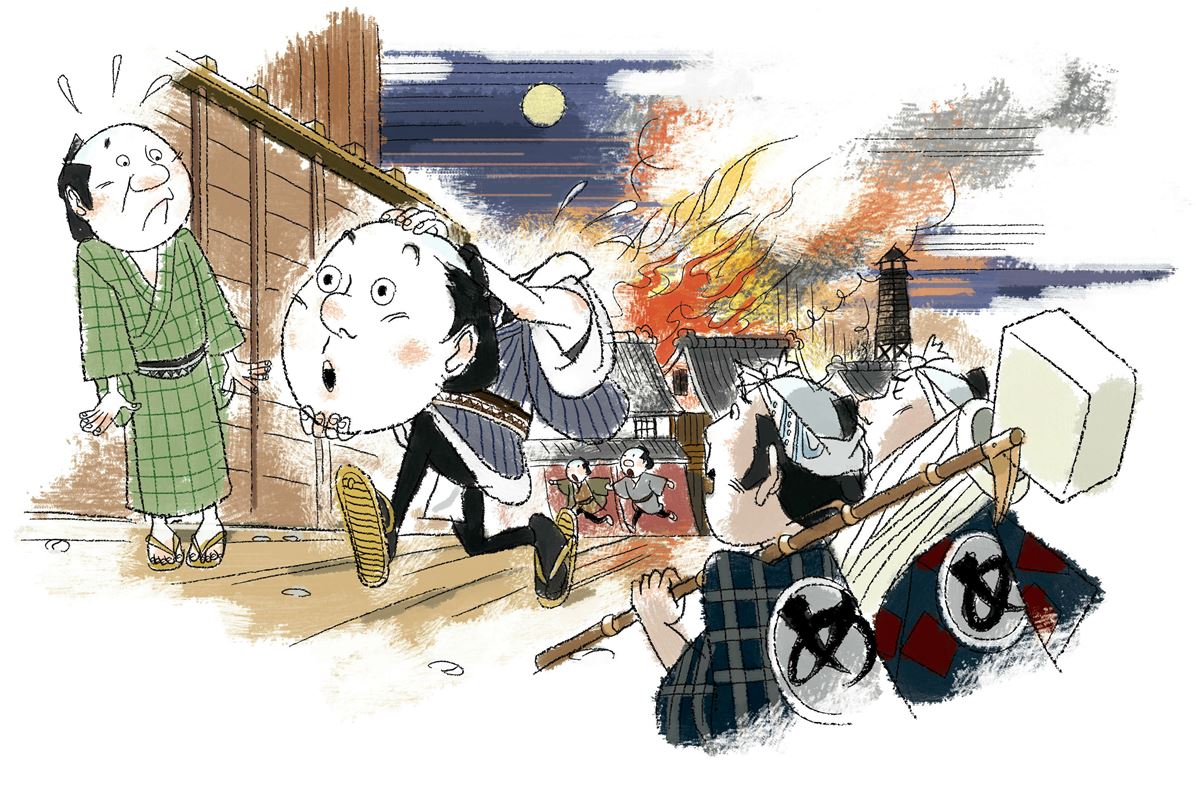
Genre: Comedy | Watch on YouTube
“Displaying a Rare Species” → Ichimekuni (One-Eye Land)
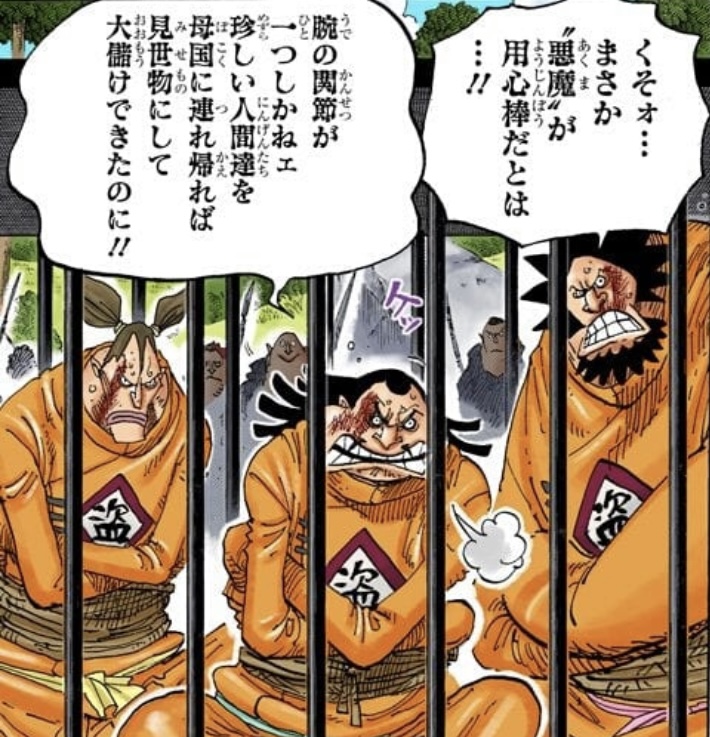
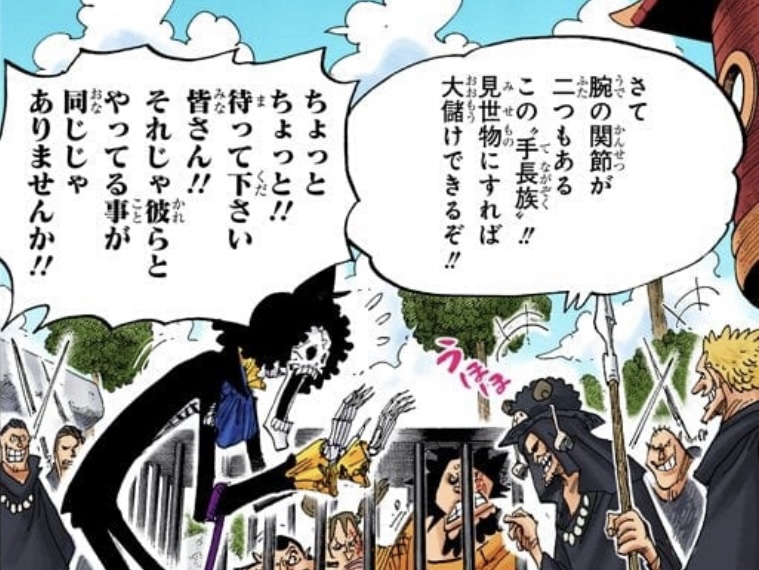
Both sides try to profit by displaying a species with a different number of arm joints as a sideshow. The source material is “Ichimekuni” (一眼国) — “One-Eye Land.”
Synopsis: A Buddhist pilgrim is taken in by the boss of a traveling sideshow troupe. The boss wants to capture a rare creature to display and profit. The pilgrim mentions: “On the way here, I was startled by a one-eyed child and ran away.”
The boss sets out the next morning to find the one-eyed child. Resting under a tree, a one-eyed girl calls out “Uncle, uncle!” He grabs her — she screams “Help!” and suddenly one-eyed adults surround him from all sides.
“Catch this kidnapper!” He’s taken to a village full of one-eyed people. “What’s this? It has TWO eyes! How unusual — let’s display it and make money!”
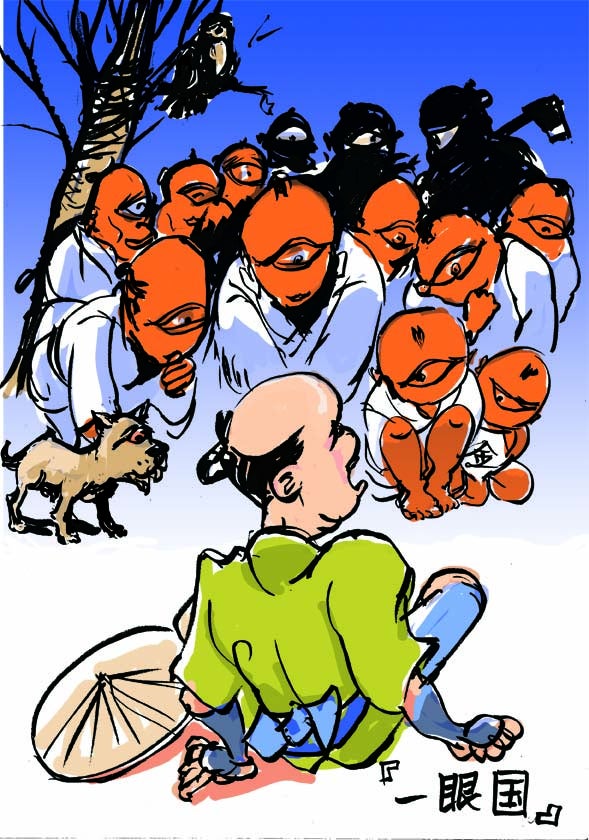
Genre: Comedy | Watch on YouTube
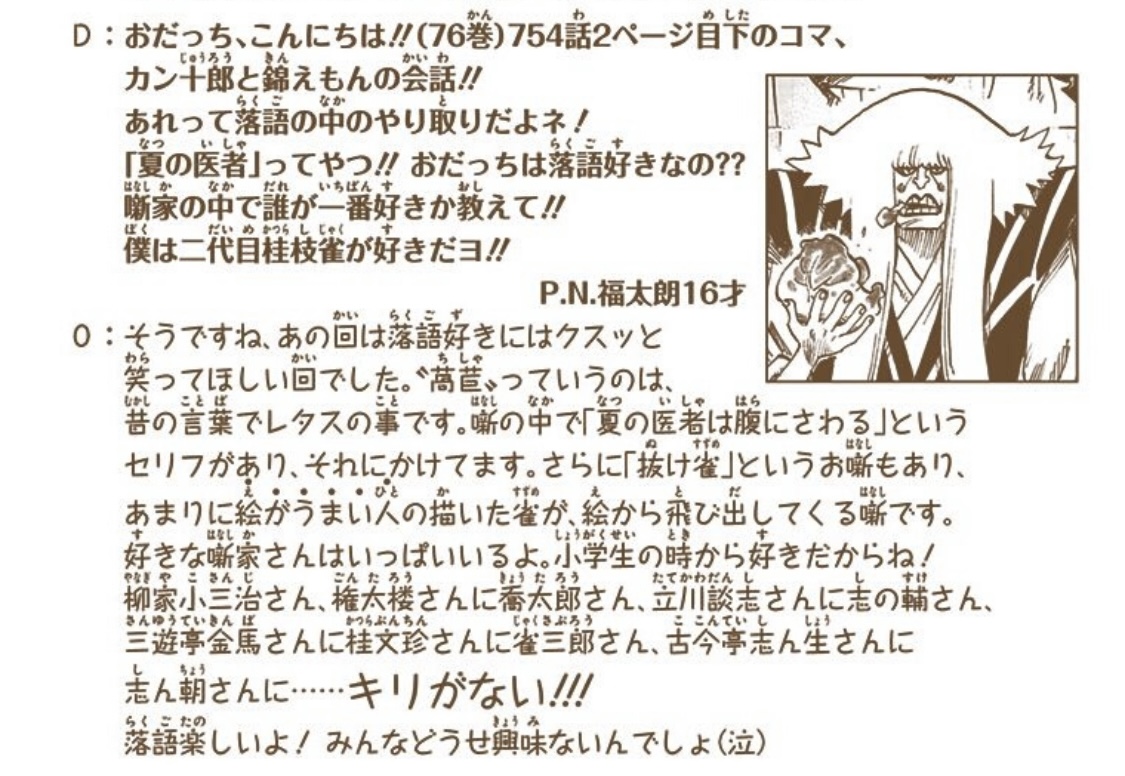
“Lettuce Upsets the Stomach” → Natsu no Isha (The Summer Doctor)
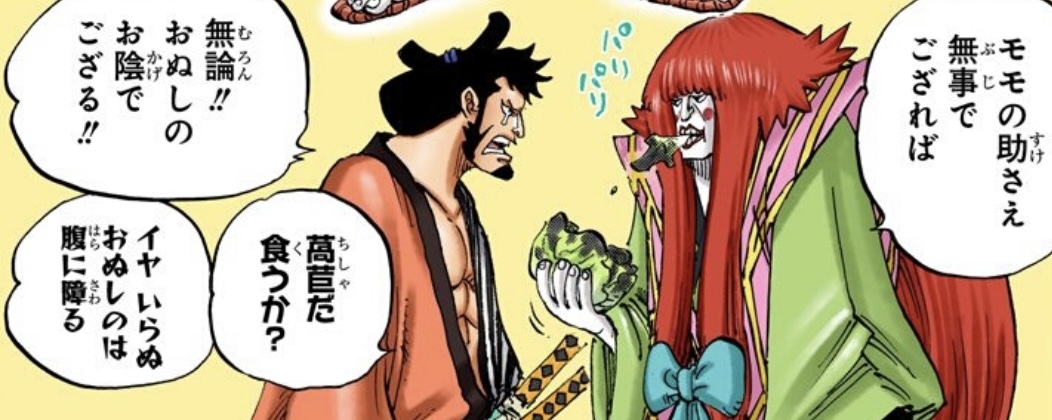
“Chisha” (芷草) means lettuce. The exchange between Kinemon and Kanjuro at their reunion references the rakugo “Natsu no Isha” (夏の医者) — “The Summer Doctor.”
Synopsis: In a remote summer village, a farmer collapses. The village has no doctor, so his son runs over a mountain to the next village. The doctor immediately suspects food poisoning and says: “Summer lettuce upsets the stomach.” (夏の芷草は膟に際る)
Rushing back, they stop to rest in the mountains — everything goes dark. “Oh no! This mountain has a giant serpent (uwabami) that swallows people! We’ve been swallowed!” The doctor scatters laxatives from his bag inside the serpent, which writhes and expels them.
They finally reach the farmer — but the doctor’s bag is gone. “I left it in the serpent’s belly!” He rushes back and asks the exhausted serpent: “Please swallow me again.” The serpent refuses, saying: “Summer doctors upset my stomach.” A pun on chisha (lettuce) and isha (doctor).

Genre: Comedy | Watch on YouTube
“Nuke-Suzume” → Nuke-Suzume (The Escaped Sparrows)

The source material is the rakugo story “Nuke-Suzume” (振け雄) — used directly. To understand the wordplay punchline, you need to know:
- Kagokaki (鳥カゴ描き): someone who draws a birdcage (tori-kago) with a perch for sparrows
- Kagokaki (馈箵かき): a palanquin bearer — low-status, backbreaking work, often done by disreputable people who overcharged customers
The punchline: the son’s actions forced his father to become a kagokaki (palanquin bearer) — a profound act of filial impiety.

Synopsis: A fat man in dirty clothes arrives arrogantly at a run-down inn. He drinks heavily on credit for a week. Asked to pay for at least the sake, he offers to paint as collateral, draws five sparrows on a folding screen, and leaves without paying.
The innkeeper couple despairs — until they hear sparrows chirping. The painted sparrows are walking around the room! When they gasp, the birds fly back into the painting. Every morning the sparrows escape to play; the spectacle draws crowds and the couple makes a fortune.
But day by day, the sparrows grow weaker. An old man appears: “The painting is unfinished — the sparrows will die soon. There’s no perch; they fly until exhausted.” He adds a birdcage with a perch. The sparrows recover.

Later the painter returns properly dressed to pay his debt. Hearing about the old man, he rushes to prostrate before the screen: “As always, I hope you are well. I ask forgiveness for my filial impiety.” The old man was the painter’s father.
“Parent and child, both masters!” the innkeeper says joyfully. The painter replies: “What is joyful? I have made my parent into a kagokaki.”
Genre: Comedy | Watch on YouTube
“Gama no Abura” → Gama no Abura (Toad Oil)

The source material is the rakugo “Gama no Abura” (蛙の油) — used directly.
Synopsis: A merchant uses showmanship and sleight of hand to sell “toad oil” as a miracle cure. He profits, then drinks himself drunk. Spotting a new crowd, he begins his pitch — but drunk and incoherent, he forgets to rig his trick sword and accidentally cuts his own arm.
A customer says: “Just put some toad oil on it — it heals any wound instantly, right?” Of course it’s all fake, and the wound doesn’t close. Punchline: “Is there anyone here who has medicine to stop bleeding?”

Genre: Comedy | Watch on YouTube
“Evil Eye Weed” → Jagan-gusa / Soba-sei (Snake-Dissolving Grass)

“Jagan-gusa” (邼含草) is based on the rakugo “Jagan-gusa” (蛋含草). This story has many versions; the most accessible is called “Soba-sei.”
Synopsis: On a mountain, a giant serpent has swallowed a human and its belly is distended. A passing man watches the serpent swallow a plant — and its swollen belly instantly shrinks. The man takes the plant home, convinced it has extraordinary digestive properties. But the plant only dissolves humans.
Genre: Comedy | Watch on YouTube
“Atama-yama” → Atama-yama (Head Mountain)

Kuri’s “Atama-yama” is directly based on the rakugo “Atama-yama” (山). This story requires fully suspending logic and unleashing your imagination.
Synopsis: A short-tempered man eats a cherry with its pit; a sprout grows from his head into a full cherry tree. Delighted neighbors name it “Atama-yama” and hold noisy hanami parties. Irritated, the man yanks the tree out — leaving a huge hole in his head.
Rain fills the hole into a pond; neighbors fish in it. Hooks catch on his eyelids and nostrils. Furious beyond endurance, the man jumps into the pond to end it all. The pond is his own head.

Genre: Comedy | Watch on YouTube
“Rakuda” → Rakuda (The Camel)

“Rakuda” is directly based on the rakugo “Rakuda” (らくだ).
Synopsis: In a tenement building lives a hated troublemaker nicknamed “Rakuda” (Camel). His associate “Hanjiro” visits and finds him dead from eating poisonous pufferfish. Wanting to hold a funeral but having no money, Hanjiro catches a passing junk dealer.
He forces the dealer to collect condolence money from the landlord — who had suffered greatly from Rakuda’s harassment. The landlord refuses, so Hanjiro takes the corpse directly to him and dances with it. Horrified, the landlord pays. They repeat this with neighbors.
The increasingly reckless dealer gulps the sake bought with the money — and his personality flips. The formerly timid dealer starts lecturing the yakuza Hanjiro, and their roles are completely reversed.
Genre: Comedy | Watch on YouTube
“Ichido-gitsune” → Nana-do-gitsune (The Seven-time Fox)

“Ichido-gitsune” is based on the rakugo “Nana-do-gitsune” (七度狩).
Synopsis: Two travelers, Kikuroku and Seihachi, are on a pilgrimage to Ise Shrine and have unknowingly earned the wrath of a fox. That fox is the feared “Seven-time Fox” — once it holds a grudge, it takes revenge sevenfold. At every stop on their journey, the fox tricks and deceives them — a comedy of relentless supernatural harassment.

Genre: Comedy | Watch on YouTube
“Denjiro’s Pot” → Tsubozan (The Jar Calculation)

The scene of Denjiro buying a pot references the rakugo “Tsubozan” (奖算).
Synopsis: Yoshikichi wants to buy a 100-liter jar cheaply and enlists his haggling expert, “Long-san.” Long-san first buys a 50-liter jar for 1 yen (down from 1 yen 15 sen).
He then returns and asks to swap it for the 100-liter jar: “50 liters for 1 yen, so 100 liters is 2 yen.” Already a 30-sen discount off the 2 yen 30 sen price. Then: “I already paid 1 yen — and I’m returning this 50-liter jar, so that’s 2 yen paid. So I’ll take the 100-liter jar.” He walks out with a 100-liter jar for just 1 yen.

Genre: Comedy | Watch on YouTube
[Recommended] Anime About Rakugo Performers

A new rakugo boom is definitely coming. The anime that became hugely popular during the last boom is “Descending Stories: Showa Genroku Rakugo Shinju” (昭和元稚落語心中).
It comes in two seasons. Available on Amazon Prime Video and Netflix internationally. Highly recommended for anyone wanting to dive deeper into the world of rakugo.