Characteristics of the Lunarian Tribe
King (Alber) — the sole survivor of a race thought to be extinct. The Lunarians are an exceptionally rare species with the following known traits:
① White hair ② Large black wings ③ Dark-tanned skin ④ Can survive in any natural environment ⑤ Were once called “gods” in ancient times
The white hair and the “god” title in particular seem connected to Nika — so let’s take a closer look at each feature.
White Hair
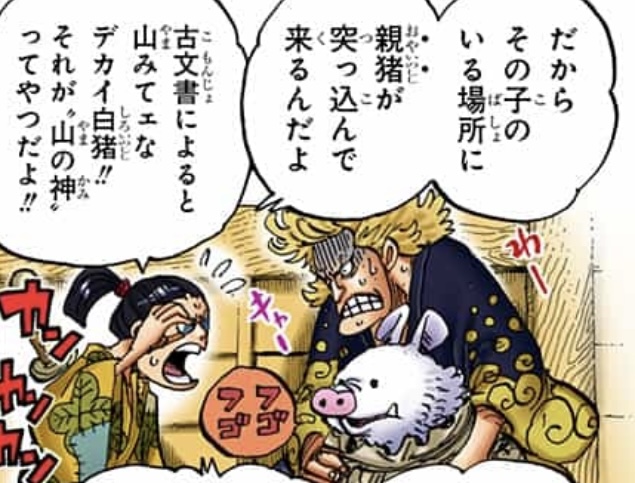
The Mountain God — a massive white boar thought to be nothing more than legend — turned out to be real. Its white fur marks it as a divine creature.
White = divine. The pattern repeats:

The Sun God Nika wears pure white and has white hair. Just like the Mountain God, white is the color of the gods.
If white = divine, does that make the Lunarians gods too?
When Whitebeard spoke of “the land of the gods,” could he have been referring to the nation where Lunarians once lived in great numbers?
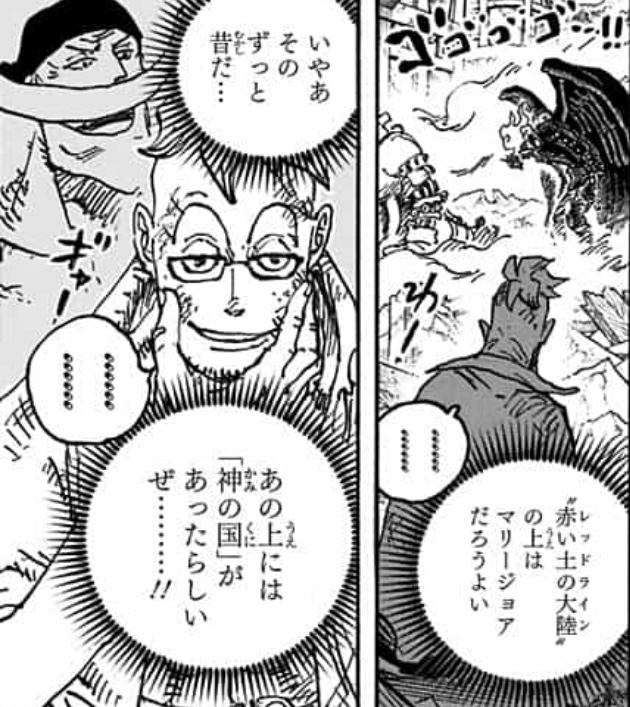
The theory: the Celestial Dragons conquered the land where the Lunarian “gods” lived — and along the way, stole the title of “god” for themselves. And that’s how things stand today.
Black Wings
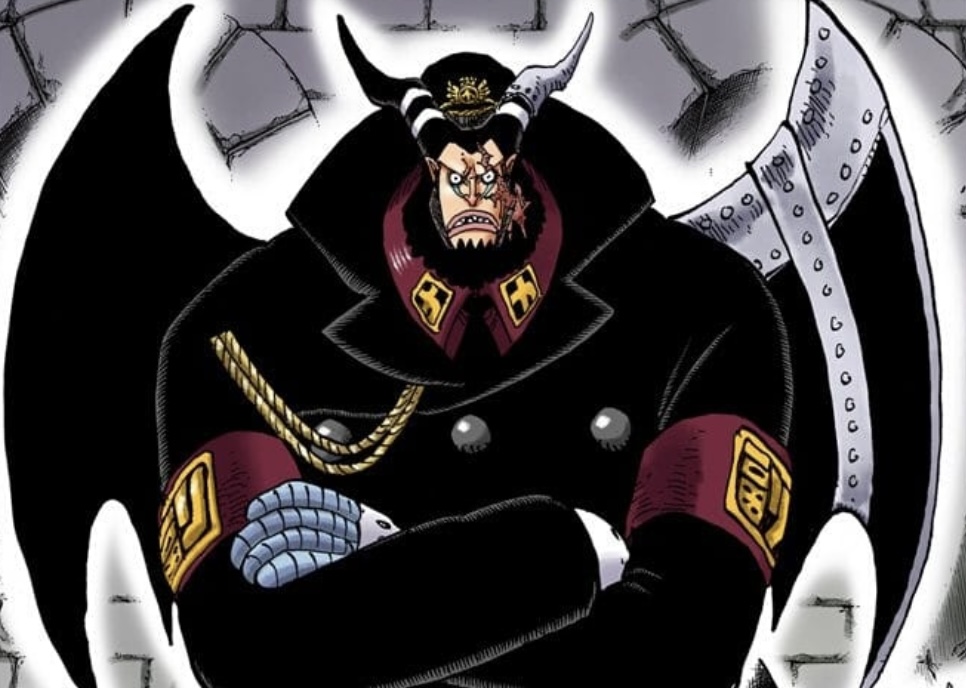
After the Impel Down breakout, Magellan was demoted to vice-warden. Something worth noting: his wings.
Are those wings a part of his body, or just decorations? His horns could apparently be removed and were reinforced with an iron-like material — and if the same applies to the wings, they might also be removable accessories.
But if they’re a genuine part of his body: bat-like black wings on someone who works in a dark, sunless prison — that fits almost too perfectly.
And here are two others with similarly dark wings — sky island officials from the time of Enel:
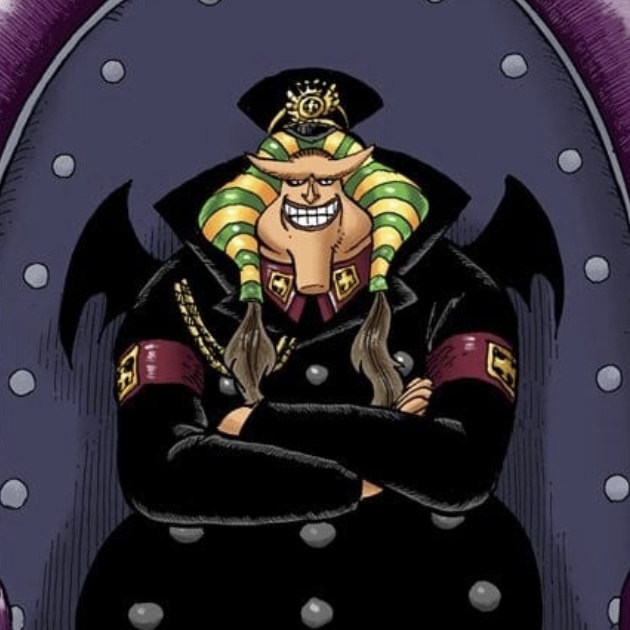
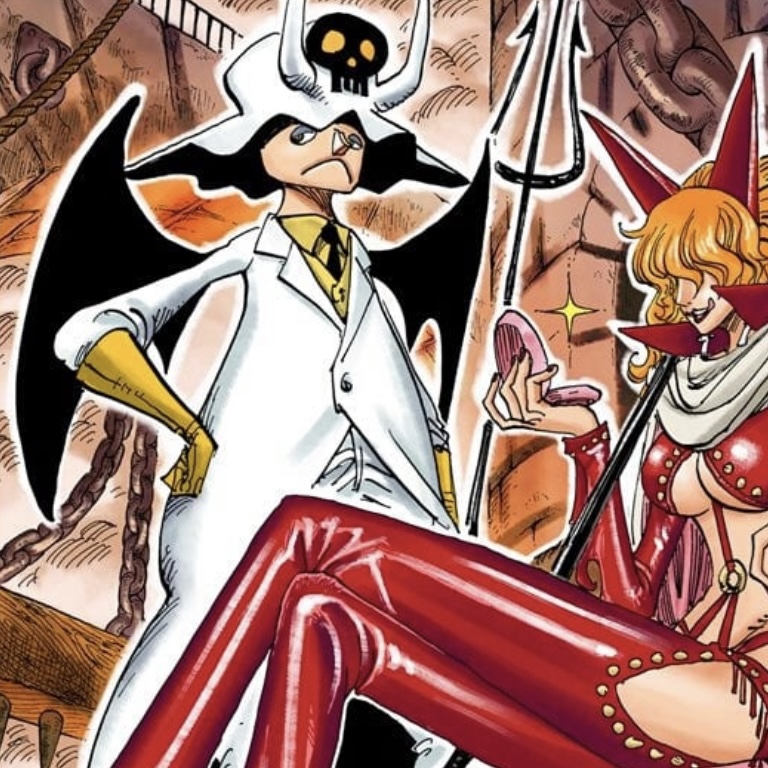
Consider this pattern: sky island people (closer to the sun) have bird-like white wings, while deep-sea workers (no sunlight) have bat-like black wings. Day and night, light and dark, white and black — a perfectly symmetrical contrast.
So where do the Lunarians fit? Bird-shaped but black. Crow-like, perhaps? In Japanese mythology, the Yatagarasu (three-legged crow) is a divine solar messenger — interesting for a “god” race with crow-black wings.
Differences in Wing Size
King of the Lunarians has enormous crow-like wings. But among the sky island people with white wings, size varies — and there’s a pattern.
Conis and common sky island folk have small wings:
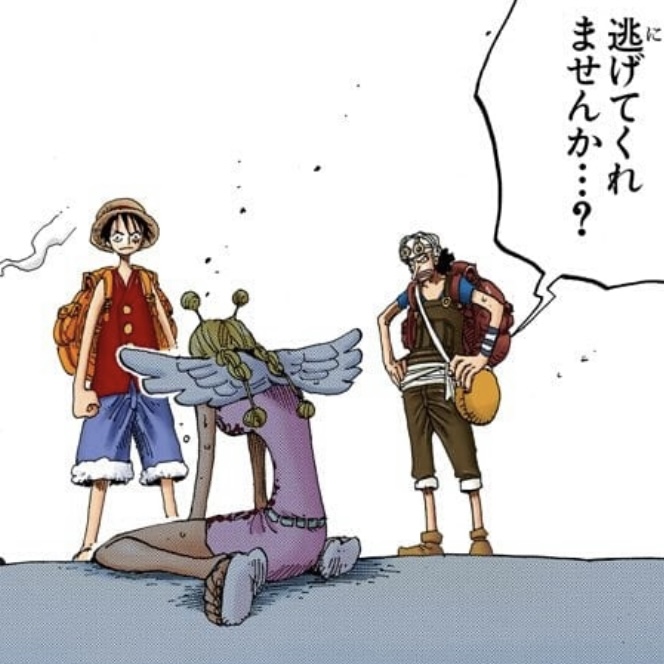
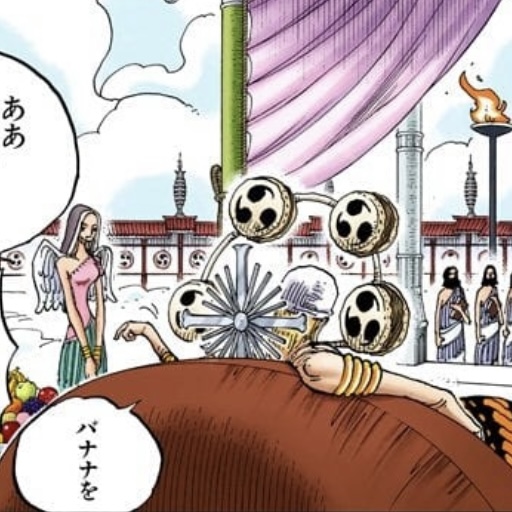
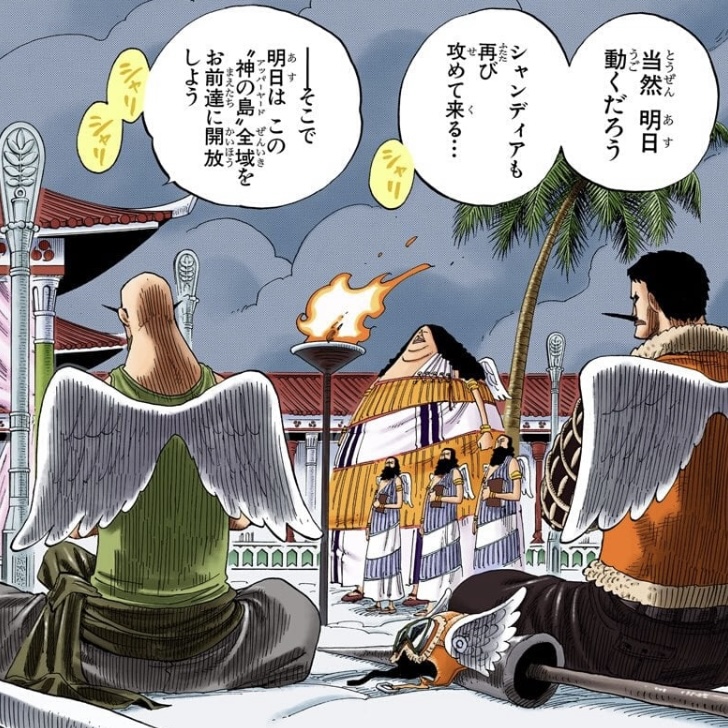
Those who serve the gods have slightly larger wings: women serving Enel, priests, and scholars.
And Usopp, dressed as a monk (closest in appearance to a “god”), has the largest wings of all:
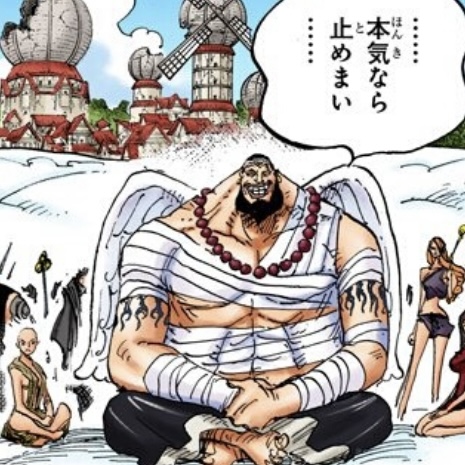
If this pattern holds, it maps neatly onto the ancient Indian caste system called Varna — created by the Aryans who conquered India.
The four Varna tiers: ① Brahmin (priest) ② Kshatriya (warrior/noble) ③ Vaishya (commoner) ④ Shudra (slave)
The mural Enel discovered on the moon shows figures whose costumes and wing sizes match these tiers: far right = warrior (Shandia chief), next = priest (monk-Usopp), then three slave robots (Roba), and far left = commoner with balloon hair like Conis.

If the highest rank is priest, then above the priests stands a god. The Lunarians, with their uniquely large black wings distinct from all sky island people, may be that god tier.
The connections stack up: ancient lunar ruins show caste-like murals; “Luna” means moon in both French and Latin; the Varna system was created by Aryans; Luna + Aryan = Lunarian.
Surviving Any Natural Environment

The Lunarian ability to “survive in any natural environment” is extraordinary. Consider what King (then a prisoner) endured:
① Dragged behind Whitebeard’s ship for three days ② Swelled up like a drowned corpse, then rapidly recovered ③ Frozen solid ④ Roasted alive without dying ⑤ Survived boiling in an oil cauldron for a full hour
The Kozuki clan also displays abnormally high toughness and regeneration. Could they have Lunarian-level environmental adaptability?
“Luna” in Latin means moon. “Aryan” — the Lunarian model — means “noble person.” Luna + Aryan = “noble moon.” Light (hikari) + moon (tsuki) = Kozuki (光月).
A coincidence? Or a deeper connection?

Dark-Tanned Skin

In a previous analysis, the Whiskey Peak arc was interpreted as based on the Taos Revolt — a war between Native Americans and white colonizers. If “dark-skinned people = indigenous people of invaded lands” is Oda’s visual shorthand, then Miss Monday (Monday → moon?) may carry a hidden moon connection.
The Lunarians’ model, the Aryans, also have another meaning: “Persian people.” The ancient Persian Empire encompassed what is now Israel.
Israel is home to Jerusalem — a holy city that three major religions have fought over for millennia. Those wars show no sign of ending.

Consider the parallels: Mary Geoise was once “the land of the gods” where Lunarians lived — and the Celestial Dragons stole it. Real history and One Piece’s story may be drawing from the same well.
The Meaning of King’s Name

King’s real name is “Alber” — and it appears to be named after Mt. Arbel in Israel.
There it is again: Israel.
Mt. Arbel is historically significant as the refuge where the remnants of the Hasmonean dynasty made their last stand against Roman conquest, hiding in the cliff-face caves.
The Hasmonean dynasty was a Jewish kingdom. And so the threads connect: Jewish history, Roman conquest, Aryan rule over India, the Varna caste system — all seemingly woven into the fabric of One Piece’s world.
A solid understanding of this history may be essential for anyone trying to predict Luffy’s dream and where One Piece’s story ends.