The Five Elders and the Pentagram
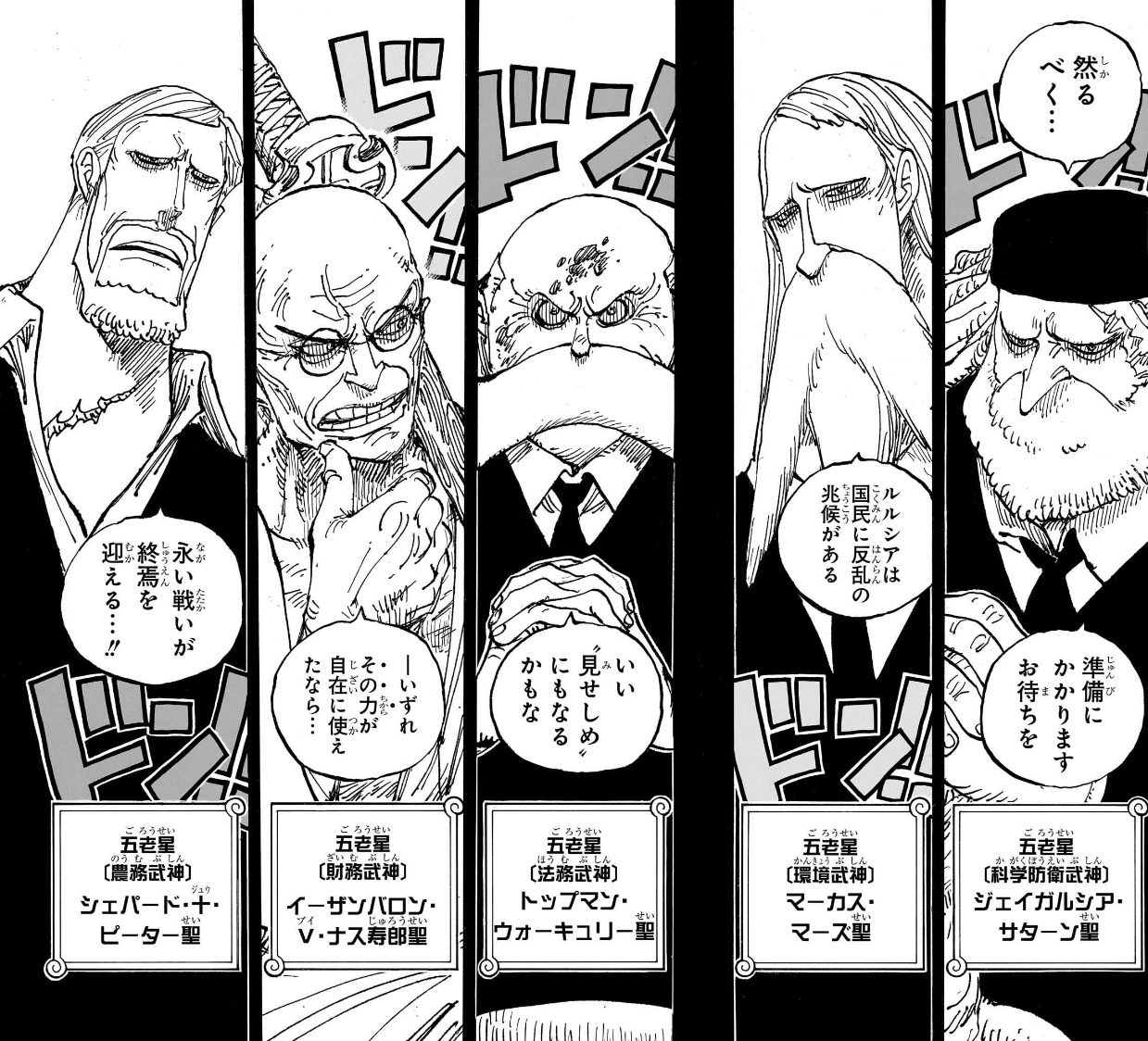
The names of the Five Elders contain planets of the solar system: Jupiter (木星), Mars (火星), Saturn (土星), Venus (金星), and Mercury (水星) — corresponding to the Five Elements of Wood (木), Fire (火), Earth (土), Metal (金), and Water (水).
- Jupiter → “Agriculture War God” Shepherd Ju Peter
- Mars → “Environment War God” Marcus Mars
- Saturn → “Science Defense War God” Jay Garcia Saturn
- Venus → “Finance War God” Ethanbaron V. Nasujuro
- Mercury → “Law War God” Topman Warcury
The Five Elements in Taoism
In Chinese Taoist cosmology, the Five Phases (Wuxing) — Wood, Fire, Earth, Metal, and Water — are believed to produce and overcome one another in cyclical relationships. These form the basis of Onmyodo, Japan’s esoteric cosmological system.
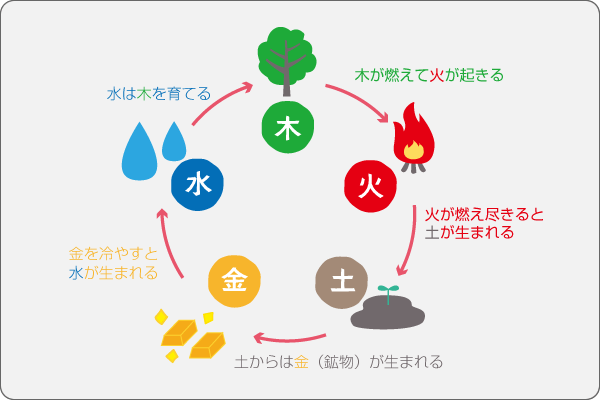
Mutual Generation (Sojo)
A yang (positive) relationship where each element generates the next. Wood burns to create Fire → Fire leaves behind Ash, which returns to Earth → Earth contains and yields Metal → Metal’s surface collects condensation to produce Water → Water nourishes Wood.
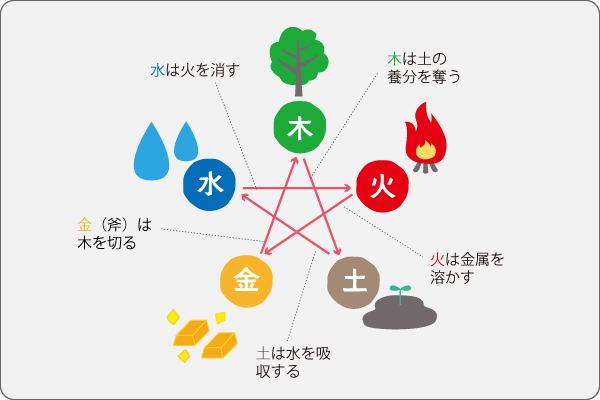
Mutual Overcoming (Sokoku)
A yin (negative) relationship where each element defeats the next. Wood’s roots penetrate and exhaust Earth → Fire melts Metal → Earth muddies and absorbs Water → Metal axes cut Wood → Water extinguishes Fire.
This Yin-Yang Five Elements cosmology — the idea that all things arise through these interactions — is the concept behind the title of Chapter 1069, “All Things Are Born from Nothing.”
As I’ve explored in another article, Luffy and Sanji’s dynamic as “two sides of the same coin” also embodies the interplay of Yin and Yang.
Furthermore, the magic circle that appears when Saint Saturn warps is a pentagram constructed from the Five Elements’ cycle of overcoming.
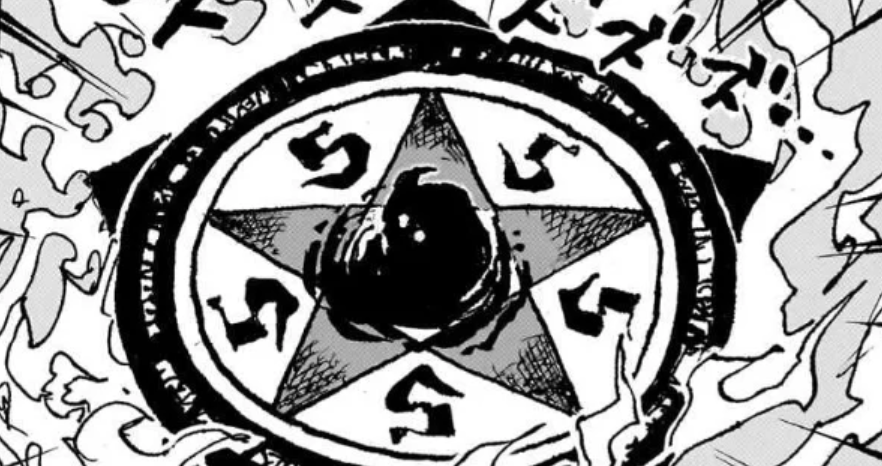
Given all this, it’s hard to deny that Oda is deeply referencing Onmyodo — the ancient Japanese esoteric tradition rooted in Taoism and Yin-Yang theory.
The Edo-Period Calendar and Clocks
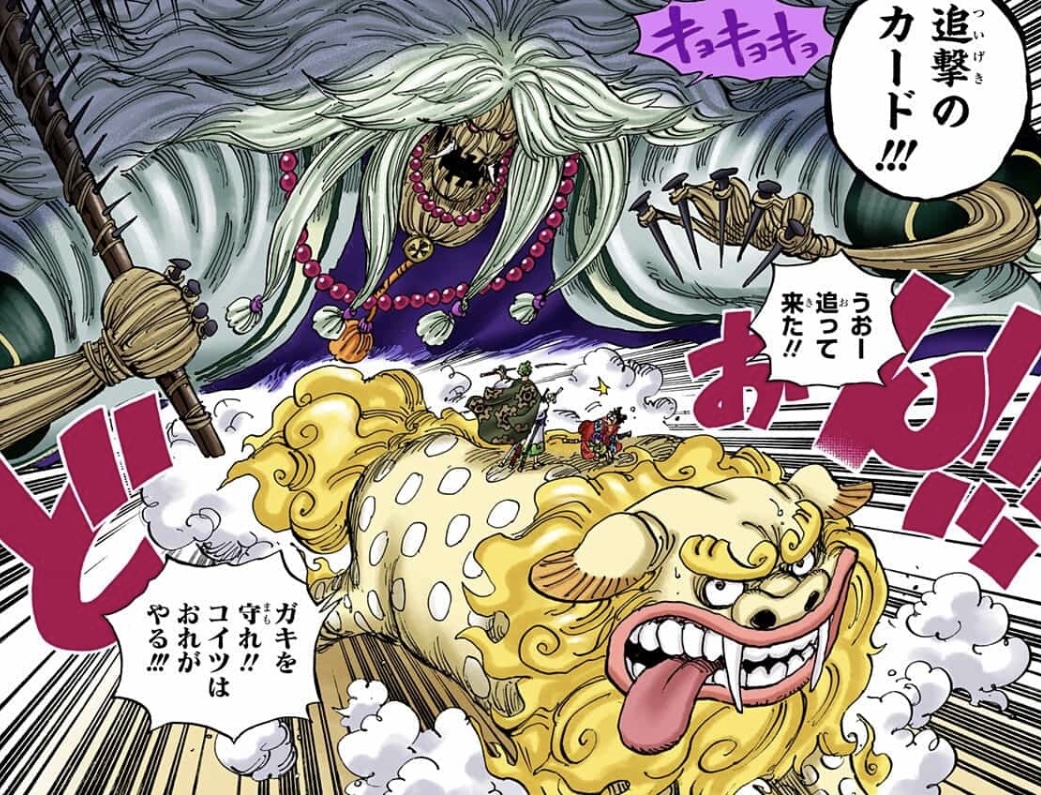
The famous voodoo straw doll curse is performed at the “hour of the ox” — 2 AM — and nails are driven into a cedar tree (a holy tree). In directional terms, the ox-tiger direction (northeast) corresponds to the “demon gate” (kimen), the most spiritually dangerous direction.
In Edo-period cosmology, 2 AM (the hour of the ox) pointing northeast toward the demon gate connects directly to Onmyodo beliefs about auspicious and inauspicious directions.
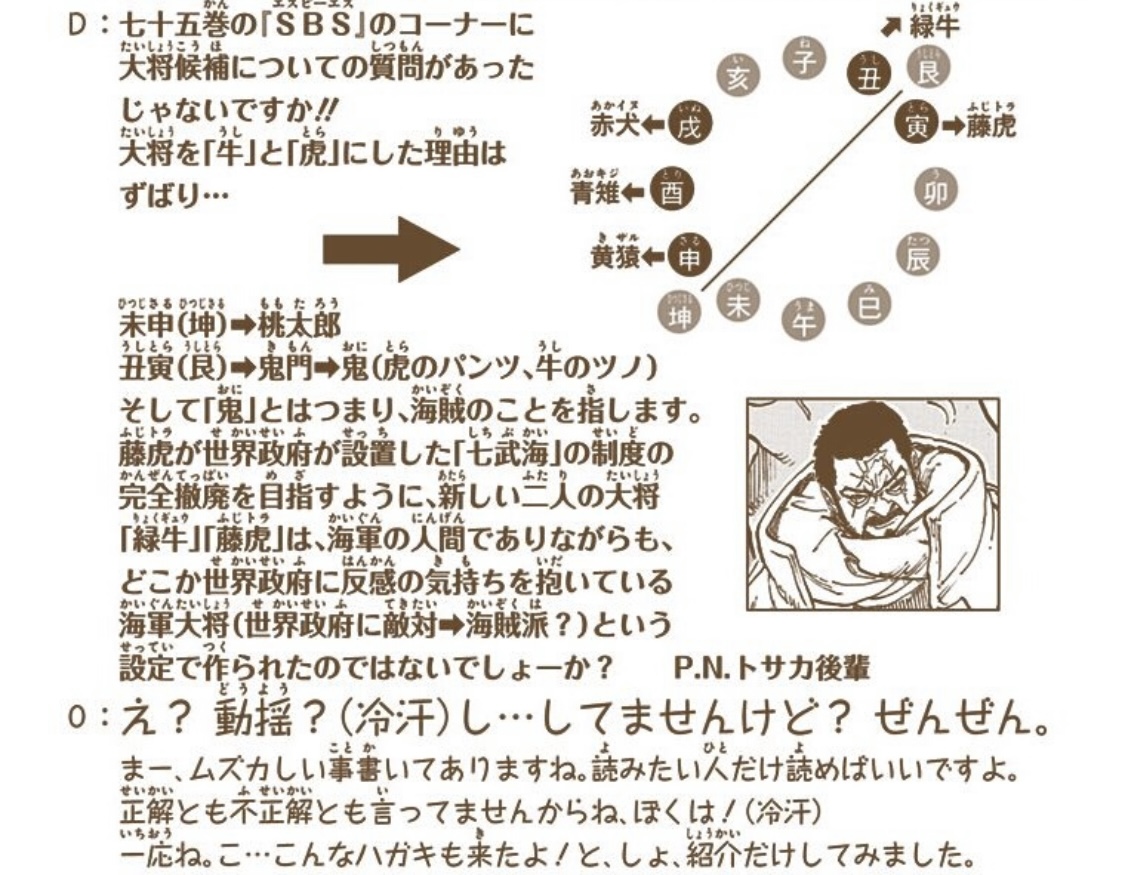
Speaking of the demon gate and its opposite: the SBS reveal about the admiral names (Kizaru, Fujitora, Aokiji) was also connected to Onmyodo’s eight directions.
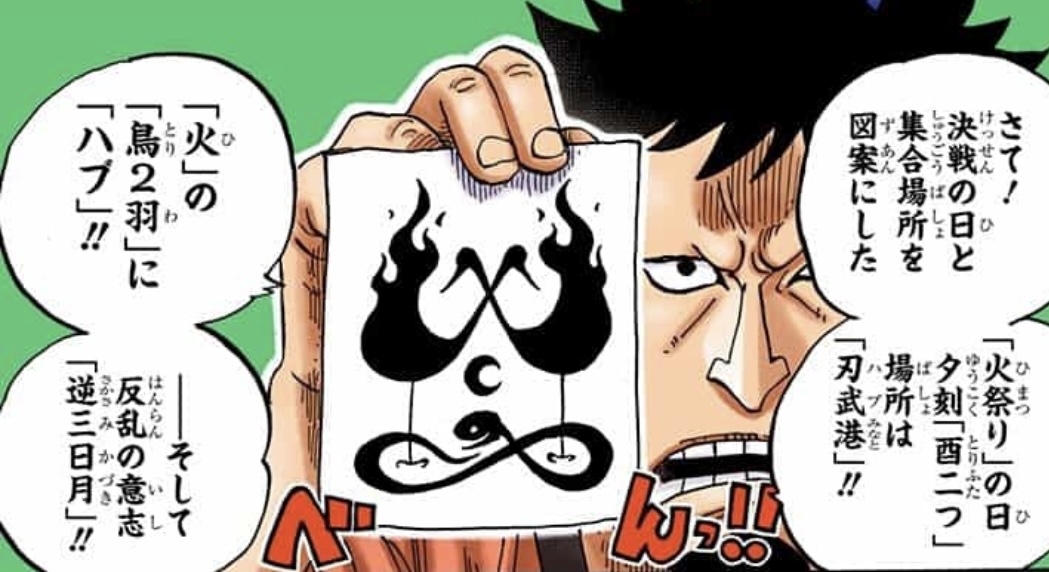
Even the timing of the decisive battle against Kaido was described in Wano’s traditional Edo-period timekeeping: “Yūkoku, Tori Futatsu” — meaning around 5:30–6:00 PM in modern time.
This is actually based on the traditional Japanese clock system of the Edo period, which divided day and night into six intervals each, with the animal zodiac marking each segment — fundamentally different from the modern 24-hour clock.
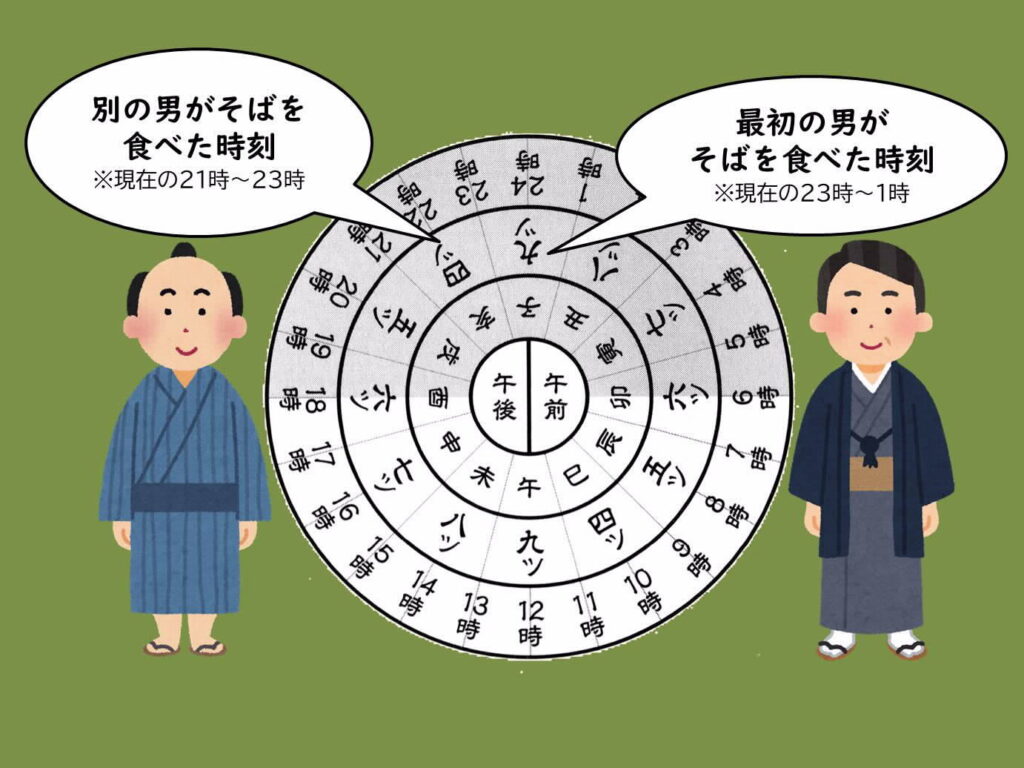
(The famous rakugo comedy skit “Toki-Soba” — about cheating on a noodle bill — only works if you understand how Edo-period clocks functioned.)
The Onmyo-ryo: Bureaucrats of Time and Space in Edo
The Edo-period calendar was a lunisolar calendar — a complex system that had to reconcile the lunar cycle with the solar year. This task, along with managing official timekeeping and astronomical observation, fell to the Onmyo-ryo, the government bureau for Onmyodo.
This was an official government agency under the shogunate’s central administration. The Onmyo-ryo’s hierarchy, from top to bottom, was:
- Onmyo-no-kami (Head of Onmyo)
- Onmyo-no-suke (Deputy Head)
- Onmyo-no-jo (Senior Official)
- Onmyo-no-taizoku (Senior Clerk)
- Onmyo-no-shozoku (Junior Clerk)
- Onmyoji (Yin-Yang Master)
- Onmyo Hakase (Onmyo Scholar)
- Tenmon Hakase (Astronomy Scholar)
- Reki Hakase (Calendar Scholar)
- Rokoku Hakase (Water Clock Scholar)
- And below, various students and apprentices
As bureaucracies do, ranks were finely subdivided. The Onmyoji was actually fairly low in this hierarchy.
As the titles reveal, the rank order from lowest to highest was: Time → Calendar → Astronomy → Onmyo (Theory).
This means that mastering the calendar and astronomical movements was seen as a prerequisite to understanding the deeper principles of Yin-Yang cosmology.
In particular, divining the auspicious and inauspicious directions of compass points was considered extremely important — even the most powerful feudal lords could refuse to travel in the direction of the “demon gate” based on an Onmyoji’s advice.
Onmyodo Was Abolished at the End of the Edo Period
Onmyodo had been an indispensable part of Japanese government for over a millennium. But with the Meiji Restoration, it was abruptly abolished — because:
“To avoid being subjugated by Western powers, Japan must rapidly adopt Western culture. That requires switching from the lunar calendar to the Gregorian calendar.”
“Therefore, the Onmyo-ryo — which managed the lunar calendar system — is no longer needed.”
This shift in national policy explains why Onmyodo, once central to Japanese civilization, was effectively erased from public consciousness almost overnight.
I believe the historical figure who drove this transformation — the key architect of the Meiji Restoration — is likely the inspiration for Five Elder Marcus Mars.
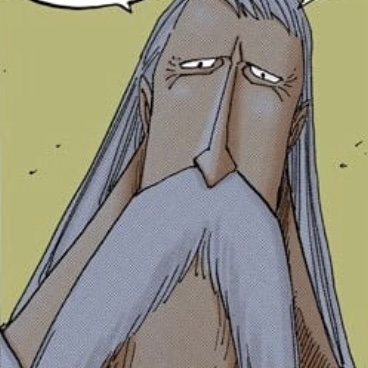
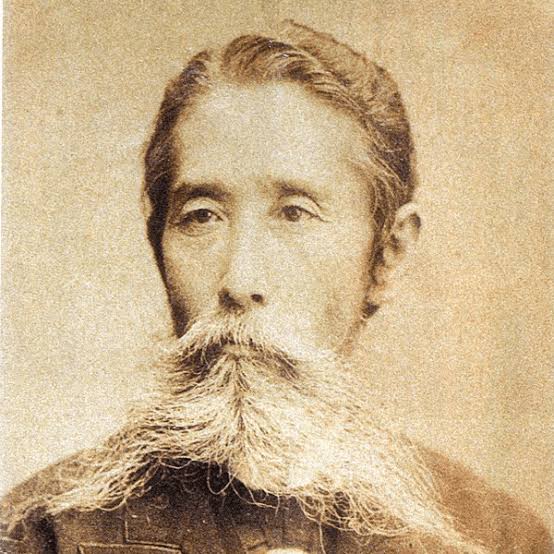
And Oden, the man who tried to open Wano’s borders, is modeled on Oda Nobunaga — another pivotal figure in Japanese history who sought to modernize by opening up to the outside world.
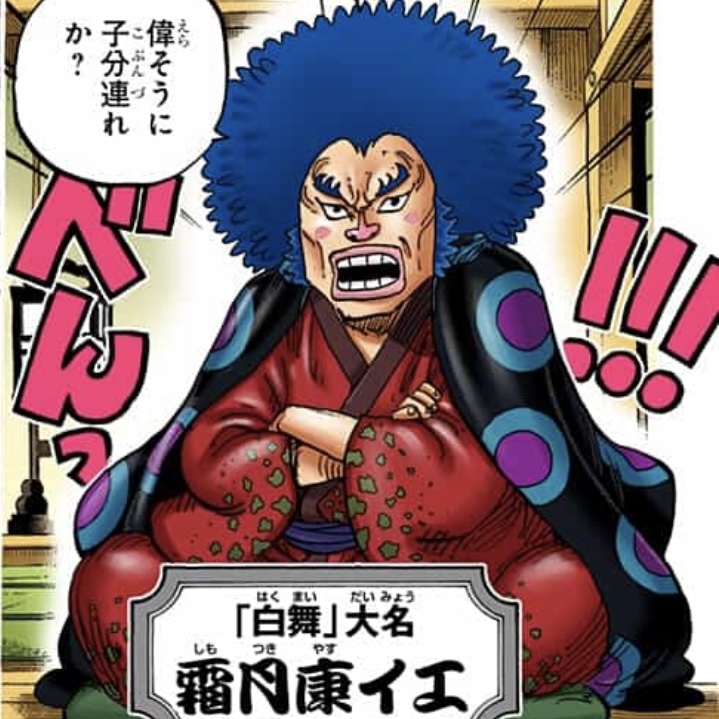
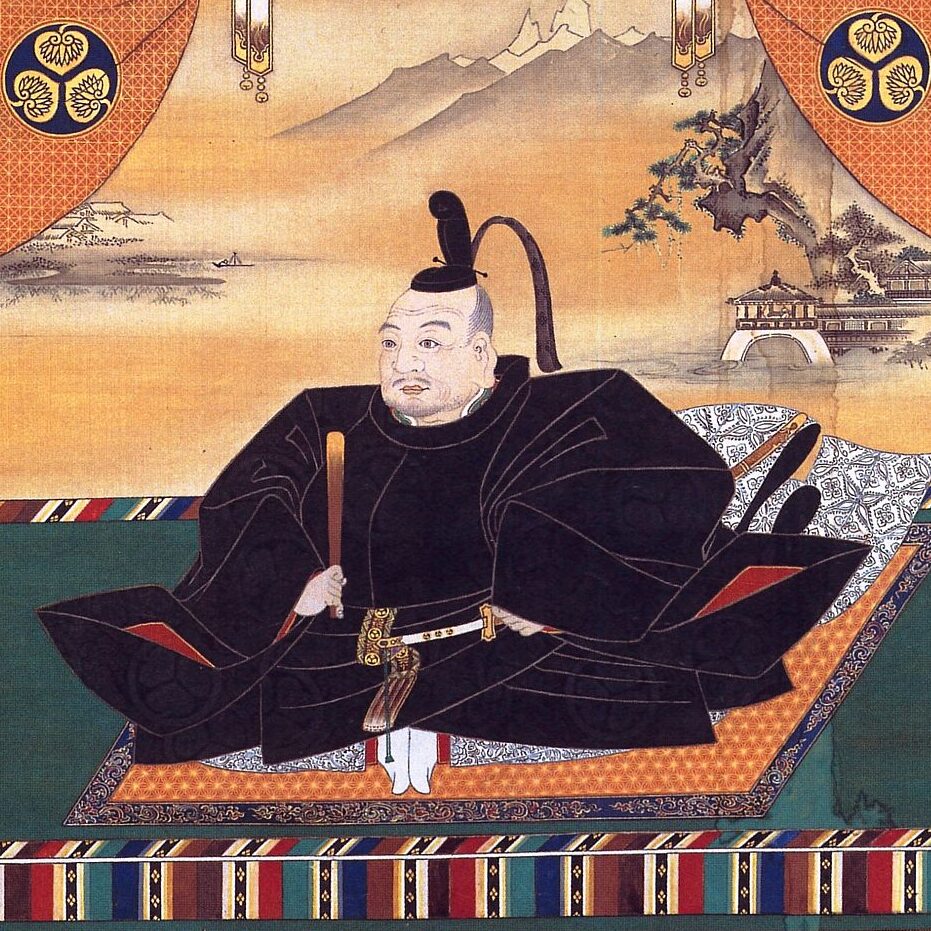
In particular, the founder of the shogunate that locked Wano’s gates, Kozuki Sukiyaki, seems to parallel Tokugawa Ieyasu, the founder of the Edo shogunate that sealed Japan from the outside world.
The Five Seasonal Festivals (Gosekku) of the Odd-Numbered Months
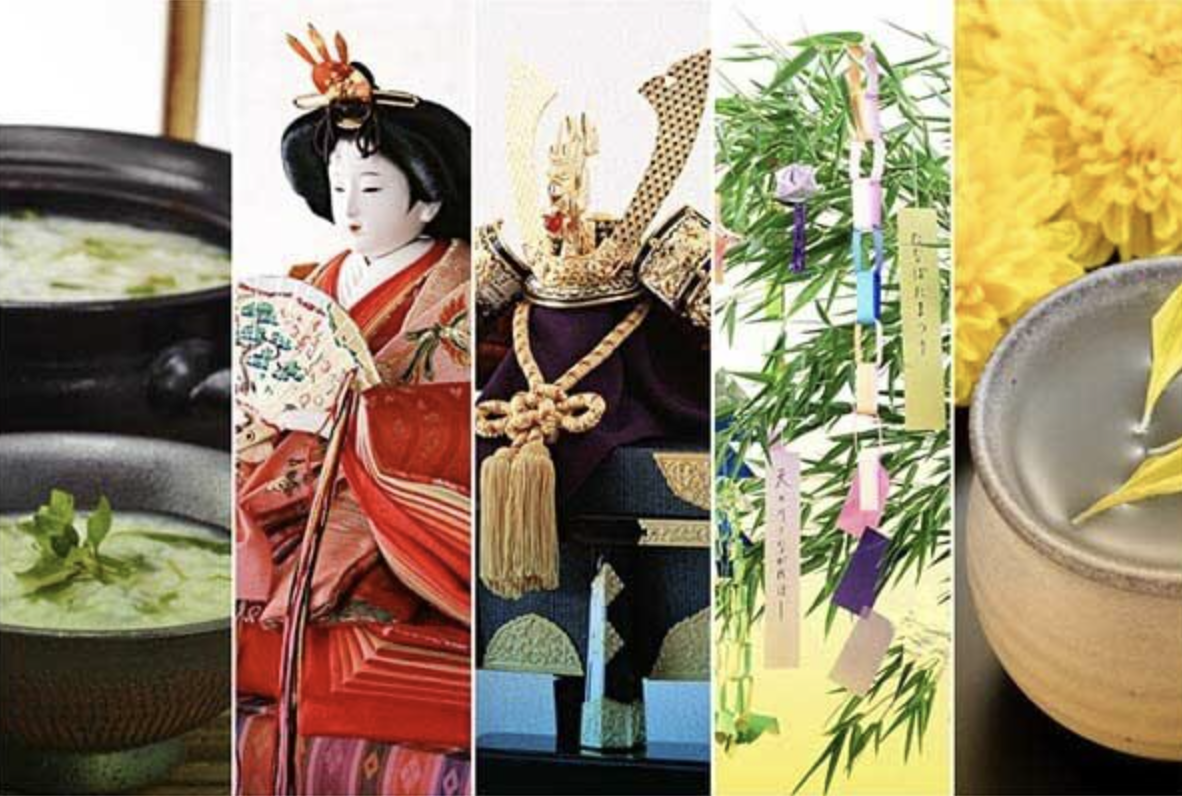
The Five Seasonal Festivals (Gosekku) — once a common tradition among ordinary people until the Edo period — were officially abolished along with the lunar calendar in the Meiji era’s calendar reform.
The Doll Festival (Hinamatsuri) on March 3rd and the Star Festival (Tanabata) on July 7th still survive in modern Japan, though often shortened. But originally all five had fixed rituals:
- January 7: Jinjitsu (Human Day) Festival
- March 3: Joshi (Upper Snake Day) Festival
- May 5: Tango (Dragon Boat) Festival
- July 7: Shichiseki (Seven Evening) Festival — known popularly as Tanabata
- September 9: Choyo (Double Yang) Festival — Chrysanthemum Festival
Each had specific foods to eat and customs to perform. Note that Zoro’s birthday is November 11th — 11/11 — which has a peculiarly “all-odd-numbers” symmetry reminiscent of the Gosekku tradition.
The origin of the seasonal festivals lies in Onmyodo’s ancestral tradition. They were among the most important civic events of the Edo period.
But then: why has Onmyodo’s influence been so thoroughly erased from modern culture? And why does Oda-sensei keep weaving its references so persistently into One Piece?
That’s all for this week. See you next time.