The Color Page: Crane Game
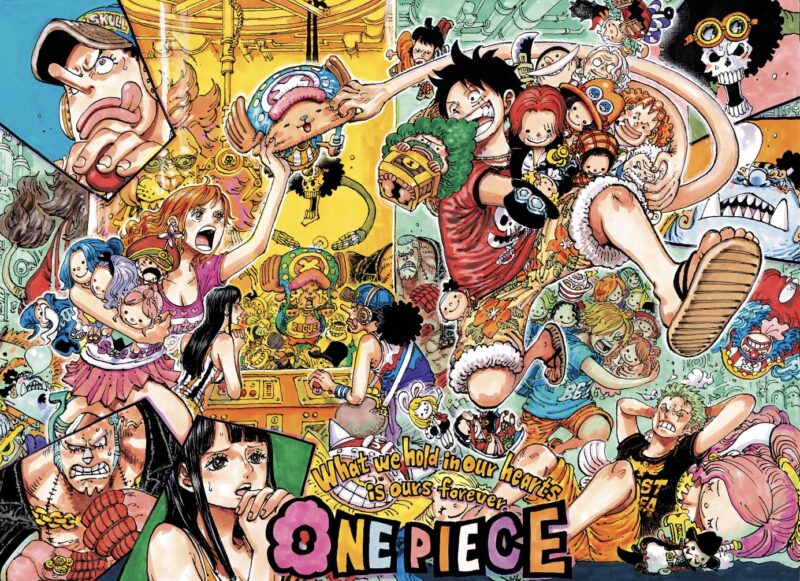
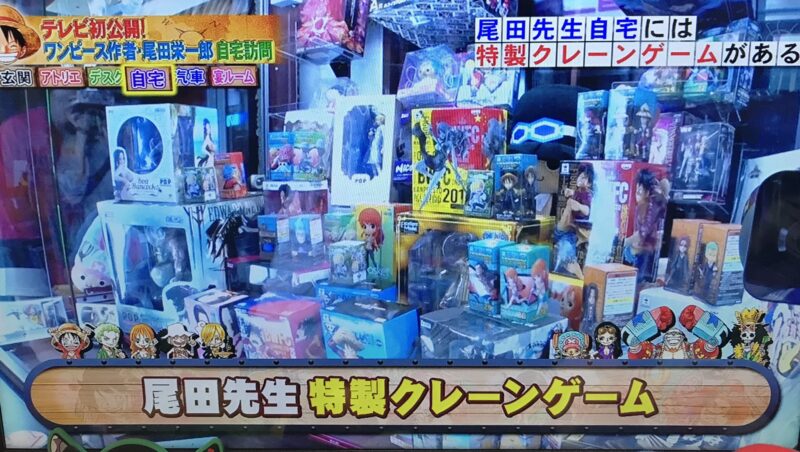
The color spread features the crew playing a crane game filled with chibi plushies — those cute, big-eyed, round-nosed map pin icons that One Piece uses for character location. Roger and Rocks have been added to the series this time around. (Rocks is adorable, by the way.) These would be an instant hit as real merchandise — and given that Oda is a massive arcade fan who reportedly owns a crane game machine at home, a real release might not be too far off.
Eris, Goddess of Discord
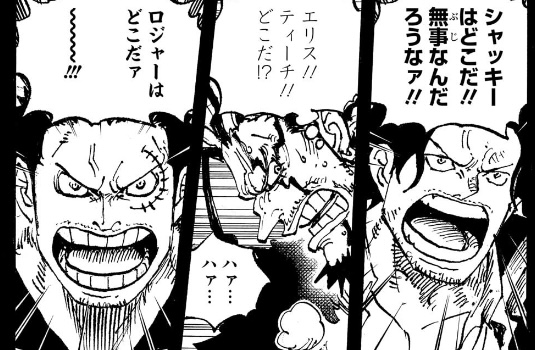
Rocks’s wife — and Teach’s mother — has been revealed. Her name is Eris. This is the same name as Eris, the goddess of strife and discord in Greek mythology. Eris was the one who ignited the Trojan War — one of the greatest conflicts in myth. In brief:
- Eris throws a golden apple inscribed “For the Most Beautiful” among the goddesses
- Three goddesses — Hera, Athena, and Aphrodite — quarrel over who deserves it
- They ask the mortal prince Paris to judge
- Each goddess offers Paris a bribe
- Paris chooses Aphrodite, who promised him the most beautiful mortal woman
- He abducts Helen, wife of the Spartan king, as his prize
- Greece and Troy go to war to reclaim Helen
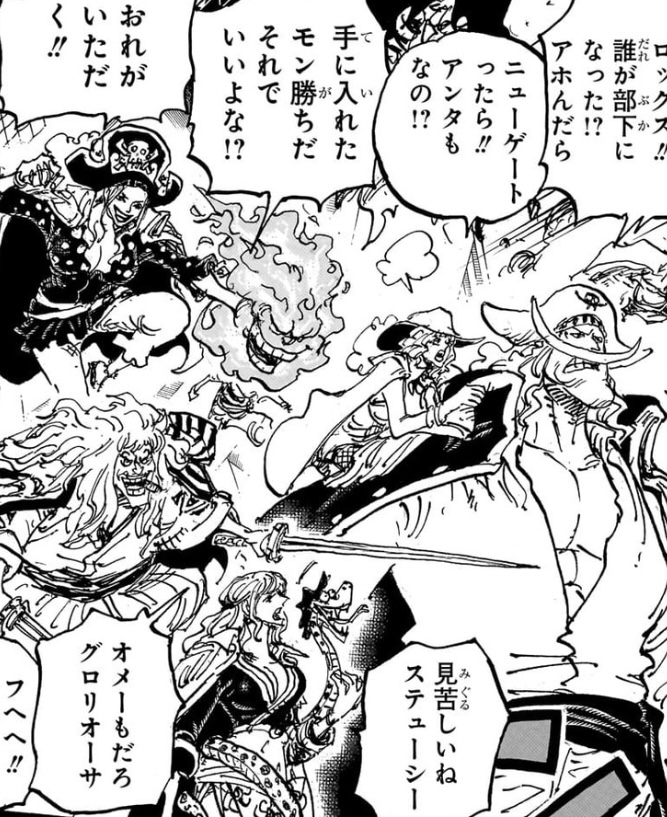
This maps almost perfectly onto the God Valley Incident: three powerful women (Big Mom, Gloriosa, Stussy) arguing over who comes out on top; the abducted beauty (Shakky); and the coalition of enraged men going after the kidnappers. It’s the Trojan War reframed as One Piece.
Satchelz Muffy Palace
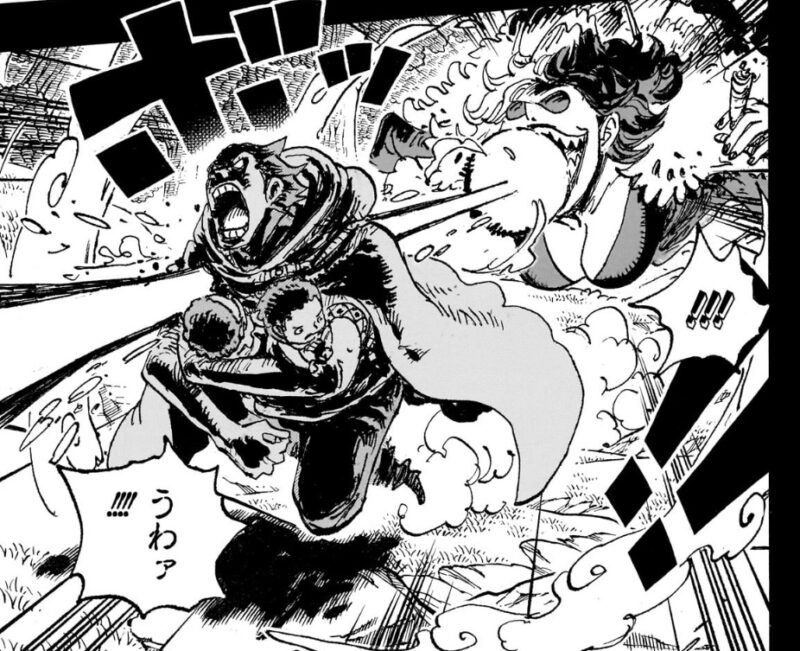
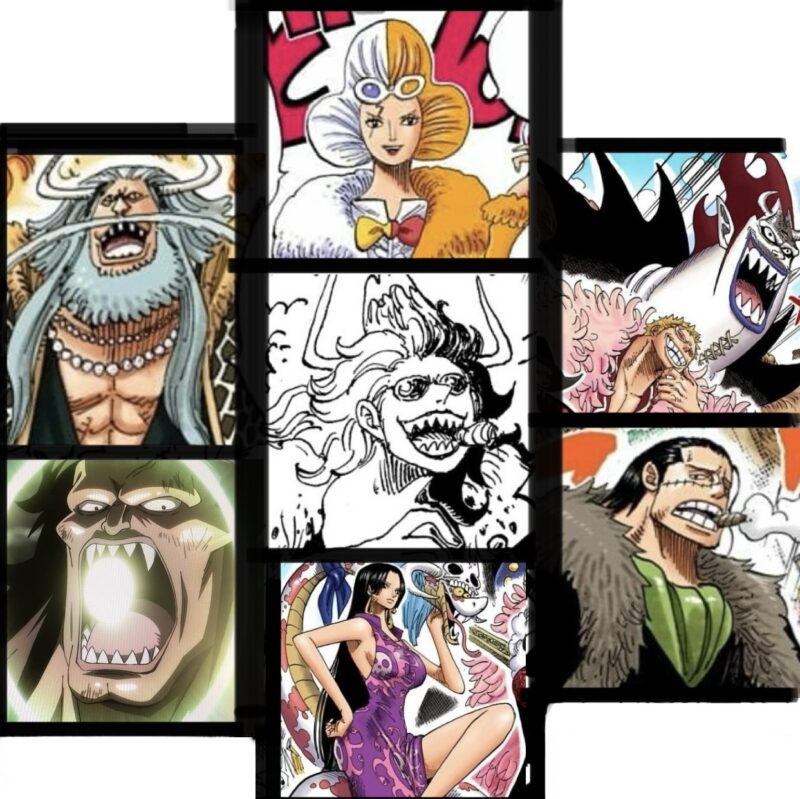
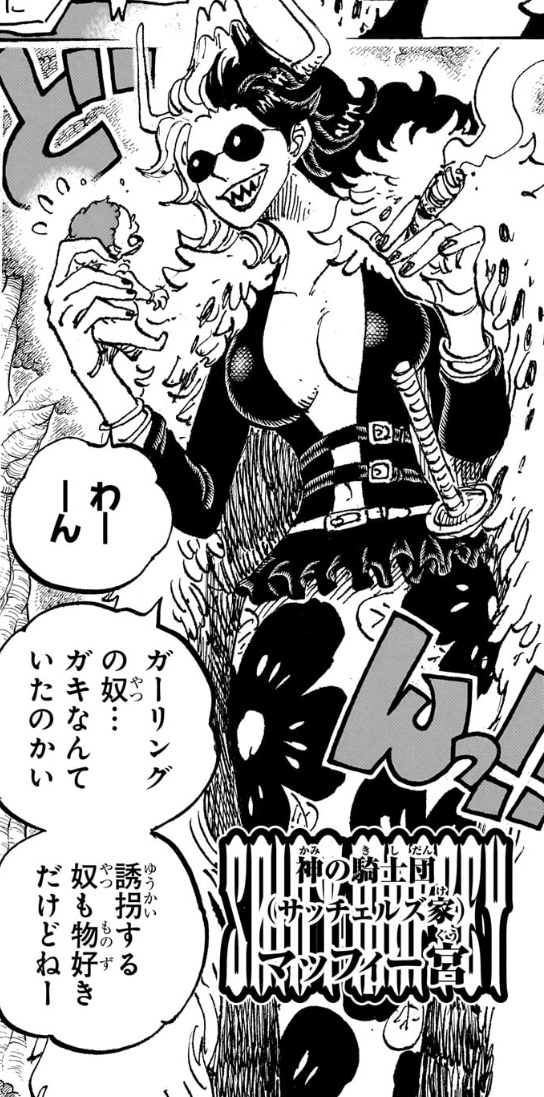
Muffy’s character design is a mashup of Marineford’s greatest hits: two-toned lightning-bolt hair like Inazuma, a fur coat and sunglasses like Doflamingo, a snake-patterned body like Hancock, fangs like Moria, a cigar like Crocodile, and horns like Pizarro. On top of that, she can fire a beam from her mouth — the same technique as Howling Gab of the Red Hair Pirates in FILM RED. Combining elements from the Seven Warlords, the Revolutionary Army, the Blackbeard Pirates, and the Red Hair Pirates, Muffy is essentially a living greatest-hits compilation of Marineford.
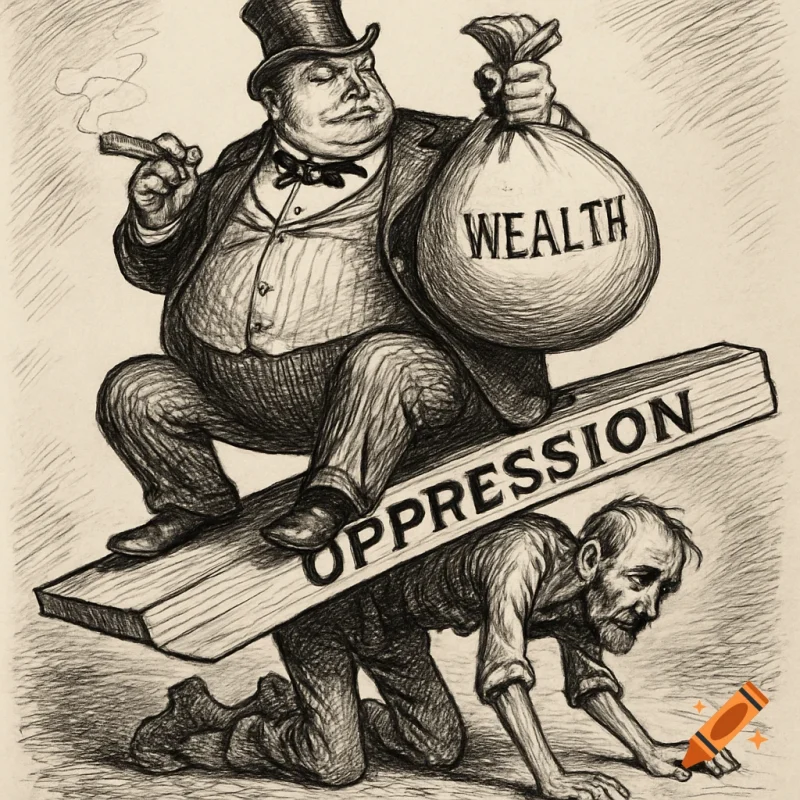
“Satchel” traces back to the Latin saccellus (small pouch), which evolved into “small bag” → “purse” → “money bag.” By the 19th century in America, the phrase satchel full of money appeared regularly in political cartoons as a symbol of bribery and corruption, and “satchel” became slang for a politician who takes bribes. “Muffy,” meanwhile, is English for a fur hand-warmer — and by extension, a symbol of luxury, fur coats, and aristocratic taste, commonly given to spoiled rich-girl characters. In short: the Satchelz family = a lineage of corrupt politicians; Muffy = a rotten, pampered princess. Any overseas manga reader would clock these names instantly.
Celestial Dragons vs the D Clan: Modeled on the Heike and Genji?
When Oda crafts a layered title, it often draws from Japanese classical literature — the Man’yōshū, the Kokinshū, and so on. Chapter 1161’s title, “A Love Poem Woven Through a Rain of Arrows,” feels like a blend of the Heike Monogatari (“rain of arrows”) and the Genji Monogatari (“love poem”) — two works that couldn’t be more different in tone. The young Shakky being described as “the sea idol” also feels like a nod to Hikaru Genji.
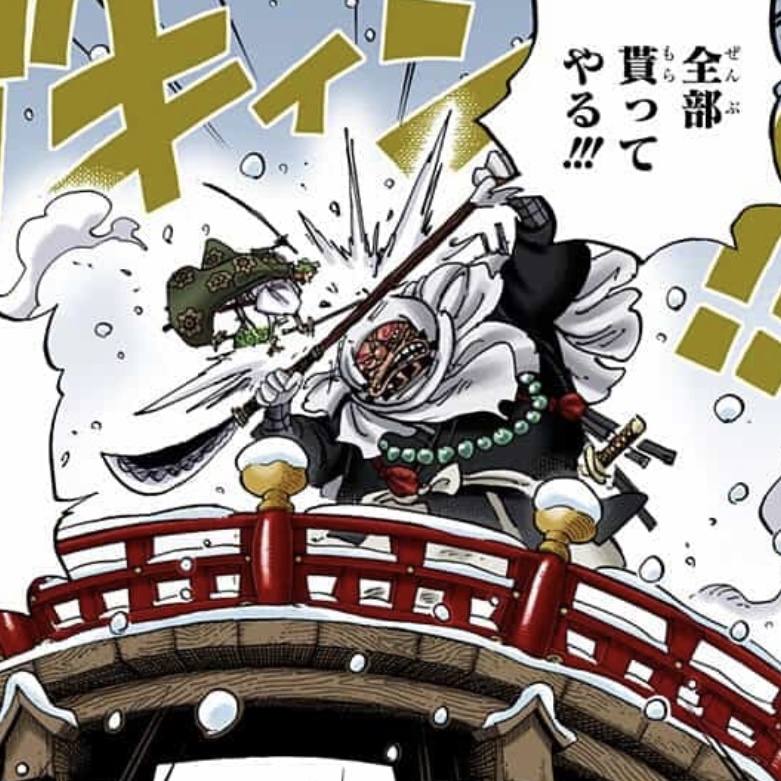
The D clan’s model likely includes the Genji as one of its elements — nearly wiped out by the Heike but ultimately returning to defeat them. The battle between the Genji and Heike was literally Red Army vs. White Army (the origin of Japan’s “red and white” tradition in competitions). The Heike represent the ruling class — “those outside the Heike are not human” — which maps onto the Celestial Dragons and how they treat common people. Shanks and Shamrock are red-haired. The Genji were the ones erased from history who came back — just like the D clan. And when Luffy becomes Nika, his hair turns white. In other words: Shanks (Celestial Dragon representative) vs. Nika (D clan representative)?
The Cover Page’s “Will Not to Inherit”
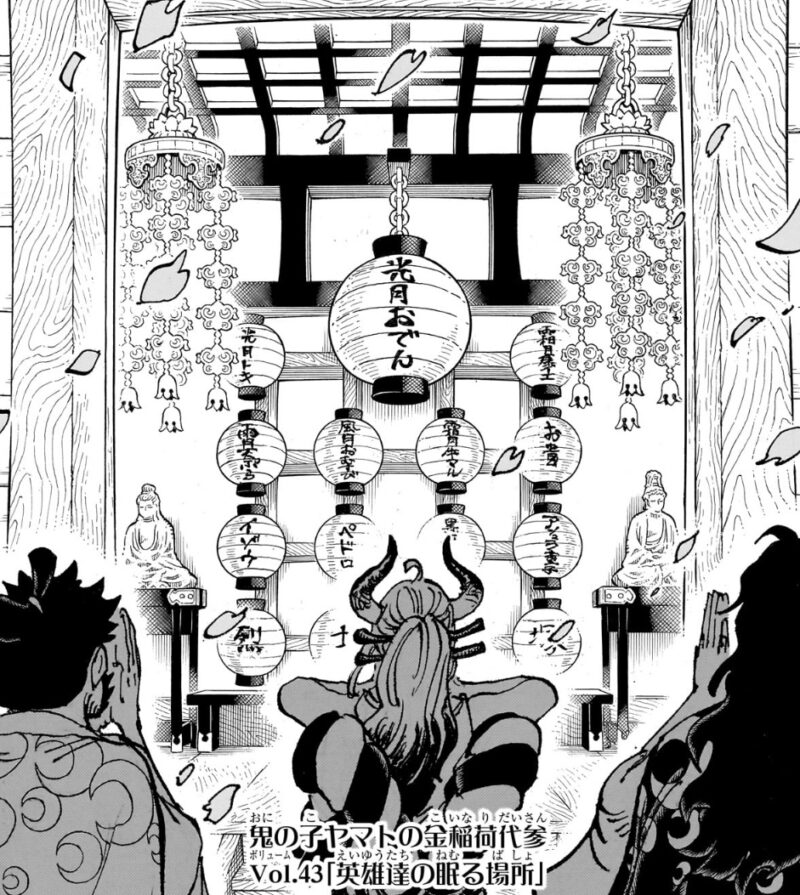
Yamato’s Cover Page Series Vol. 43: “The Resting Place of Heroes.” Next to Pedro — there’s the character for “Kuro” (black)! That’s Kanjuro. It seems Kinemon and the others chose to forgive Kanjuro’s betrayal and enshrine him as a fallen hero — one of Oden’s retainers who gave his life in the fight to save Wano. The composition likely references the Skypiea scene where Roger’s name was carved among the fallen, because the meaning of an engraved name is everything.
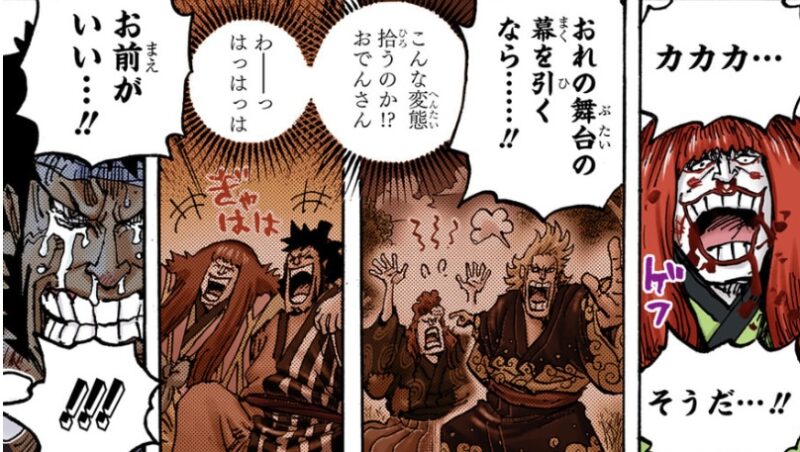
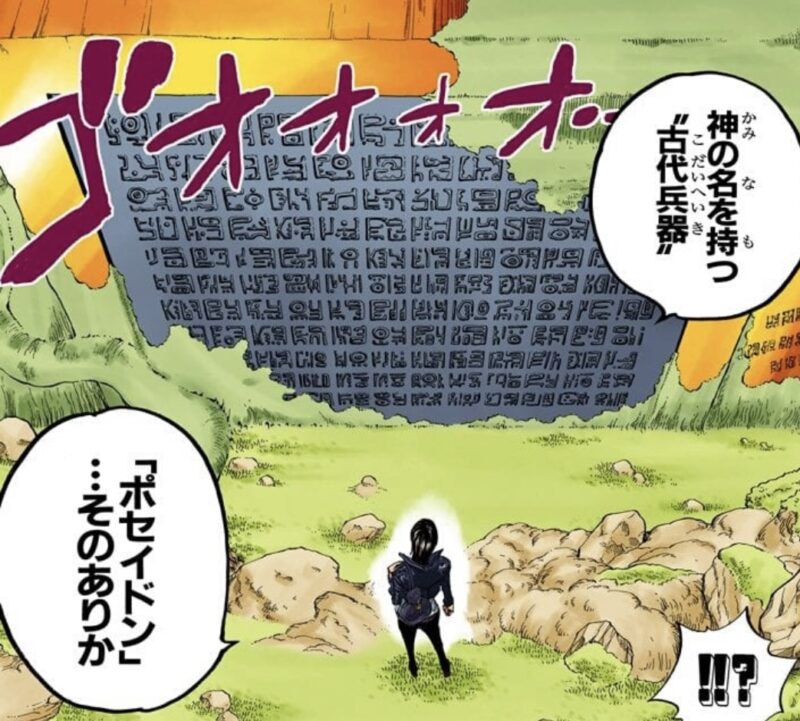
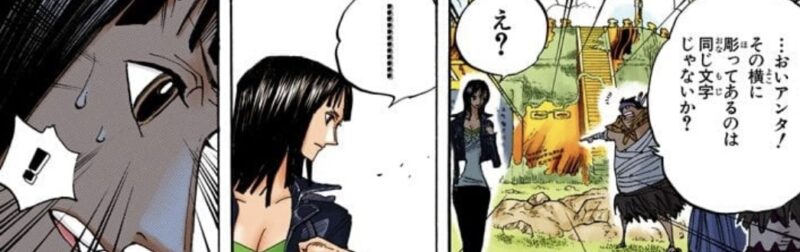
The Will Not to Inherit
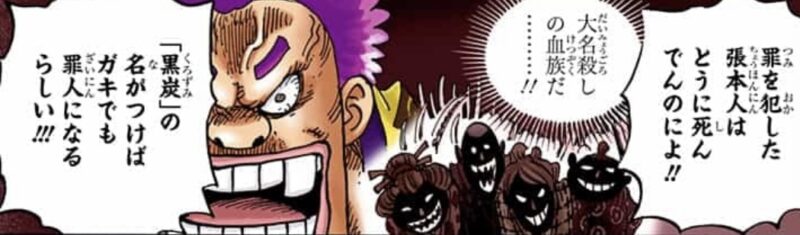
Kanjuro is forgiven and enshrined, and Kurozumi’s sins are behind them. But what drove Orochi to turn Wano into hell was vengeance against those who had persecuted him. The Kurozumi family had served as one of the daimyo families under the Shogun, but when the Kozuki line had no heir, one of the daimyo families was in line to become Shogun. Orochi’s ancestor killed many rivals to seize that chance — and as a result, even having the Kurozumi name was enough to bring horrific persecution, even to children. The men who actually committed those murders had long since been punished. Was it truly necessary to persecute a child simply for sharing their blood?
In SBS, Oda spoke directly about this:
Reader: You can make out the characters for “Kurozumi” on Otama’s parents’ grave… Otama shares her birth clan with Orochi, who walked the path of revenge — but could she be depicted as a child who chooses a different path in the new Wano, like Koala in contrast to Hody? A hope for the future?
Oda: Oh — you caught that! Let me be clear: Otama’s full name is Kurozumi Tama. So does that mean she deserves resentment? In the final scene, Hiyori said clearly: “The Kurozumi who burns and becomes ash.” Does Otama fall into that? No — anyone who followed her story knows Hiyori meant only Orochi. What would people’s reaction be if they learned Otama was of the Kurozumi bloodline? Think about it. This is a major social issue — in fiction and in the real world.
And this problem doesn’t stop with families who committed crimes — it applies just as much to those born into privilege. Why is this girl considered superior simply because of the family she was born into? Genji and Heike. Kurozumi and Kozuki. Celestial Dragons and the D clan. These threads run deeper than they appear — and One Piece keeps pulling on them.
Related Reading
- ← Chapter 1160: The Babett Family Is Modeled on Queen Elizabeth — Dragon and
- → Chapter 1162: Rocks and Eris — Sabaody Homage and Teach’s Bloodline
- Browse all Chapter Analysis (Ch. 1127–1186) →