Imu uses a technique called "Omen" to resurrect the 19 Legendary Weapons of the Kings once embedded in the Empty Throne.
These 19 weapons were the power that ruled the world 800 years ago — weapons used to create the world itself. They are truly legendary weapons.
This article analyzes the name origins and mythological models for each weapon, and will be updated as all 19 weapons are revealed.
Nemesis (天罰剣 · Sword of Divine Punishment)
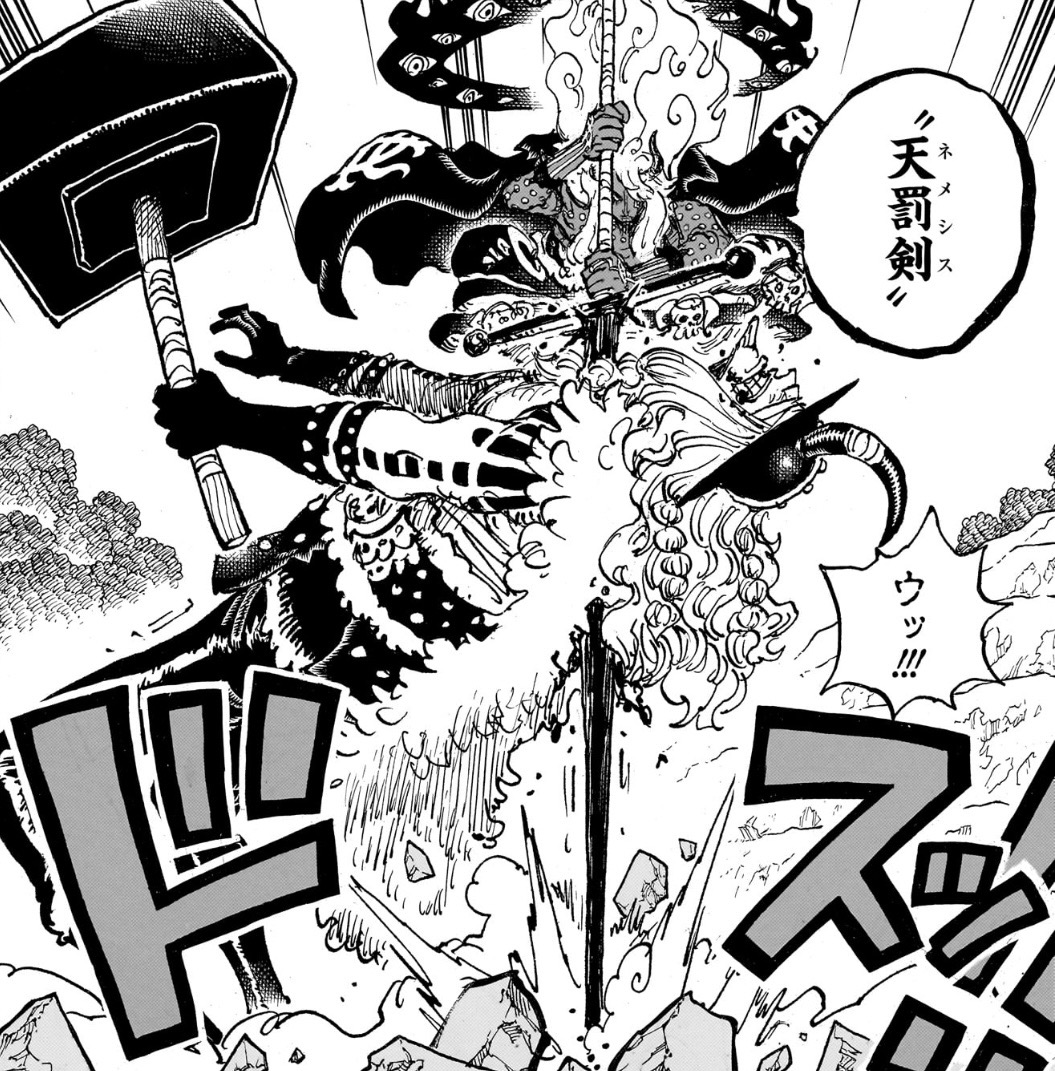
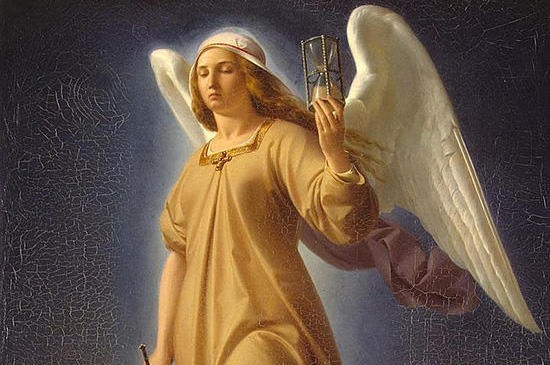
Nemesis is a goddess from Greek mythology — the personification of divine wrath and retribution against those who show hubris or disrespect toward the gods.
The punishment of the gods for human arrogance… the name Nemesis fits the "Sword of Divine Punishment" perfectly.
Gram (憤怒剣 · Sword of Wrath)
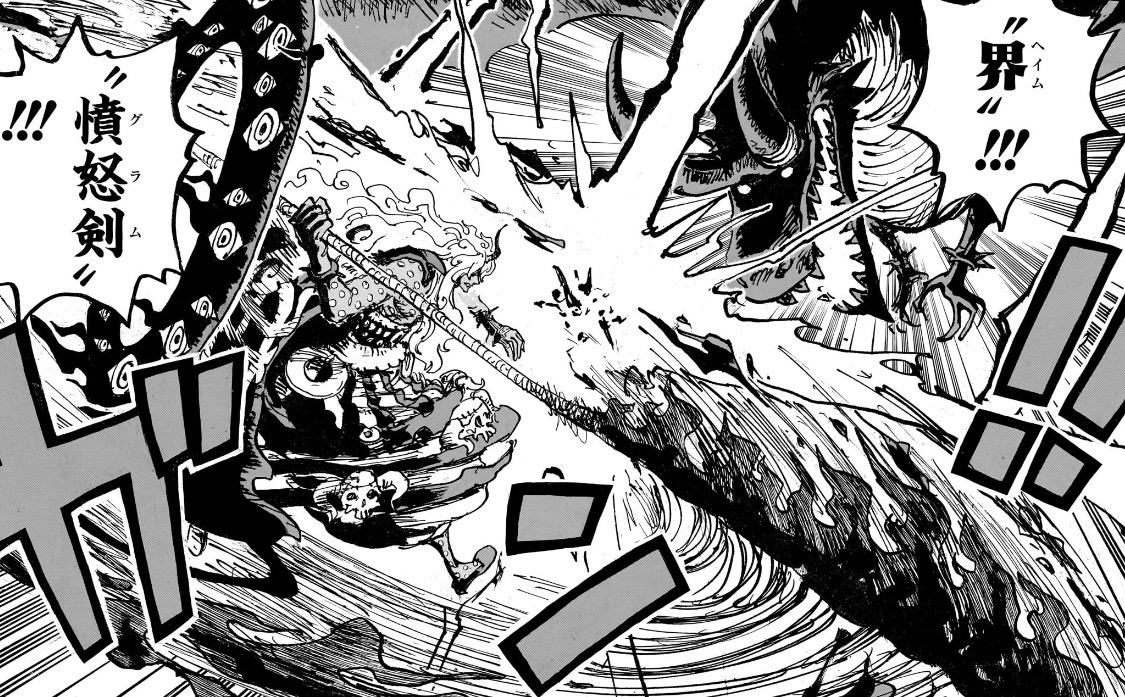
Gram is a legendary sword from Norse mythology. Its name comes from Old Norse, meaning "wrath" or "anger."
At a wedding banquet, Odin appeared and drove a sword into an apple tree, declaring that whoever pulled it out would receive it. Many tried and failed — until Sigmund finally drew it and claimed it as his own.
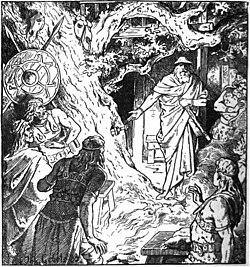
Blessed by Odin, Sigmund became an undefeated hero in battle. The sword was later passed to his son Sigurd, who used it to slay a dragon.
The perfect weapon for fighting Loki, who takes the form of a dragon.
Stigma (怨魔剣 · Sword of Cursed Marks)
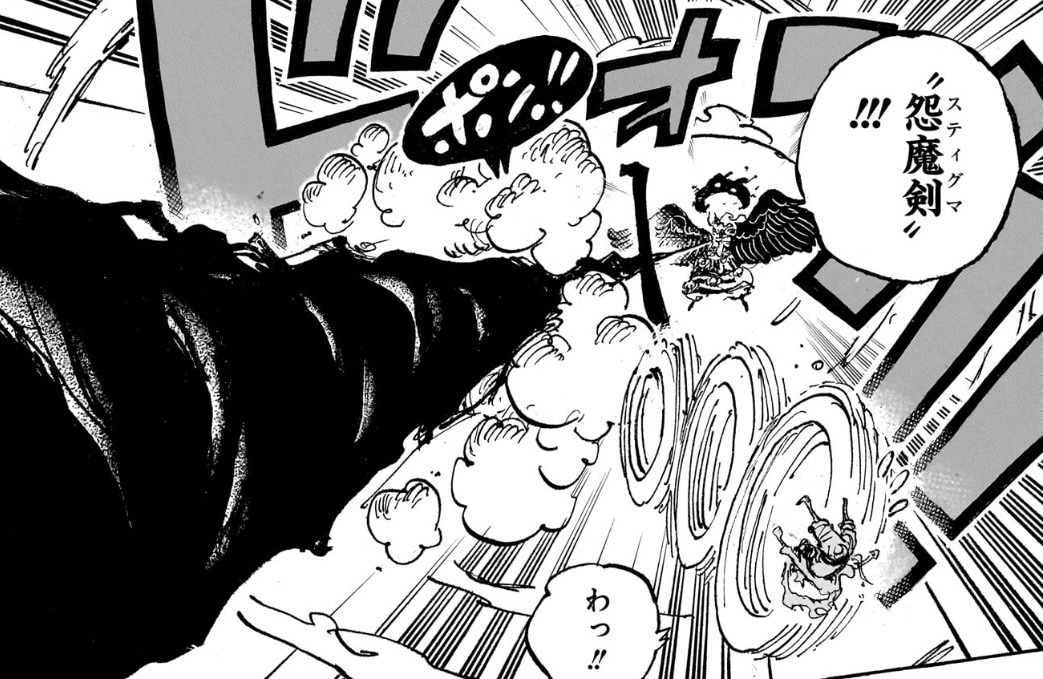
Stigma comes from ancient Greek, originally meaning a brand or mark burned into the skin of slaves or criminals.
In a Christian context, it refers to marks identical to Christ’s crucifixion wounds appearing on the body of a saint — known as the stigmata.
Imu’s Stigma first marks an enemy with Omen flames, then strikes that exact spot with a guaranteed hit — though Nika managed to dodge it.
Bōhū (虚無剣 · Sword of Void)
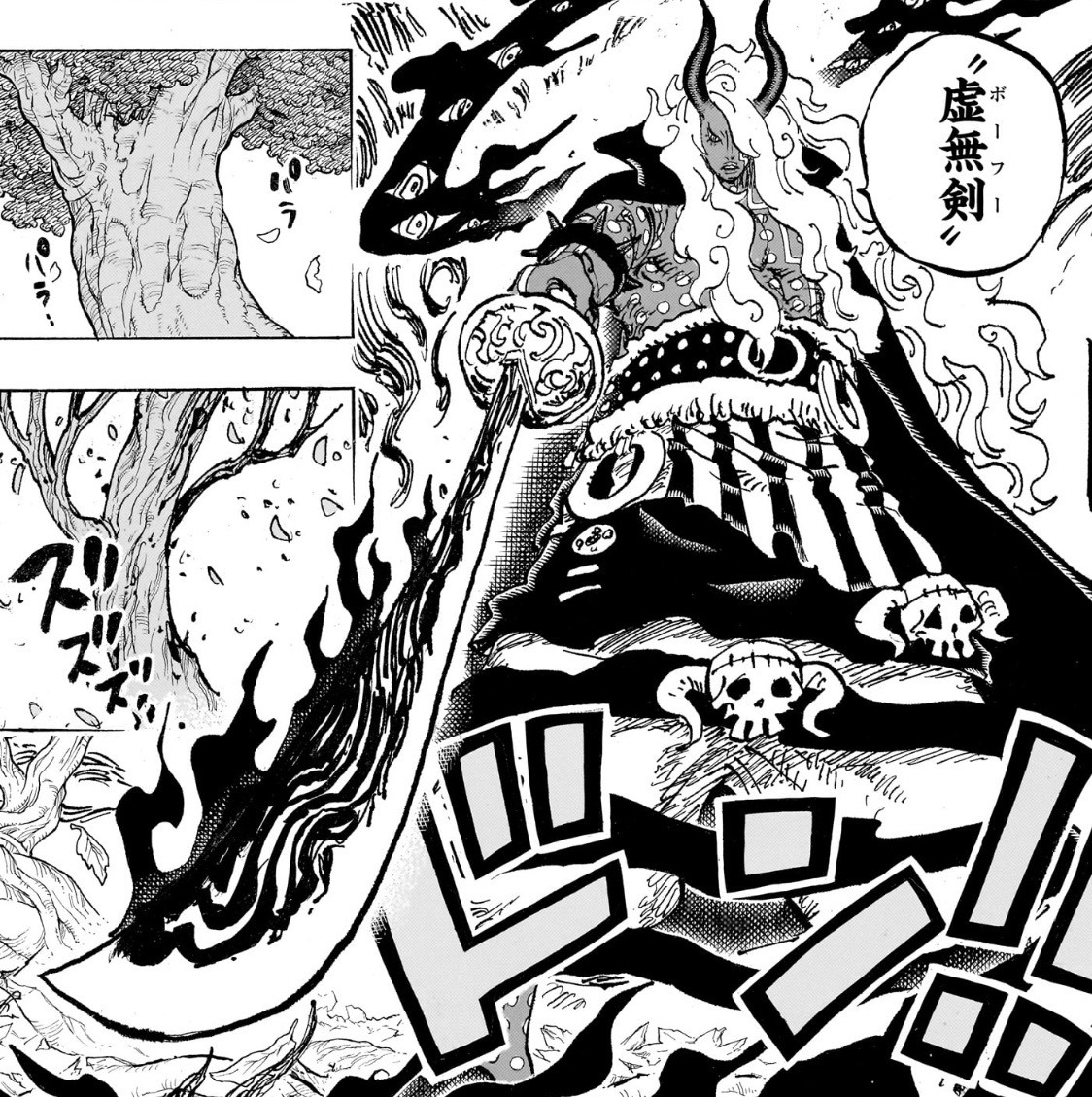
Bōhū derives from the Hebrew Tohu wa-Bohu (תֹהוּ וָבֹהוּ), found in Genesis 1:2 of the Hebrew Bible.
Genesis describes the creation of the world from nothing, opening with the state before creation:
“The earth was without form and void, and darkness was over the face of the deep.”
Then God said “Let there be light” — and the world began to take shape.
The Bible really does open with scenes nobody could have been there to witness…
Fragarach (海神剣 · Sword of the Sea God)
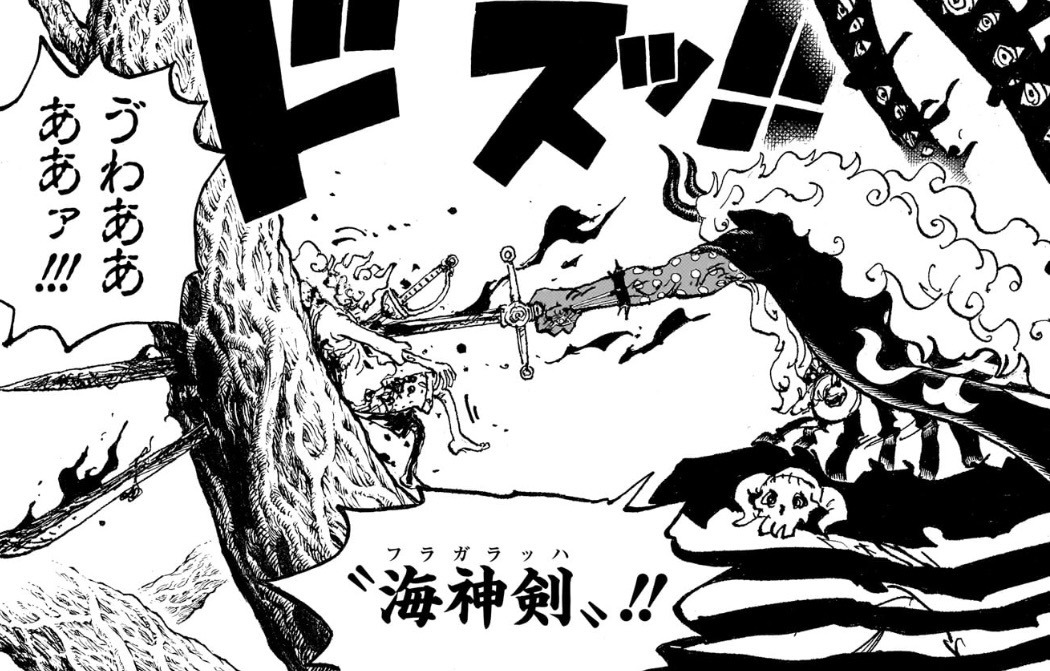
Fragarach is a magical sword from Celtic mythology (Irish mythology). Its name in Gaelic means “The Answerer” or “The Retaliator.”

It originally belonged to the sea god Manannán mac Lir, and was later granted to the god of light, Lugh Lámhfhada.
Anyone who has its point held at their throat cannot lie and must speak only the truth.
When wielding this sword, Imu asks Luffy: “How many blows before you die?”
What truth will Luffy’s answer reveal?
Axe of Xing Tian (刑天の斧)
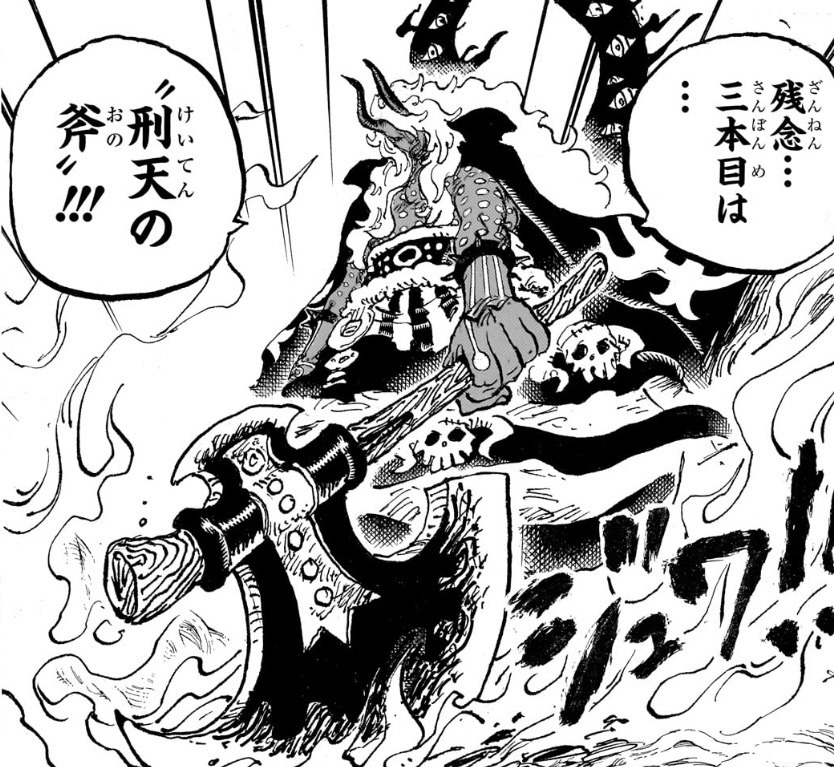
Xing Tian (刑天) is a giant deity from the ancient Chinese myth collection Classic of Mountains and Seas.
A vassal of the Yan Emperor, Xing Tian fought the Yellow Emperor for the seat of the gods. Even after being decapitated in defeat, he refused to yield — turning his nipples into eyes and his navel into a mouth, continuing to dance defiantly with his shield and axe.
There’s a bitter irony in using the axe of a warrior who never surrendered even without his head to say “I’ll cut yours off.”

Longinus
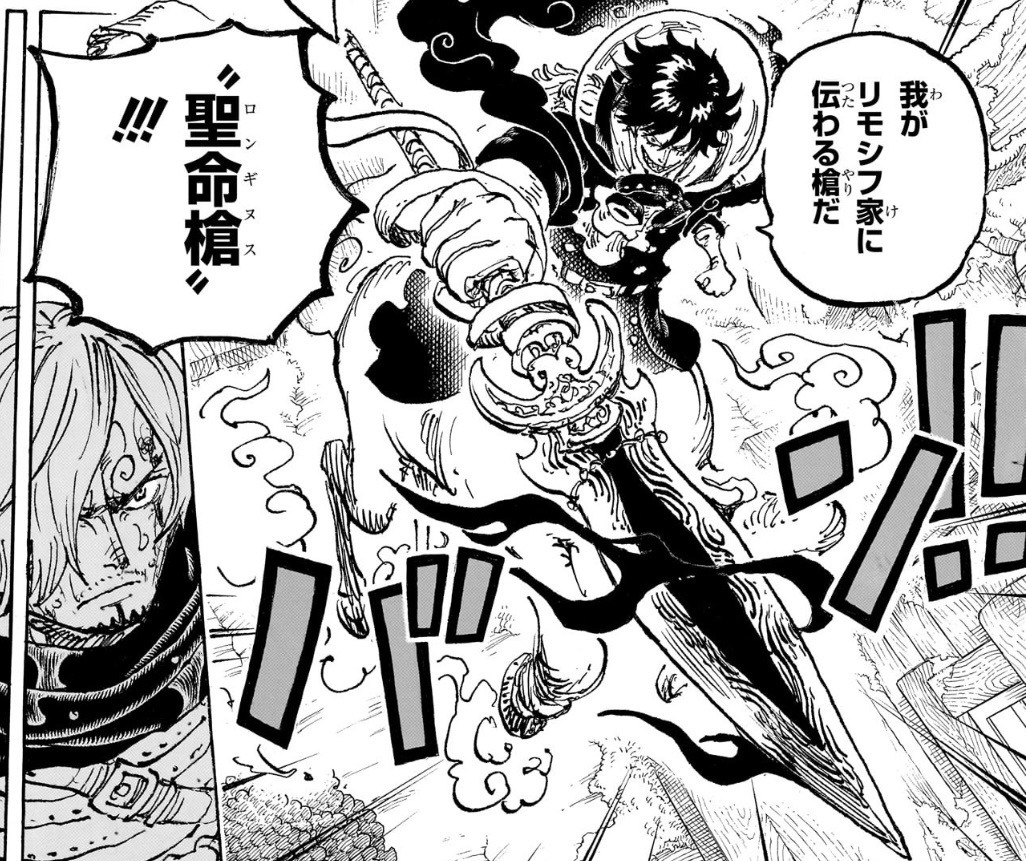
Longinus is the name given to the Roman soldier in the Gospel of John who pierced Christ’s side with a spear as he hung on the cross.
Longinus had poor eyesight, but when Christ’s blood splashed onto his eyes, his sight was miraculously restored. He converted on the spot and was later venerated as “Saint Longinus.”
The Spear of Longinus, having directly touched Christ’s “blood and water,” is revered as a holy relic and appears as a legendary weapon in countless works of fiction.
Muramasa (村正 · The Cursed Blade)

Muramasa refers to a lineage of swordsmiths active in Kuwana, Ise Province (present-day Mie Prefecture) from the Muromachi through early Edo period, and the blades they produced.
Prized for exceptional sharpness and widely used among samurai of Mikawa Province, these blades came to be feared as “cursed swords” (妖刀) after appearing at the scenes of multiple misfortunes connected to the Tokugawa clan.
Honekui Tōshirō (骨喰藤四郎 · The Bone-Eater)
Honekui Tōshirō passed through the hands of Minamoto no Yoritomo, the Ashikaga shogunate, and Ōtomo Sōrin before entering the possession of Toyotomi Hideyoshi — and later the Tokugawa clan. It is a blade synonymous with supreme power.
The name “Honekui” (骨喰 · Bone-Eater) is said to originate from:
- A casual swing was enough to shatter an opponent’s bones
- Being cut by it felt as though the blade seeped into the very bones
- It could slice through bone as easily as cutting a radish — “swallowing them whole”
In every case, the name speaks to the blade’s extraordinary cutting power.
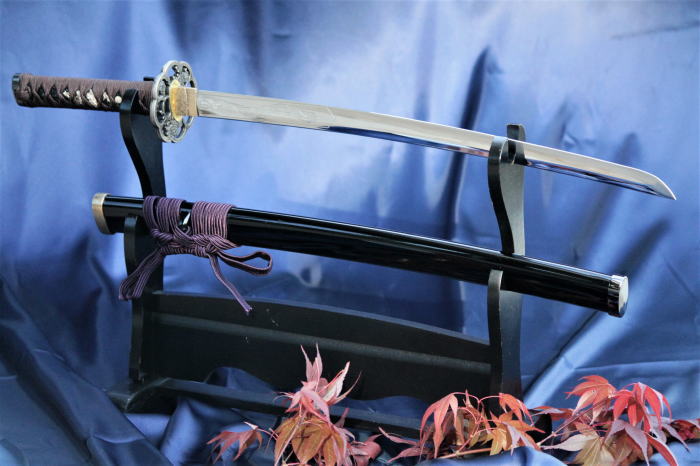
The blade features a Kurikara dragon (a dragon coiled around the Kurikara sword) engraved on the front, and an image of Fudō Myōō (Acala) with Sanskrit characters on the reverse.
The Omen that wraps around Imu’s sword in the shape of a snake is most likely a reference to the real-life Kurikara dragon engraved on this very blade.