Analysis Continued from Ch1185
The Theme Is ‘Independence’
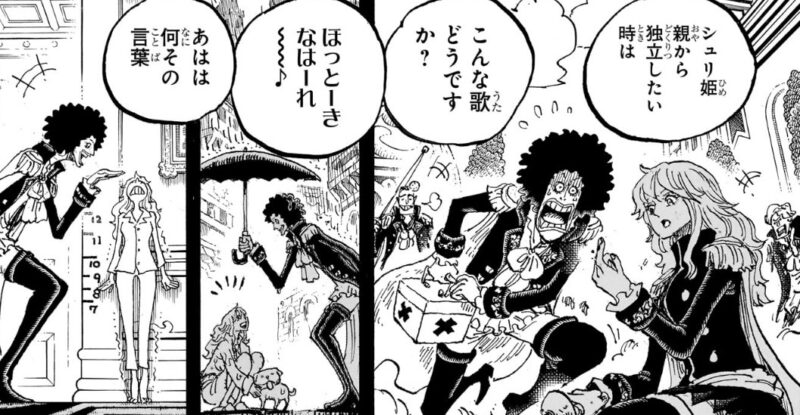
Shuri wants independence from her parents — and Brook sends her a song titled “Leave Them Be” (ほっときなはれ). The line this song is rooted in: Corazon’s “Leave him alone!! He’s free!!”
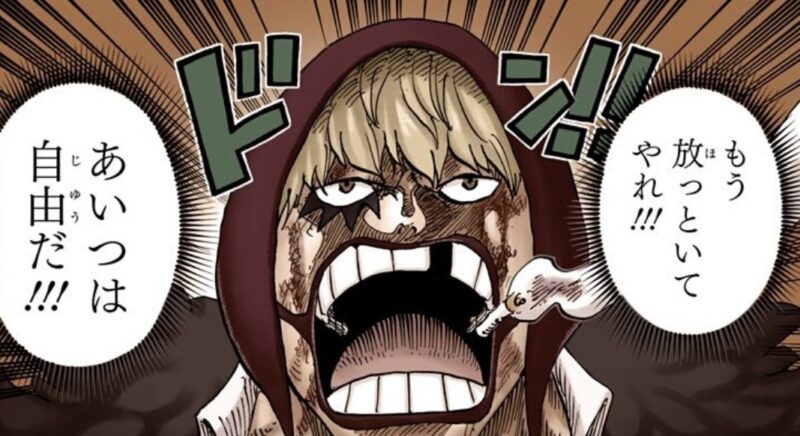
The context of that moment:
- Doflamingo was after the Op-Op Fruit
- He planned to have Corazon eat it and use the immortality surgery on himself
- Corazon stole the fruit instead
- He fed it to Law to cure his illness
That line symbolized Law gaining independence from “ruler” Doflamingo and becoming truly free. The fact that this same line became a song about wanting independence from parents suggests Oda may view the parent-child relationship as inherently one of control.
Maybe that’s why no parents appeared in Luffy’s childhood — after all, Luffy is the symbol of freedom. There was even a scene of building an “independent nation.”
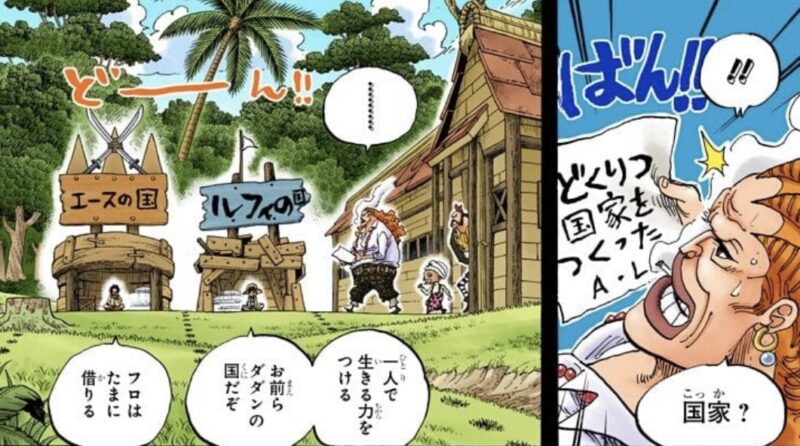
Brook’s childhood clearly homages Luffy’s: raised in a trash heap, captured and tortured… The reason Luffy was able to grow up free was a blessed environment. Ace — son of the world’s greatest criminal — and Sabo — son of a noble — both questioned their origins, wrestled with them, and arrived at the same dream: “become pirates and live free.” Luffy joined with that same dream. Crucially, no adult ever got in the way. Dadan, who reluctantly looked after them, was actually a good mother precisely because she didn’t control them.
Children controlled by parents. Citizens controlled by kings. Countries controlled by the World Government. The pursuit of freedom always means fighting those in power. Luffy’s childhood required no such fight — he had an exceptional environment. Princess Shuri, born into royalty, was far from that.
Why Kandel Was Bedridden for Months
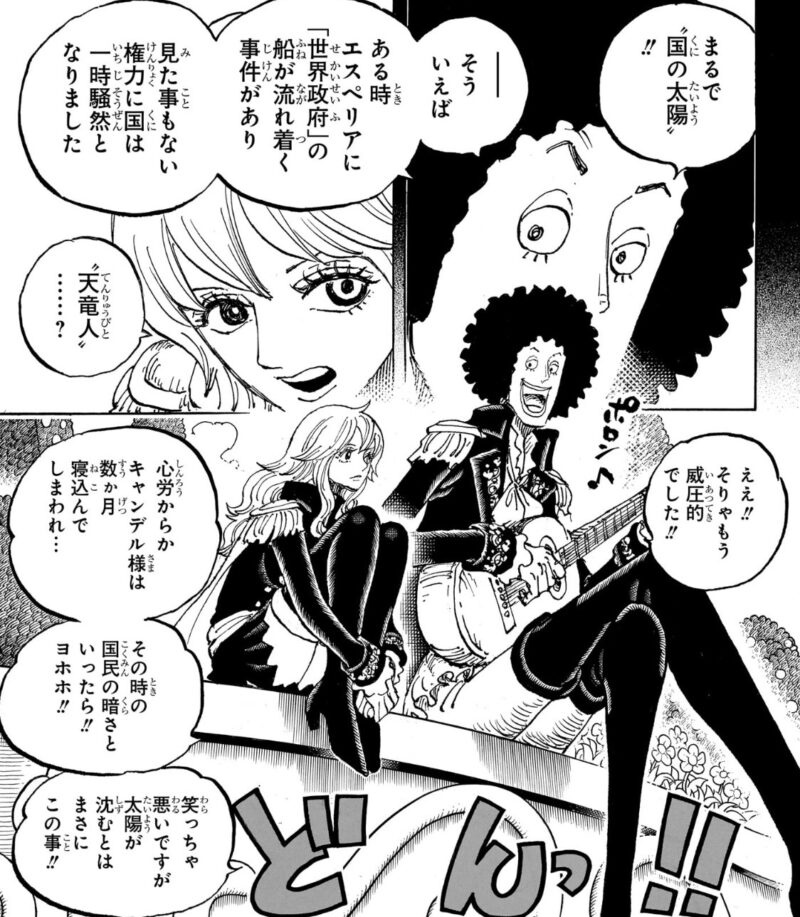
One Piece is a manga about the pursuit of freedom — and the polar opposite of freedom is domination. Because ch1185 weaves together the themes of “freedom,” “domination,” and “independence,” the cover page was a composite of Sanji, Zeff, and Hancock.
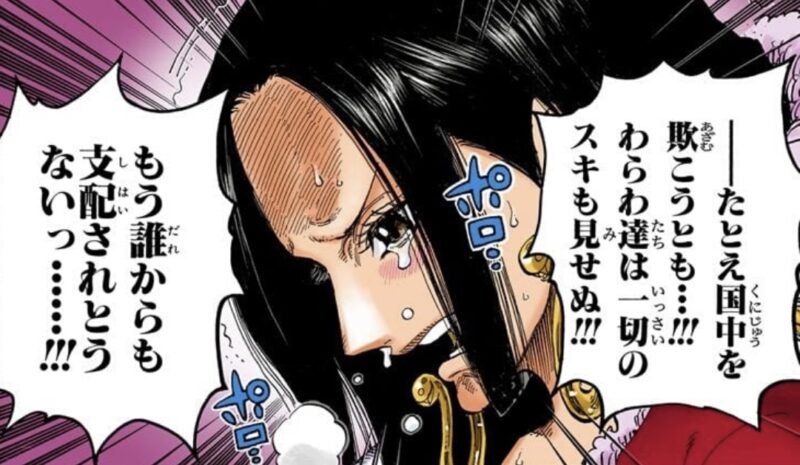
Im, who descended on Elbaf, is the symbol of “domination” and “power” — the exact opposite of Luffy’s “freedom” and “liberation.” So to obtain freedom, what must one fight? The same: domination and power.
What specifically constitutes “power”? Part of the answer is overwhelming coercion:
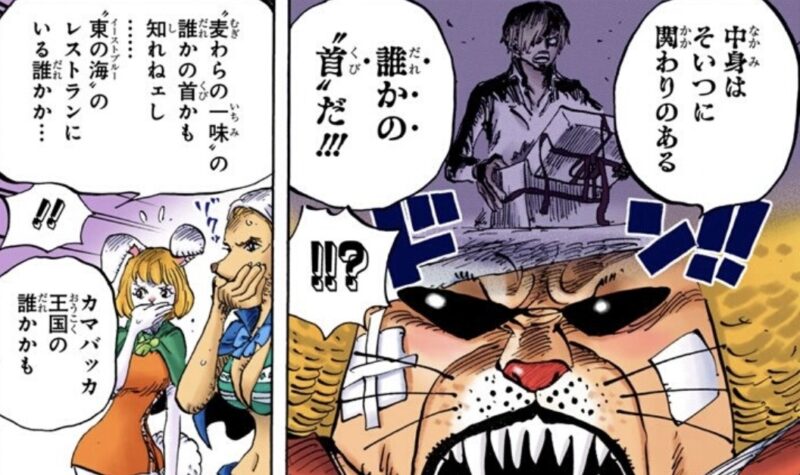
The ability to inflict unreasonable punishment on those who refuse to comply — with no one able to hold you accountable. Plus the intelligence to know exactly what the target fears most.
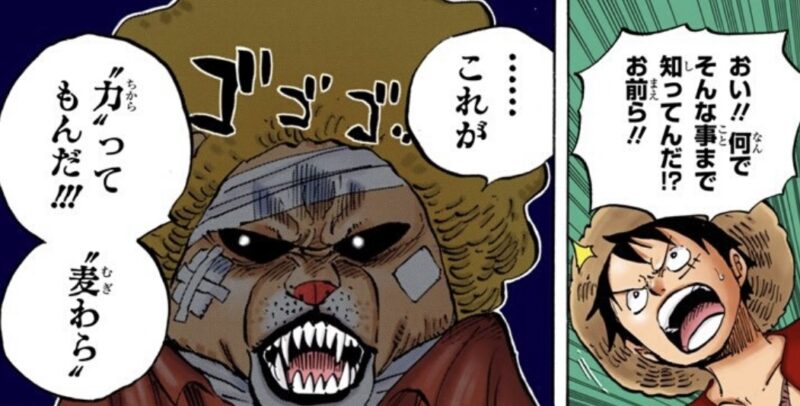
Those who understand power don’t defy it. So if a powerful person fixes their gaze on you, compliance is the only option. Kandel — a star of her nation — couldn’t avoid being noticed, and was targeted by a World Noble.
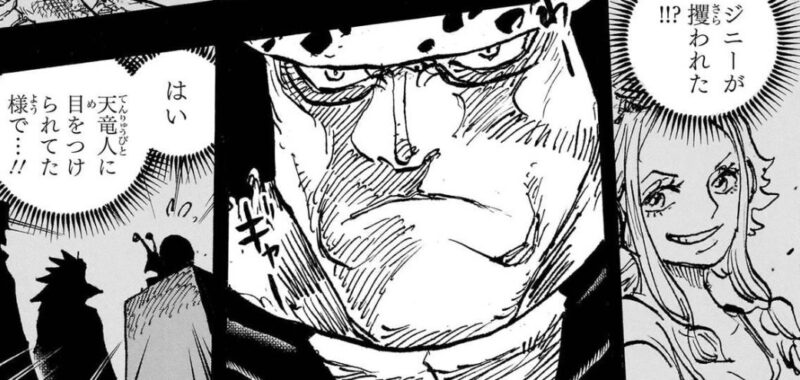
A male World Noble who finds a beautiful woman will try to claim her as his own. The woman has no right to refuse. And if she is claimed, she will inevitably become pregnant with his child.
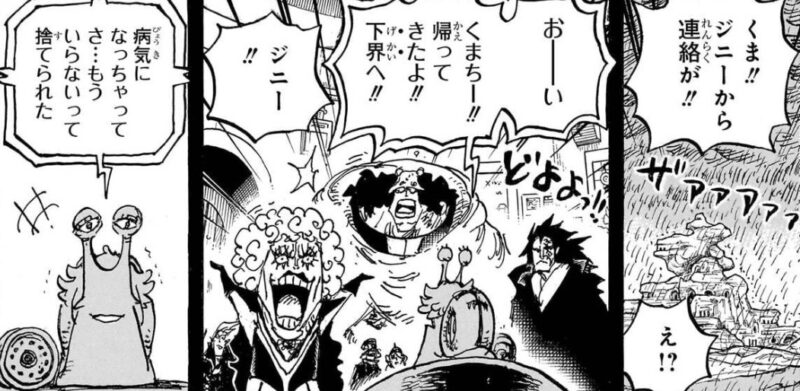
In other words:
- Kandel was bedridden for months because, despite having someone she loved (King Leuven), she had been made pregnant by a World Noble
- Leuven’s sudden announcement of marriage to Kandel was his way of protecting her after she became a victim of a World Noble
And King Leuven surely had the confidence: “If it’s Kandel’s child, I can love them as my own.”
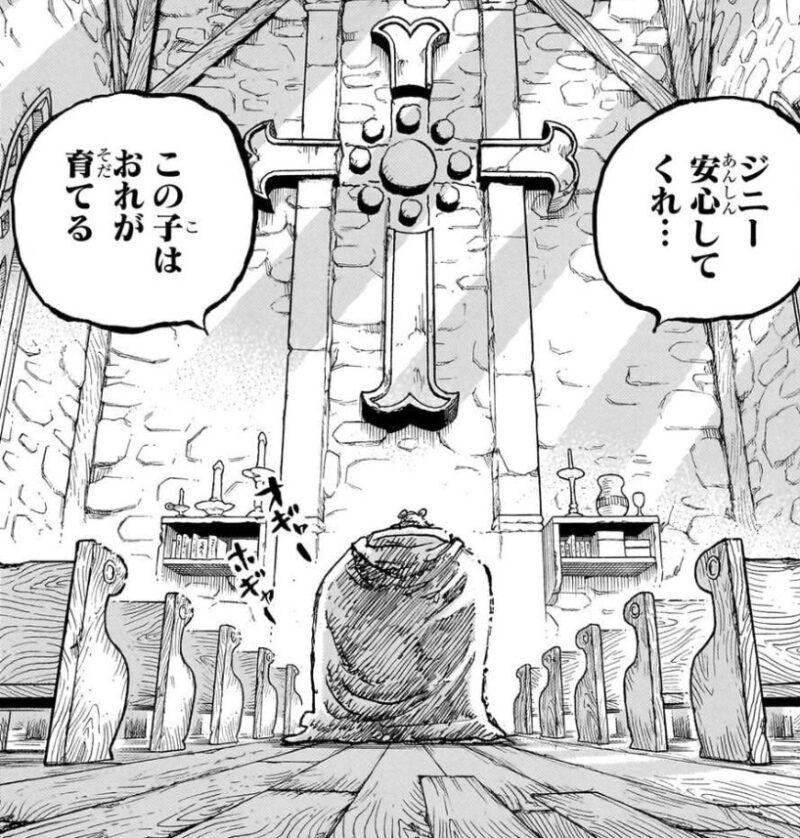
That concludes the analysis of events leading up to Princess Shuri’s birth. Now, what happened when Shuri turned 15.
How Aristocratic Parents Think About Controlling Their Children
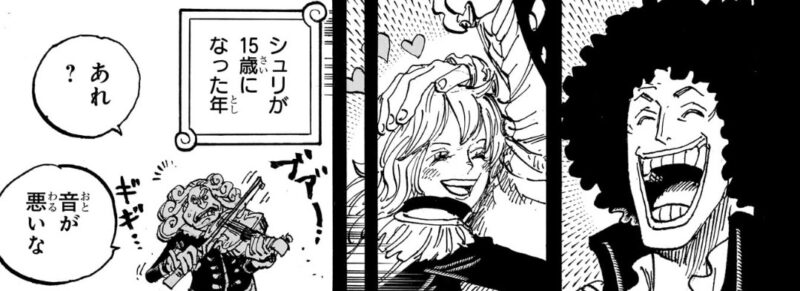
One Piece’s Great Pirate Age is modeled on the real Age of Exploration (roughly the 15th–17th centuries). In that era, 15 was considered adulthood — a knight earned recognition as full-fledged at 15; a woman could marry at 15 and be used for political arrangements. At 15, both boys and girls gained “use value.” The World Noble who fathered a child on Kandel must have come to reclaim his “possession” now that she had matured.
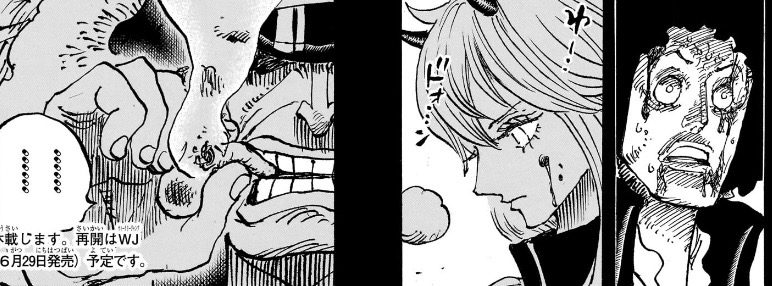
Three precedents support this reasoning:
Nobility: Sabo’s Parents
The child is the parent’s possession. Unconditional obedience is a natural duty. Children exist to make parents happy.
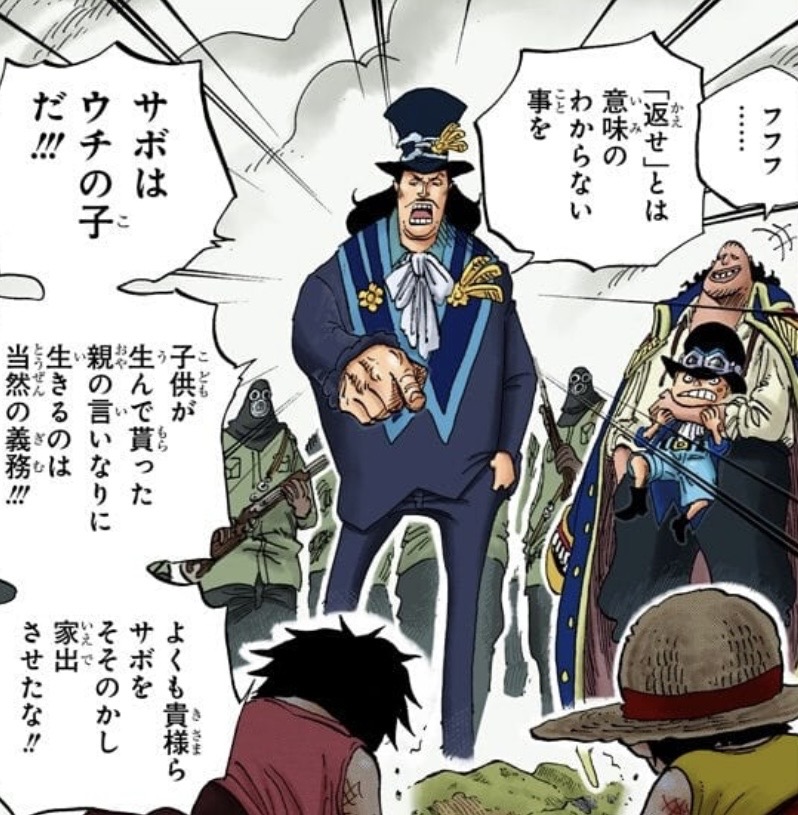
But since they’re family living in the same country and he’s their beloved eldest son, they did intend to raise Sabo properly after reclaiming him — even if their motivation was to use him as a tool for their own happiness.
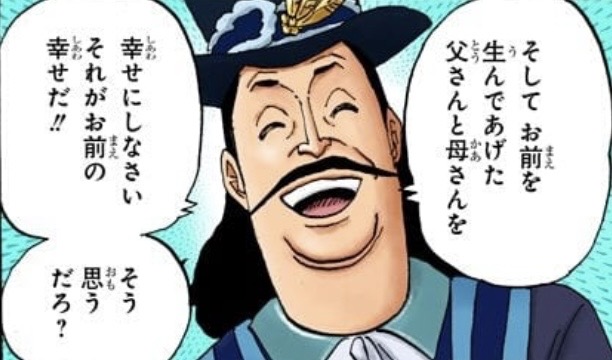
Royalty: Sanji’s Parents
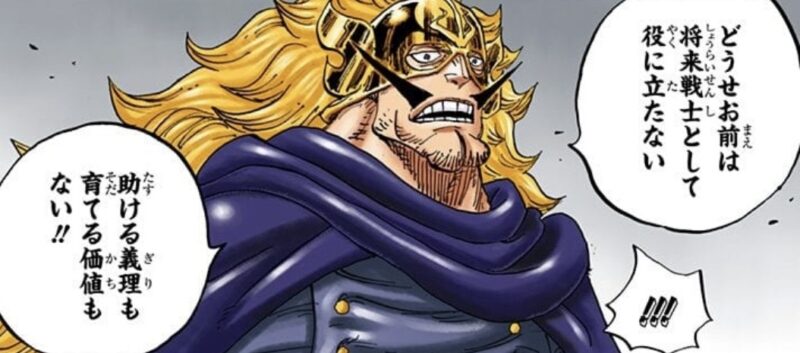
Sanji, who failed to become an enhanced soldier, is useless as a warrior. No reason to protect him from his siblings’ bullying; no value in raising him. But since he’s technically their child, killing him isn’t an option — so mask him and lock him underground. If he disappeared somehow, so be it. But for a political marriage sacrifice, he’s convenient — blood relation is a fact. “The failure finally made himself useful. Glad I didn’t kill him.”
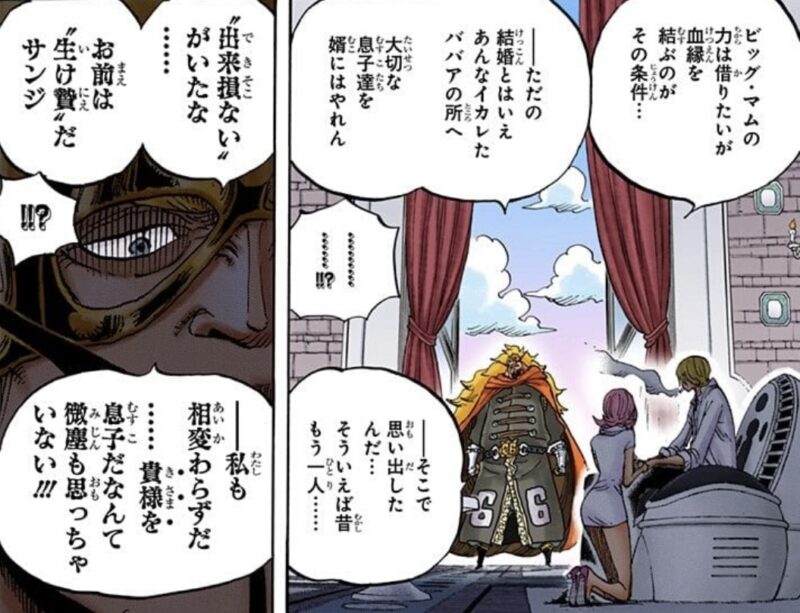
Emperor of the Sea: Pudding’s Parents
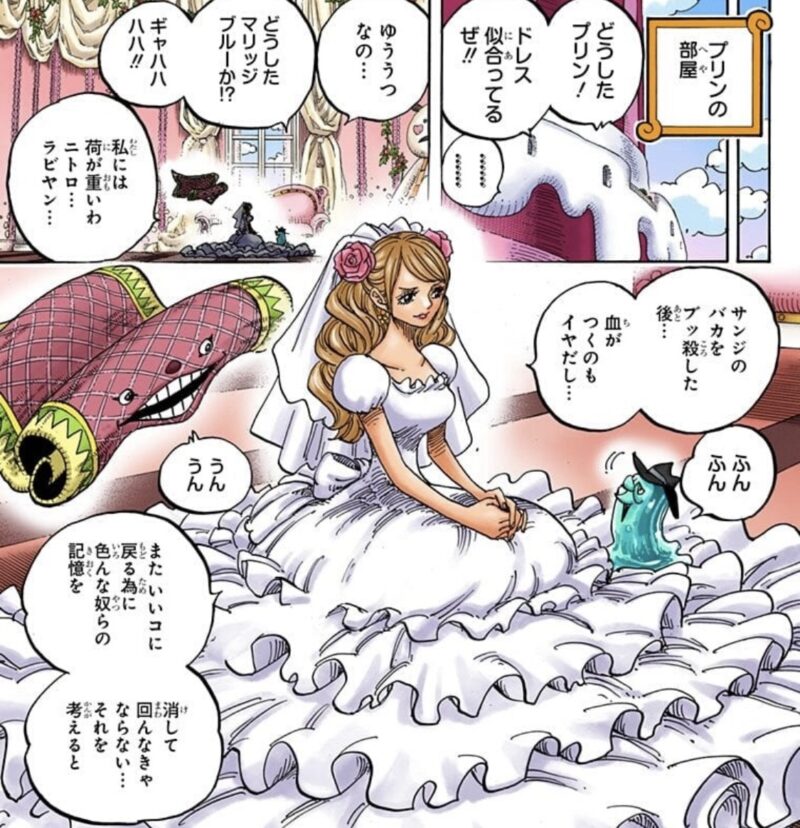
Pudding has lived her whole life as a puppet to her parent’s will — always meeting expectations — yet can’t even decide the design of her own dress. Used as a political marriage pawn because she’s female. She admires her older sister who left to live freely. Deep down, she dreams of a free life.
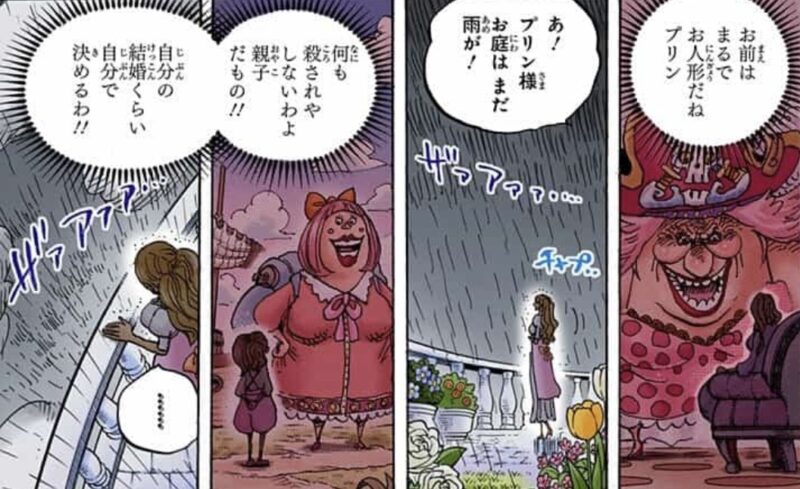
So in powerful households, children are tools — expected to comply from birth. This is why the World Noble father must have come to “collect” Shuri once she turned 15 and became valuable. The cigar-smoking man shown at the end is probably Gunko’s biological father — and a member of the Manmaiya family where Gunko currently serves. He’s wearing the same military cap as Gunko.
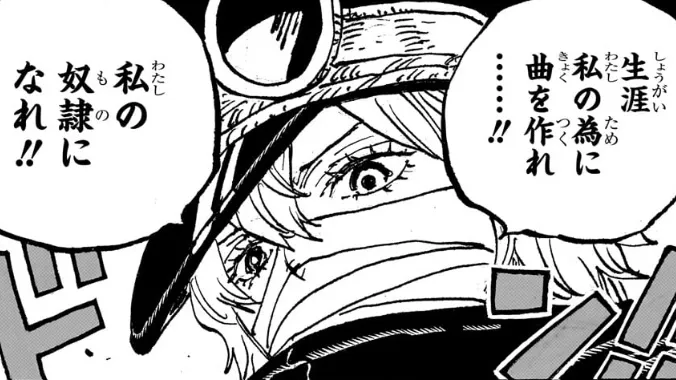
Payoff for the Lola and Loki Foreshadowing
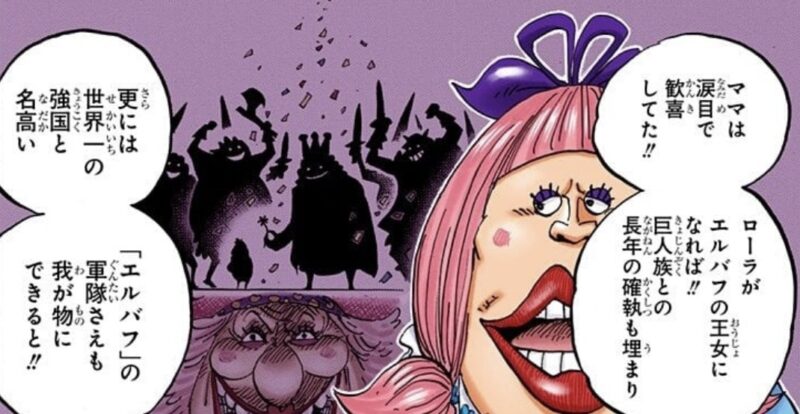
By weaving in self-homages from the Whole Cake Island arc, the Thriller Bark arc, and personal homages to Pudding, the chapter makes it much easier to approach the truth behind Lola and Loki’s marriage proposal incident. The image of Shuri and Leuven — seemingly influenced by Dominance Reversal — killing parents also connects to Loki and Harald, naturally drawing the reader’s mind back to the Elbaf arc.
That’s all for today. See you next week.
Related Reading
- ← Chapter 1184: “Everyone Dies and What’s Left Is Bones” — Homage to Luffy,
- → Chapter 1186: “Once More” — Saint Manmaiya Glow Is a Fog Devil Fruit User
- Browse all Chapter Analysis (Ch. 1127–1186) →