Usopp Hammer
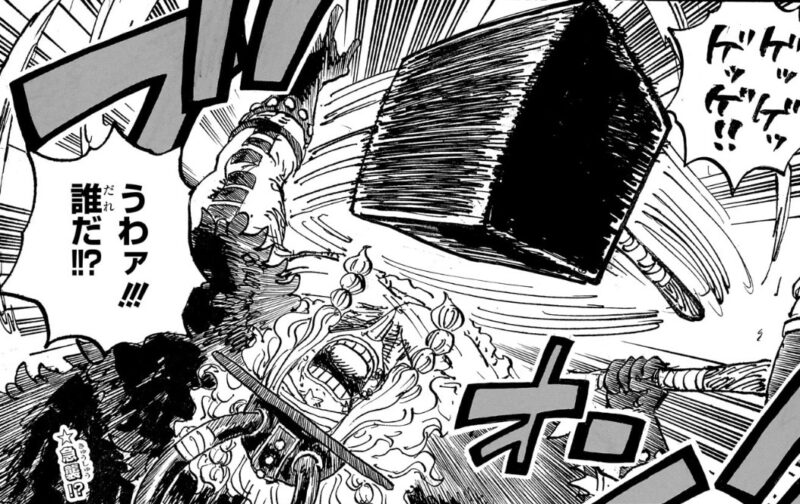
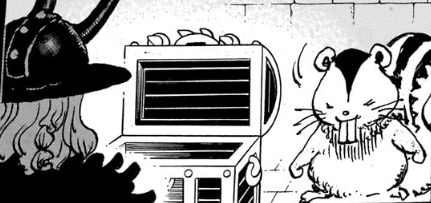
This is the final panel from last chapter. ↑ Ragnir came lunging in with a “Geh geh geh geh!!” — only to be punched by Loki, revealing his true form: a squirrel. Squirrels are classified as rodents (齧歯類 / gesshirui), which is why the cry was “geh geh geh geh” — four “geh”s, a pun on “gesshi” (rodent in Japanese).
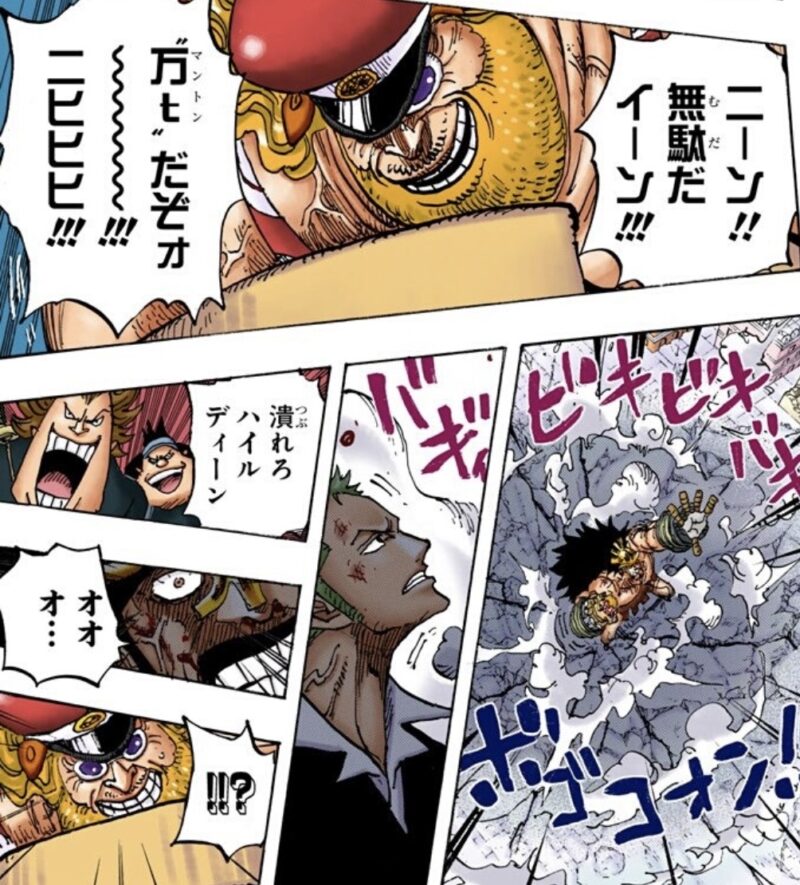
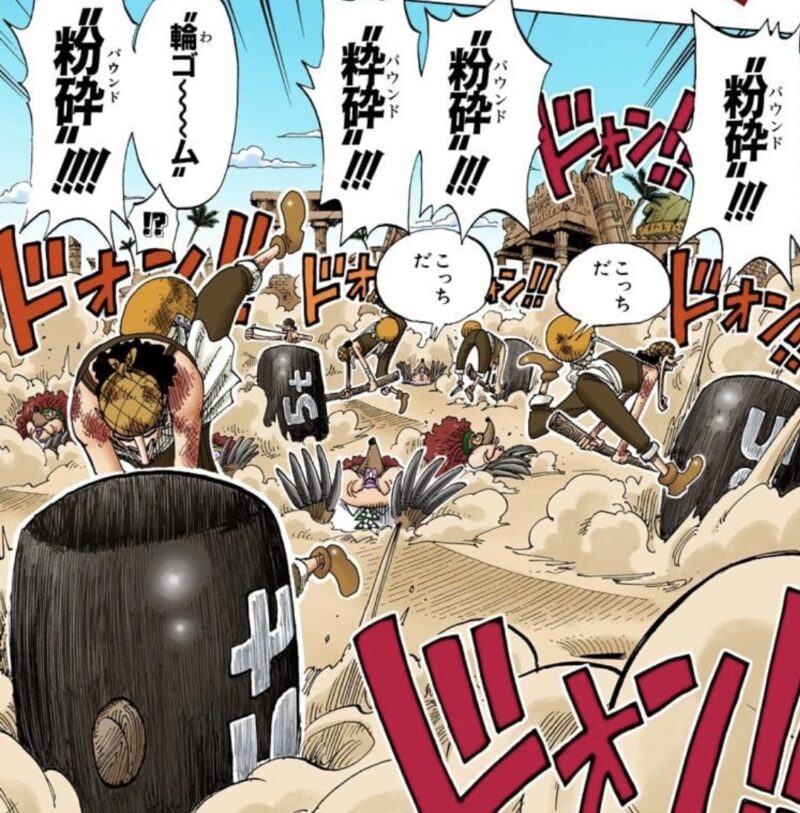
The battle between Loki and Ragnir was a self-homage to Usopp’s Hammer. First, Ragnir pouncing at Loki mirrored the Hammer Comet seen in the Mr. 4 fight.
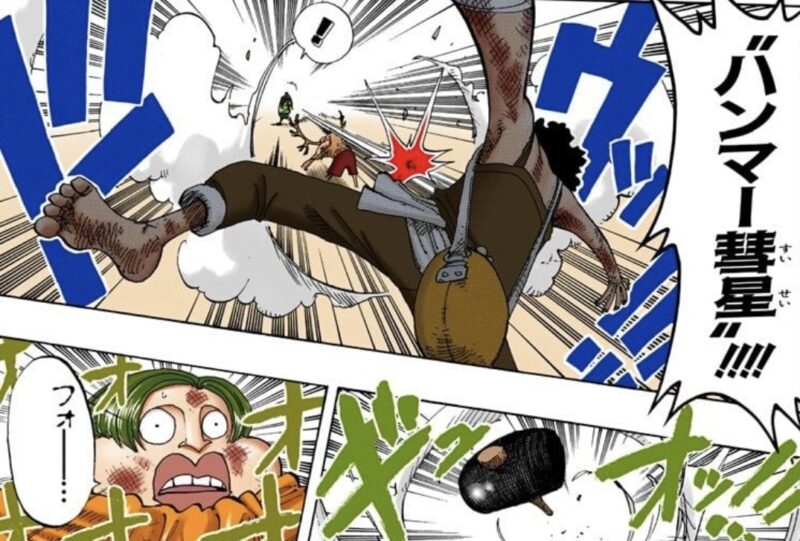
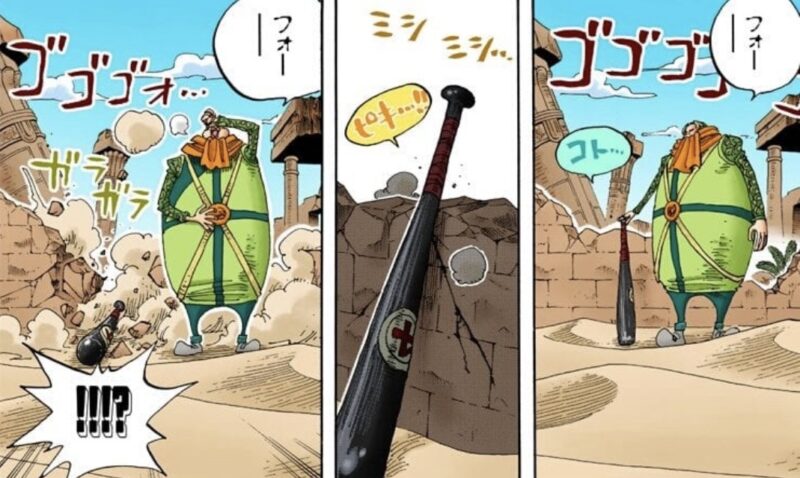
Ragnir’s weight causing the floor to collapse also mirrors the scene where Mr. 4’s bat shattered the wall. For reference, Mr. 4 was 180cm tall and his bat weighed 4 tons.
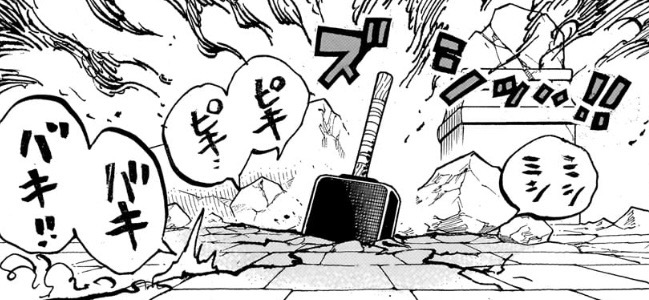
So just how heavy is Ragnir? The thick stone floor of Aulst Castle, judging by the broken cross-section, appeared to be roughly as thick as Loki’s torso — conservatively, somewhere between 10 and 15 meters. Running an AI calculation for the minimum weight that could break a floor that thick gives a result of at least 600,000 tons. Loki is swinging something that weighs at minimum 600,000 tons.
That said, in this world a 180cm Mr. 4 swings a 4-ton bat, and 22m Hajrudin punches away a Mach Vice falling with tens of thousands of tons of force. Muscle mass scales with body size here — the bigger you are, the more weight you can handle.
Zoro saw Loki and said “he’s bigger than Oars.” Oars was 67m tall, so if Zoro clocked him as noticeably bigger on sight, there has to be at least a 10m difference. That puts Loki around 80m — and combined with being Elbaf’s strongest man plus Zoan-type power, swinging a 600,000-ton Ragnir starts to make sense.
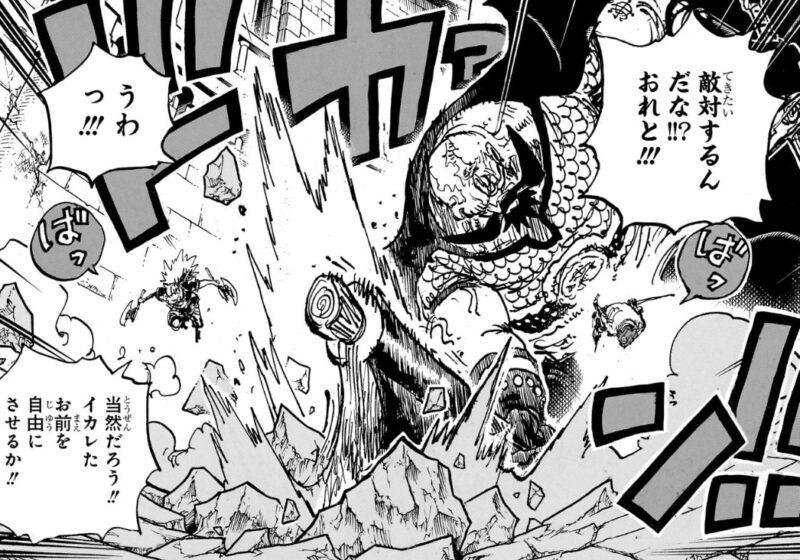
Next: the composition of Ragnir moving on its own chasing Loki, and the framing of Harald attacking Gaban and Shanks — both are also self-homages to the Usopp Hammer, specifically the Miss Merry Christmas battle from the Alabasta arc.
Ragnir’s True Identity
The moment Loki smashed his own hammer to defeat Ragnir, and the swirling eyes 🌀 on the losing side —
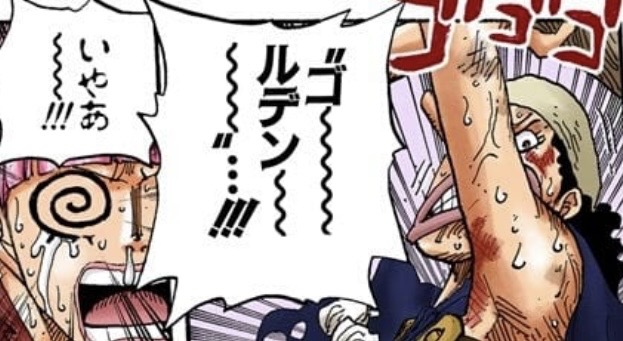
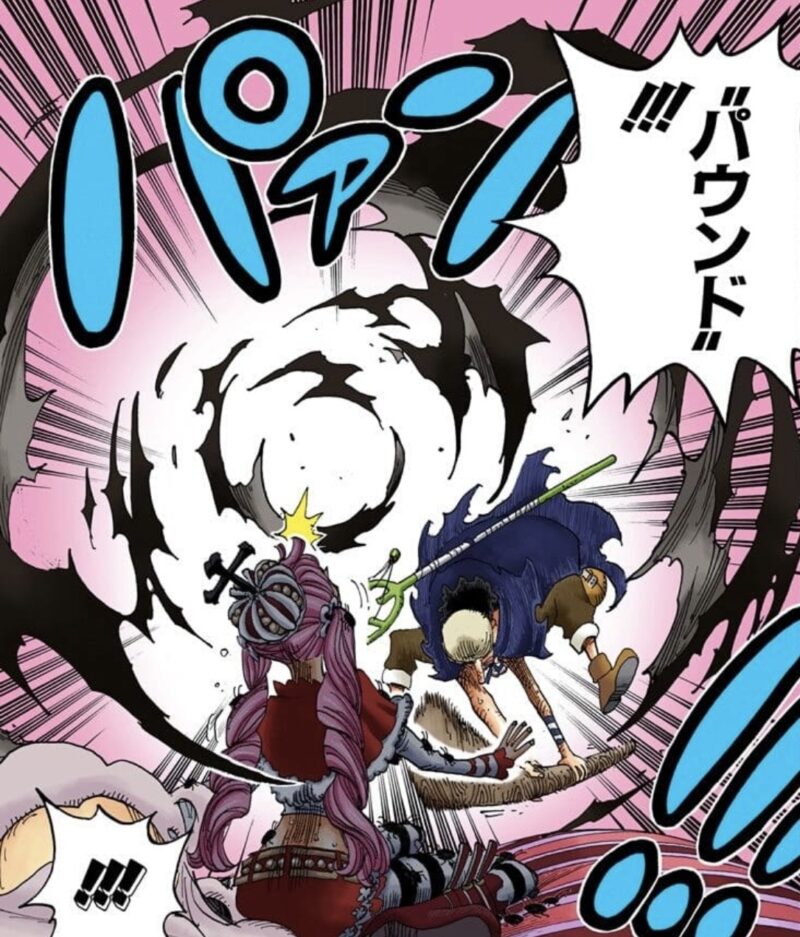
Both are homages to “Usopp Golden Pound,” the finishing move used in the Perona fight. So the entire Loki vs. Ragnir sequence was a greatest-hits self-homage to Usopp’s Hammer moments.
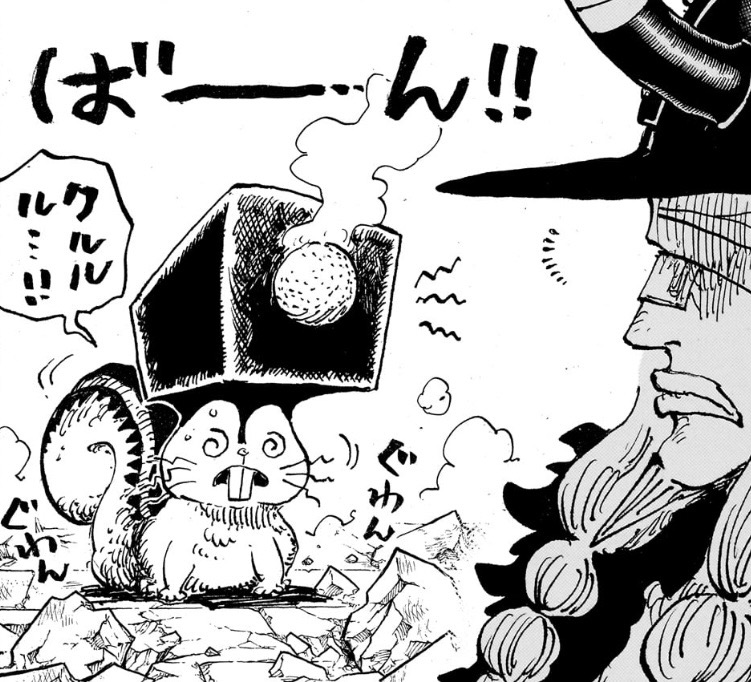
Now, Ragnir revealed his squirrel form after being punched by Loki. There are two schools of thought on this:
- The squirrel ate the Hammer Fruit
- The hammer ate the Squirrel Fruit
Opinions are split — but if a squirrel had eaten the Hammer Fruit, its natural lifespan wouldn’t change, meaning it couldn’t serve as the guardian of a legendary Devil Fruit for hundreds of years. If the original entity is a hammer, there’s no lifespan issue, and a squirrel’s will can inhabit it indefinitely. So Ragnir must be a hammer that ate the Squirrel Fruit.
A hammer has a part called the “mouth” (the striking face or opening), which means it’s capable of eating a Devil Fruit. All Devil Fruit-eating objects that have appeared so far also had a part called a “mouth” — the gun that ate the Dog-Dog Fruit had a gun barrel (銃口), the sword scabbard that ate the Elephant Fruit had a scabbard opening (鯉口), and the teapot that ate the Dog-Dog Fruit (Tanuki model) also had a spout. The likely condition for an object to eat a Devil Fruit is contact with the flesh or juice through whatever part is called its “mouth.”
Do Weapons Imbued with Conqueror’s Haki Break?
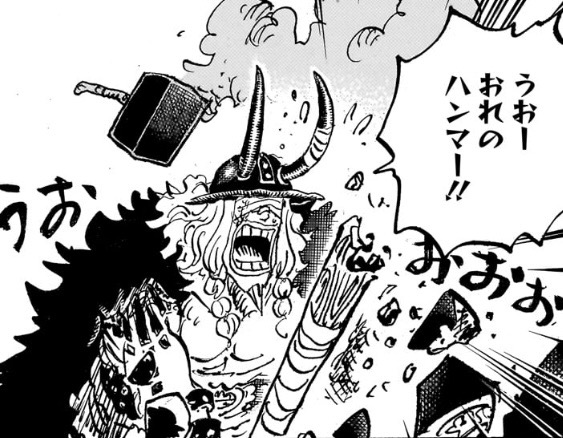
What caught my attention was Loki’s hammer shattering after being imbued with Conqueror’s Haki. Swords imbued with Armament Haki never chip or break — when the Haki fully settles into a blade, it becomes a Black Blade and rises in rank. A Black Blade is said to be so durable it won’t bend even a millimeter under a dinosaur’s weight.
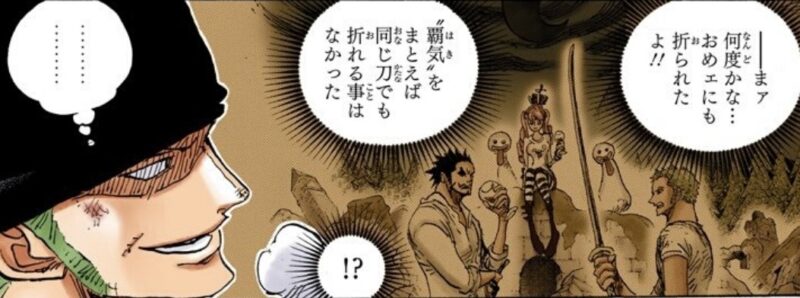
Does this mean Loki can only use Conqueror’s Haki — and his Armament and Observation Haki are still undeveloped? It’s also possible that while Conqueror’s Haki delivers higher attack power than Armament Haki when coating a weapon, it lacks the ability to protect the weapon itself.
Kung Fu Dugong
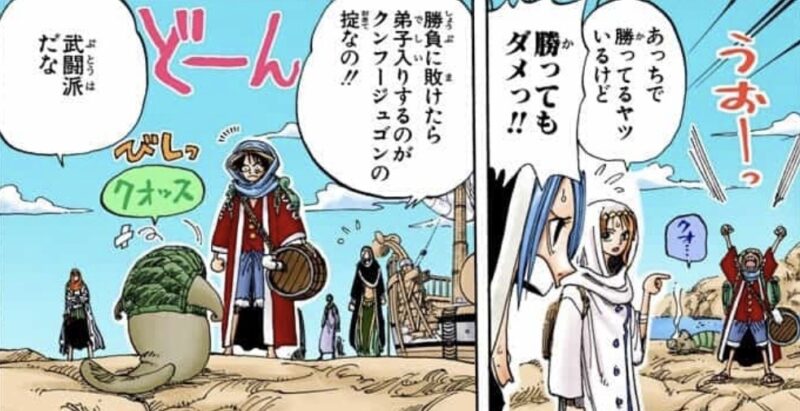
After being defeated, Ragnir accepted the loss, acknowledged Loki’s strength, and handed over the Devil Fruit — just like the Kung Fu Dugongs who asked to become Luffy’s disciples after losing to him. Another Alabasta self-homage, in keeping with the Usopp Hammer theme.
Cover Page Theory
This week’s chapter packed in homages to: Usopp vs. Mr. 4, an animal that asks to become a disciple after losing, and a Devil Fruit-eating object. The Alabasta homage ran deep this week.
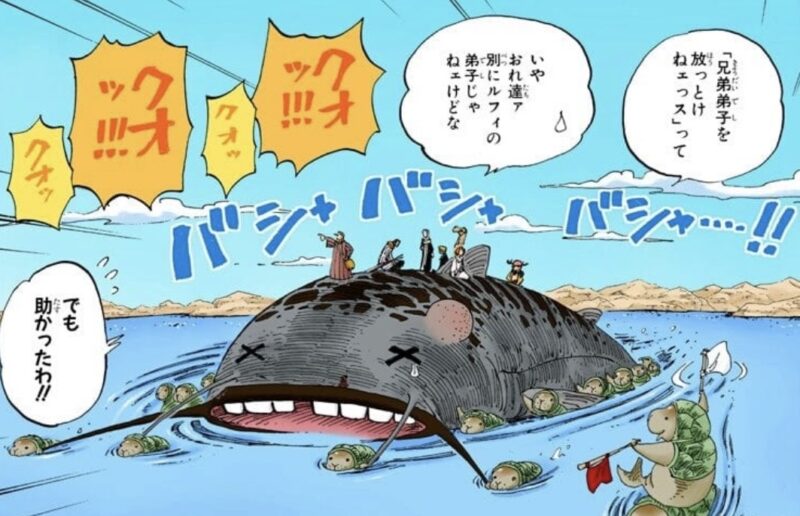
Speaking of the Kung Fu Dugongs from Alabasta, the most memorable scene is when they carried the crew across the river on a catfish. The cover page is probably a homage to that scene.
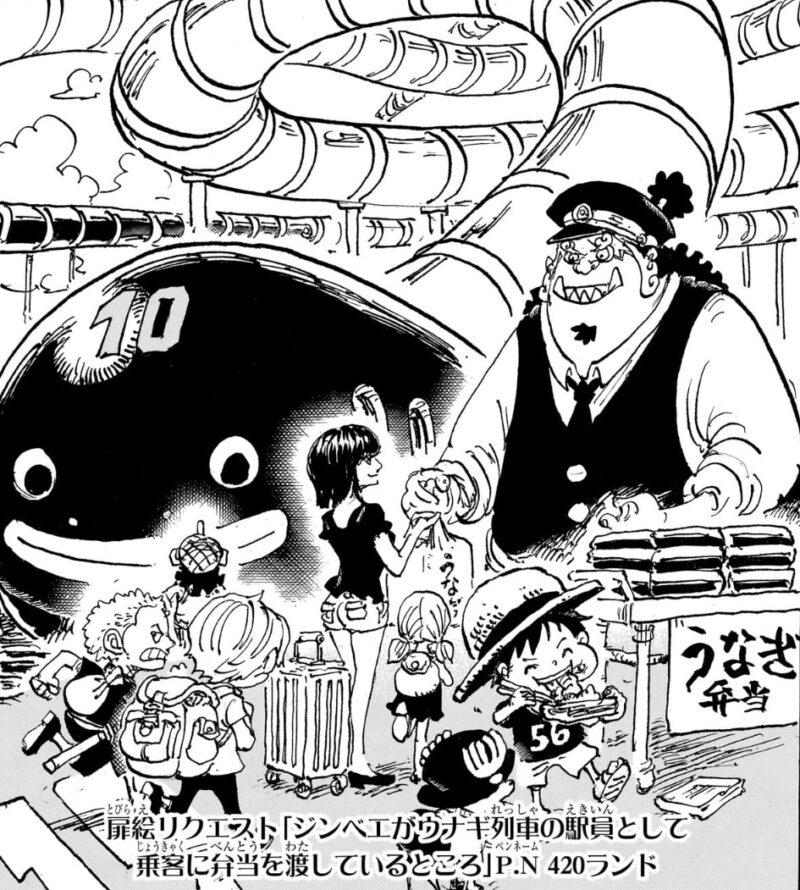
Luffy is #1, Zoro is #2, Nami is #3… and Jinbe’s image number is 10. Swap the catfish for an eel, multiply by Jinbe’s image number 10, and eel + 10 = “unaju” (うな重, grilled eel on rice). The fact that Brook and Franky are absent while Robin is the only “big sister” also fits the Alabasta arc lineup. And since Jinbe’s name already appeared back in the Arlong arc, the timeline checks out too.
Loki’s Devil Fruit Is, After All…
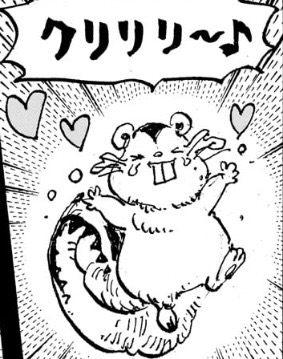
Since the guardian of the Devil Fruit was a squirrel, and since Ragnir wept with joy upon seeing Loki become an ability user — the Devil Fruit Loki ate might be Nidhogg. The reasoning comes from Norse mythology and a kanji reading.
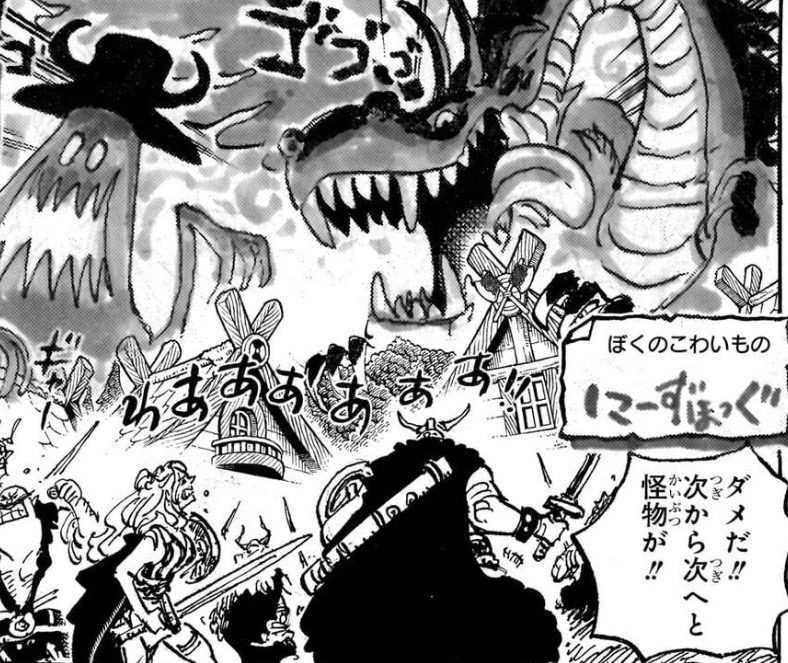
In Norse mythology, there is a great tree called Yggdrasil. At its very top lives the great eagle Hræsvelgr; at its roots lives the great serpent Nidhogg; and encircling the entire world is the colossal serpent Jörmungandr. The eagle at the top and the serpent at the roots are bitter enemies, constantly badmouthing each other. The squirrel Ratatoskr is their messenger — it runs back and forth between the roots and the crown, exaggerating each side’s insults to the other and stoking the feud.
So Ragnir the squirrel is modeled on Ratatoskr, who acts as a kind of “friend” to both the great eagle Hræsvelgr and the great serpent Nidhogg. When Ragnir saw Loki’s transformed form, it may have been crying tears of joy at a reunion with an old friend. This means the Devil Fruit is most likely either Hræsvelgr or Nidhogg.
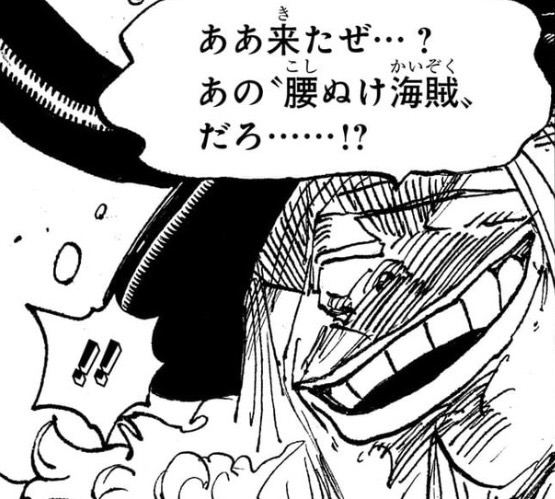
But a mythical eagle-type would be a Griffin — and Griffin calls to mind Shanks’ eagle sword. And Loki was the one badmouthing Shanks (who wields that eagle blade)… Loki, who talked trash about the eagle at the top (Shanks / Mariejois), was himself bound to the roots of the Treasure Tree Adam (the very bottom of the world). That maps perfectly onto Nidhogg. Loki is almost certainly the great serpent Nidhogg. Note that while Nidhogg is called a great serpent, it’s most commonly depicted as a dragon — and if Loki is Nidhogg, several more things fall into place.
Nidhogg — The Thunder Dragon
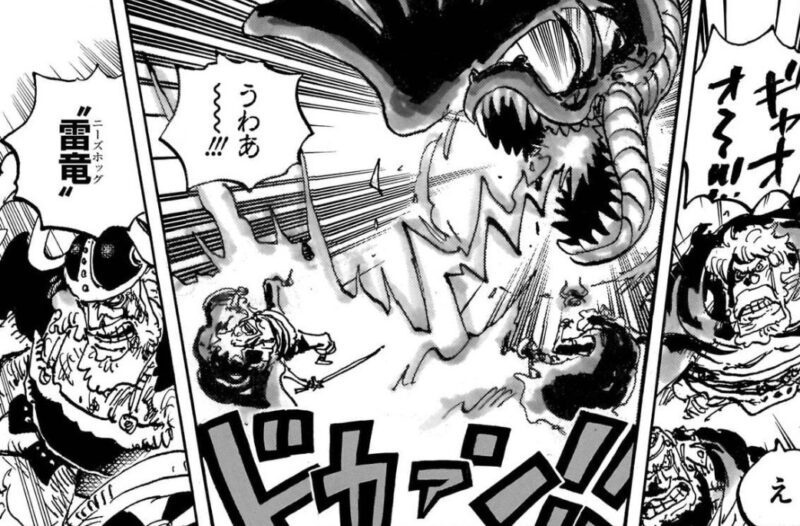
In the drawings brought to life by Kirinagum’s ability, Nidhogg appeared — its attack was lightning, and the kanji written on it were 雷竜 (Thunder Dragon), read as “Nidhogg.” In other words, it’s a lightning-attribute dragon.
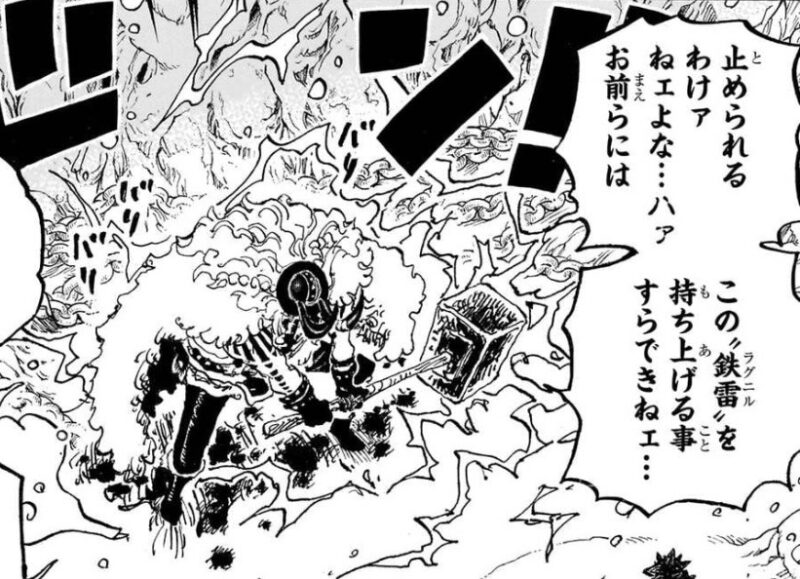
Meanwhile, Ragnir — the Devil Fruit guardian — is a lightning-attribute hammer: it strikes lightning when slammed down and electrifies whoever wields it. From Ragnir’s perspective, if Loki eats the Devil Fruit and gains lightning resistance, he can actually be used as a weapon. But at 600,000 tons, wielding him requires immense strength — so perhaps Ragnir was testing challengers to find someone capable.
If It’s Nidhogg, It Connects to Punk Hazard
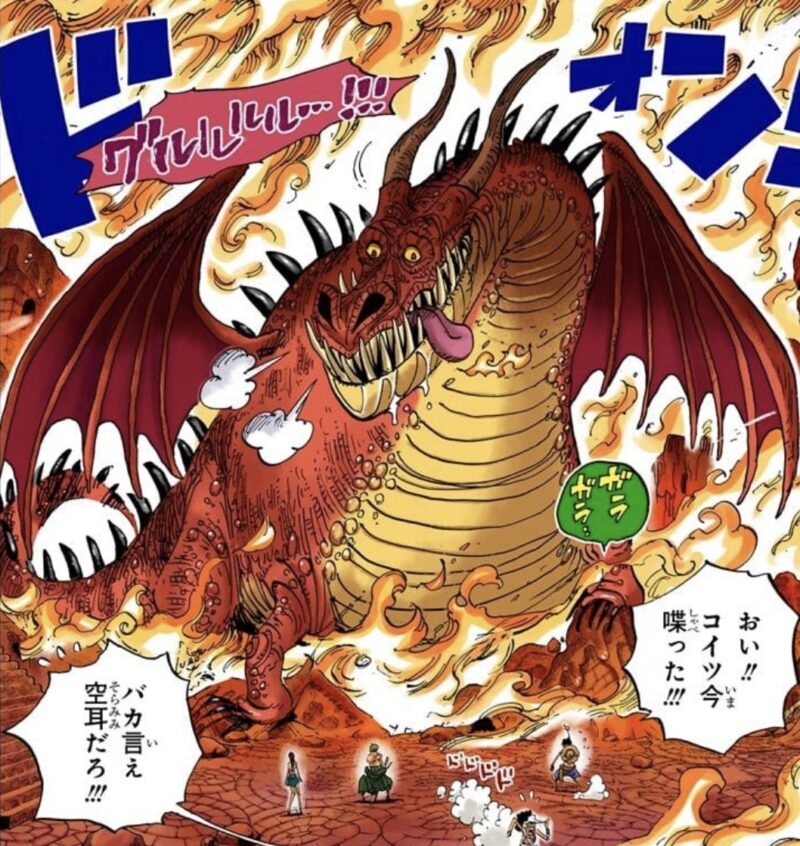
The child’s drawing of Nidhogg resembled the dragon on Punk Hazard. And speaking of Punk Hazard — there are the giants frozen in ice.
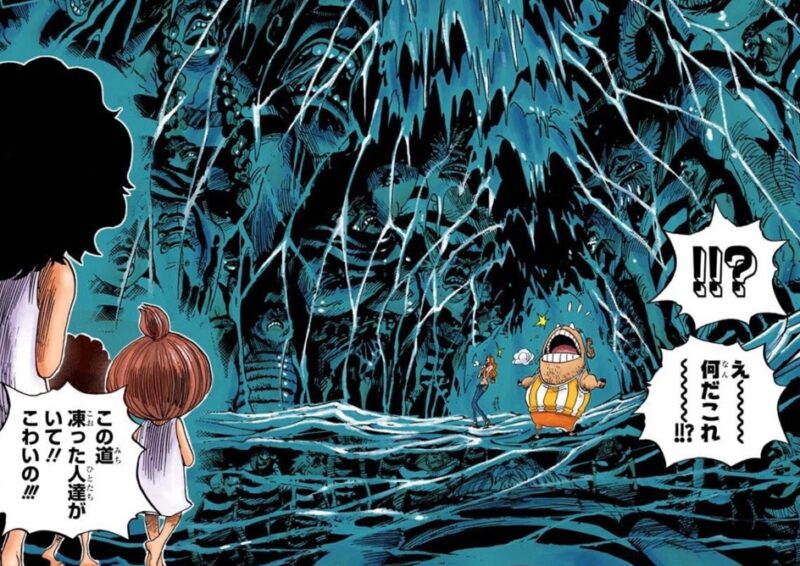
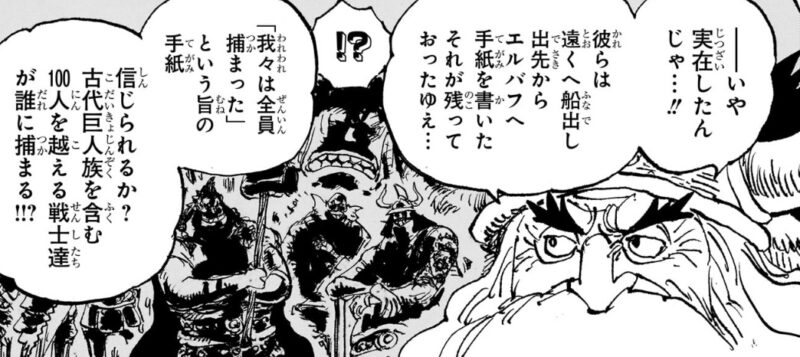
Their true identity is Garleya — the War Hammer Armada, including Ancient Giants. They’re probably the shipwrights who built the Ark Noah on Fish-Man Island.
And speaking of Fish-Man Island — during his long imprisonment, Loki’s only company was someone he called “Mosa-kun.” That person turns out to be Shirahoshi. Because she’s Neptune’s daughter and tends to be shaggy (もさもさ), she got the nickname “Mosa-kun.” She was Loki’s betrothed, arranged by their parents. Mosa-kun’s final transmission — “Things are hectic on our end too, and I won’t be able to call for a while” — is a detail that quietly sticks.
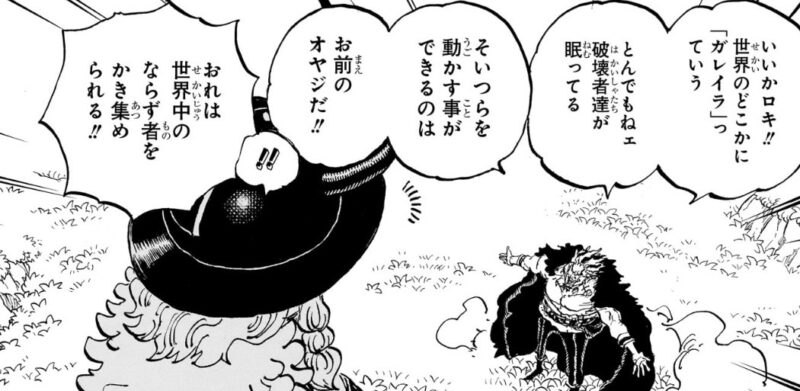
With Loki now an ability user in Harald’s place, he’s the one who can activate Garleya — so he’ll head to Punk Hazard. And Mosa-kun’s last communication is on his mind, so Fish-Man Island is next. The thread that starts from Nidhogg ties everything together cleanly. My earlier confident prediction of Jörmungandr gets overturned — but hey, it’s still a serpent motif, so close enough.
That’s all for today. See you next week.
Related Reading
- ← Chapter 1169: “I Must Die Without Delay” — Ragnir Is Mjolnir from Thor
- → Chapter 1171: “Iron Thunder (Ragnir)” — The Cover Page Is a Memorial for H
- Browse all Chapter Analysis (Ch. 1127–1186) →