What’s So Interesting About Rakugo?
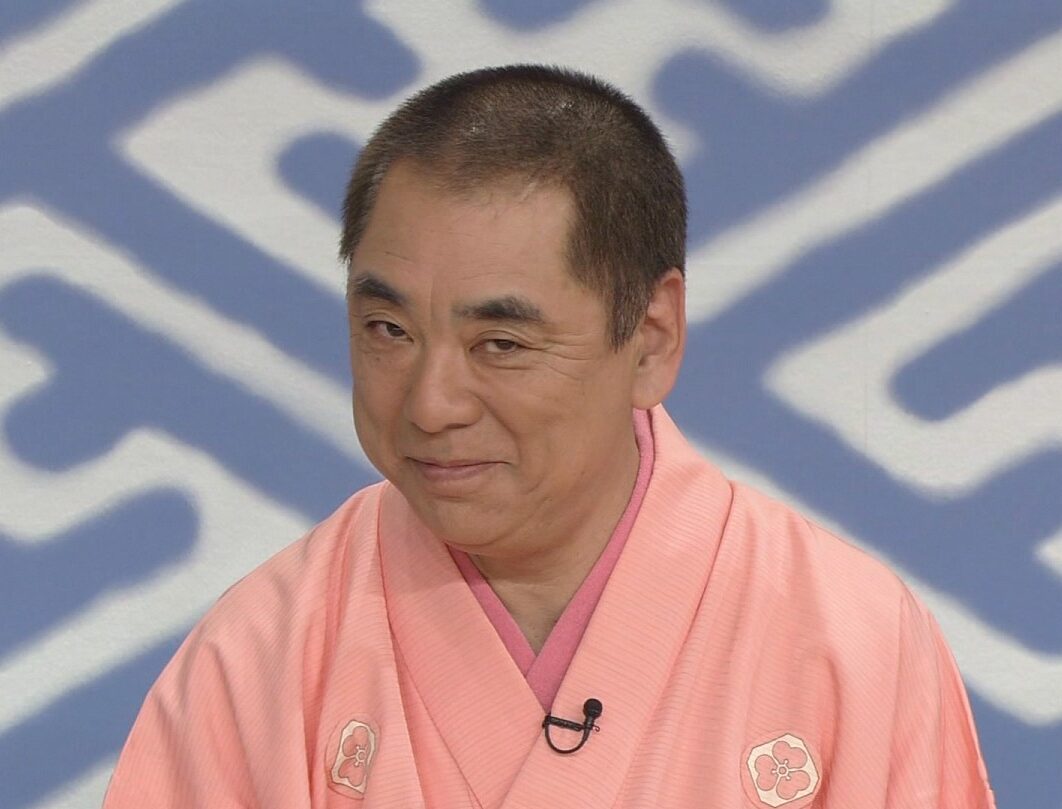
In today’s world, filled with hyper-realistic CG and animated films, you might wonder: what’s so interesting about an old man in a kimono sitting down and just… talking?
That’s what every rakugo beginner says.
And rakugo performers have a great answer for that:
“Close your eyes and picture the world’s most beautiful woman.”
“Now — is the woman you imagined the same as the person next to you? No, right? That’s what rakugo can do that movies cannot.”
“Because it’s only sound, you create your own perfect image in your head.”
“Rakugo is a collaborative work — completed together by the performer and the audience.”
“That’s why people with rich knowledge and imagination — smart people — enjoy it the most.”
“Put another way: rakugo isn’t for people who can’t engage their minds.”
“So — you’re someone who can enjoy rakugo, right?”
Introduction to Rakugo
You wouldn’t want someone who’s never even done the tutorial of a game you love telling you it “looks boring,” right?
Don’t criticize what you haven’t experienced.
For anything, there’s a sequence: interest → first experience → familiarity → practice → improvement → enjoyment.
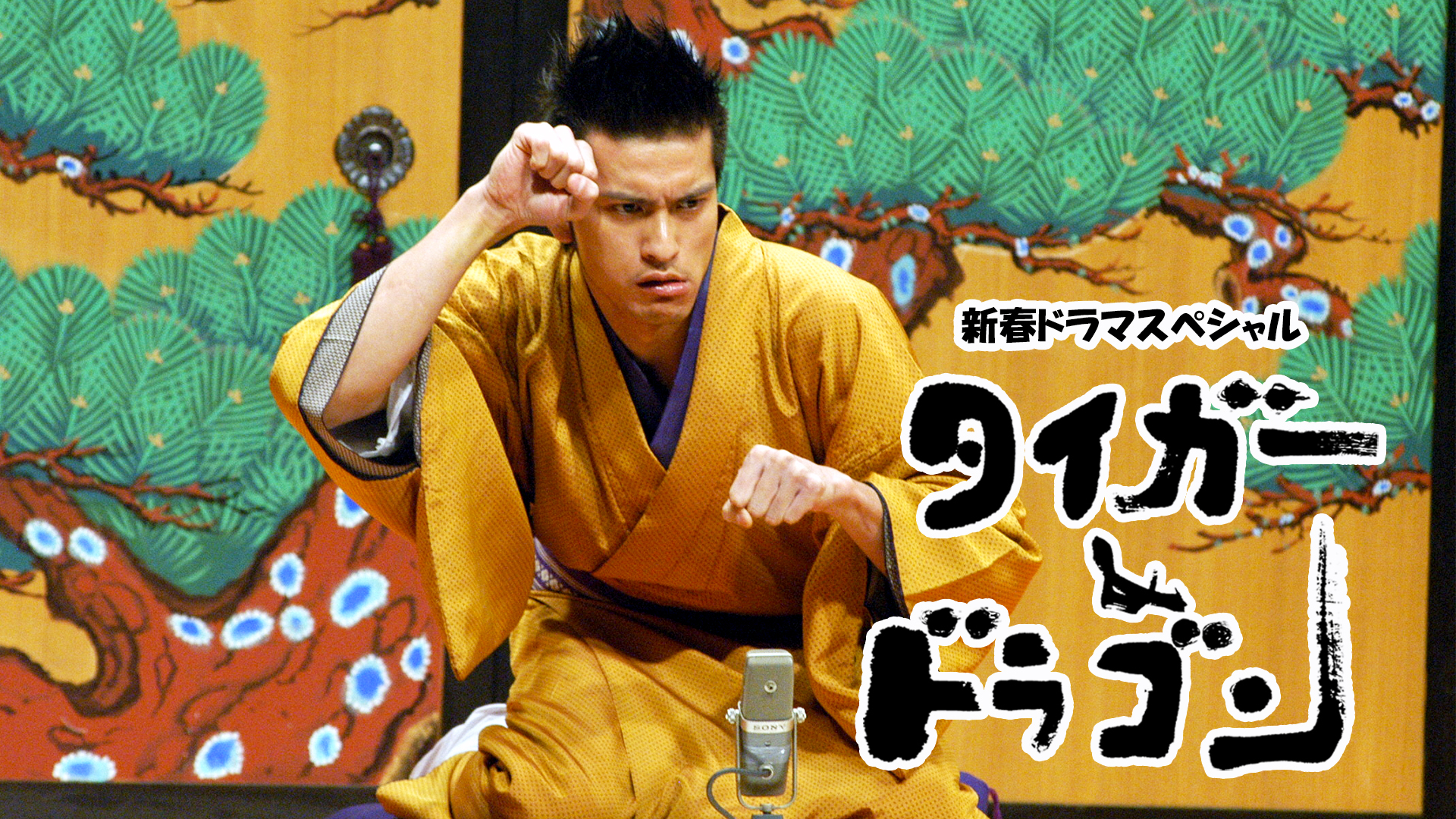
The best rakugo tutorial is the drama Tiger & Dragon. Written by Kankuro Kudo, it follows a dim-witted yakuza played by Tomoya Nagase who, with zero knowledge, becomes a rakugo apprentice.
The Kudo × Nagase combo is the greatest pairing of the Heisei era. The young Gen Hoshino also appears with a shaved head in a supporting role.
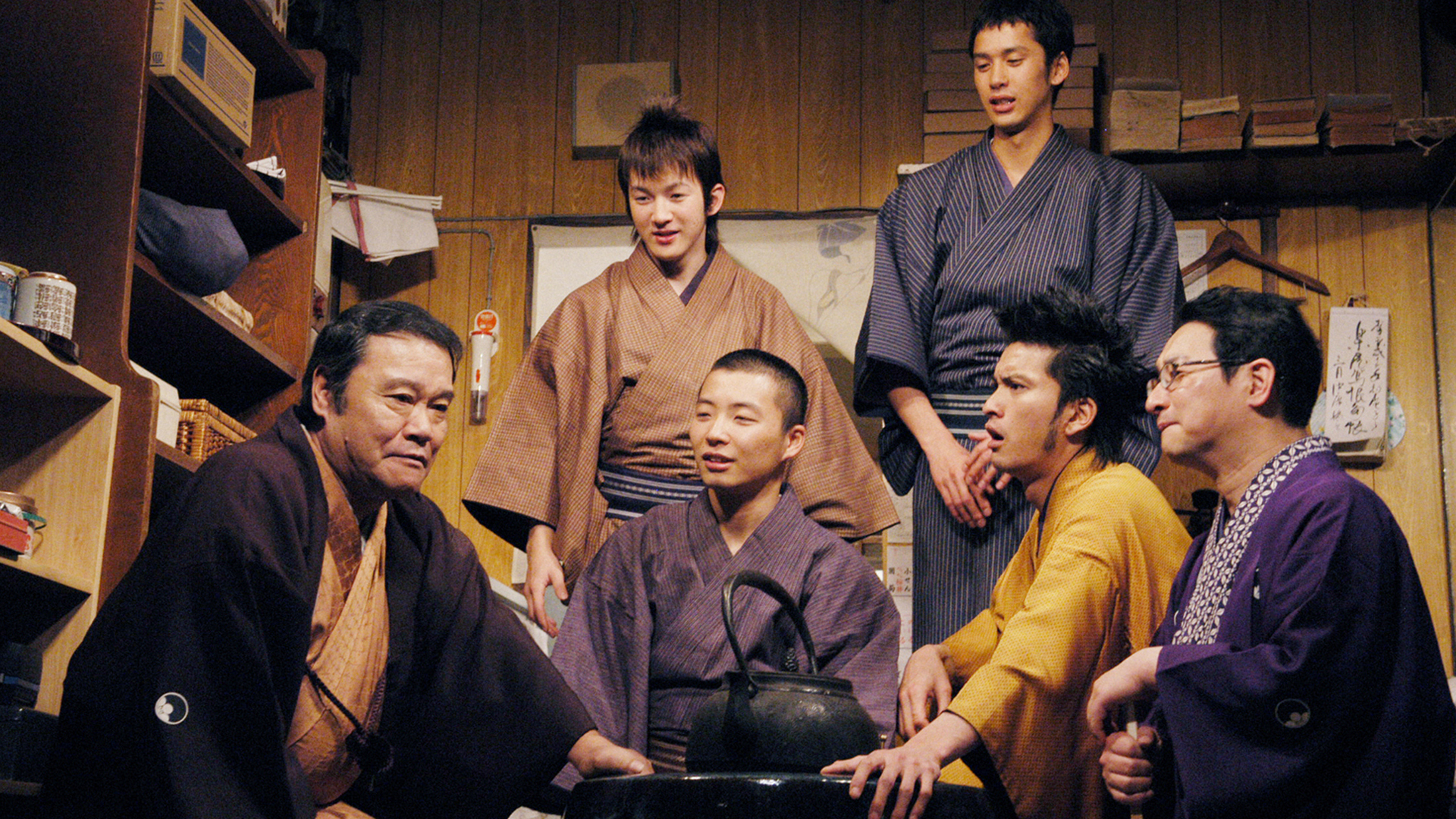
If you watch this and still don’t understand the appeal of rakugo, then maybe it’s just not for you.
Rakugo Genres
Ordinarily, “rakugo” refers to classic rakugo (kotenrakugo). New rakugo (shinsaku rakugo) also exists but rarely catches on before fading away.
Classic rakugo falls into three major genres:
- Kokkei-banashi (Comical stories) — funny tales designed to make you laugh
- Ninjo-banashi (Human interest stories) — emotional tales that bring tears
- Kaidan-banashi (Ghost stories) — supernatural tales meant to frighten
So if you’re in a laughing mood but accidentally end up at a venue specializing in ghost stories, you might be in for a rough evening. A little preparation goes a long way.
Rakugo References in ONE PIECE
“Hanauta-sanchou Yaburi Giri” Comes from “Kubi Chochin” (Head Lantern)
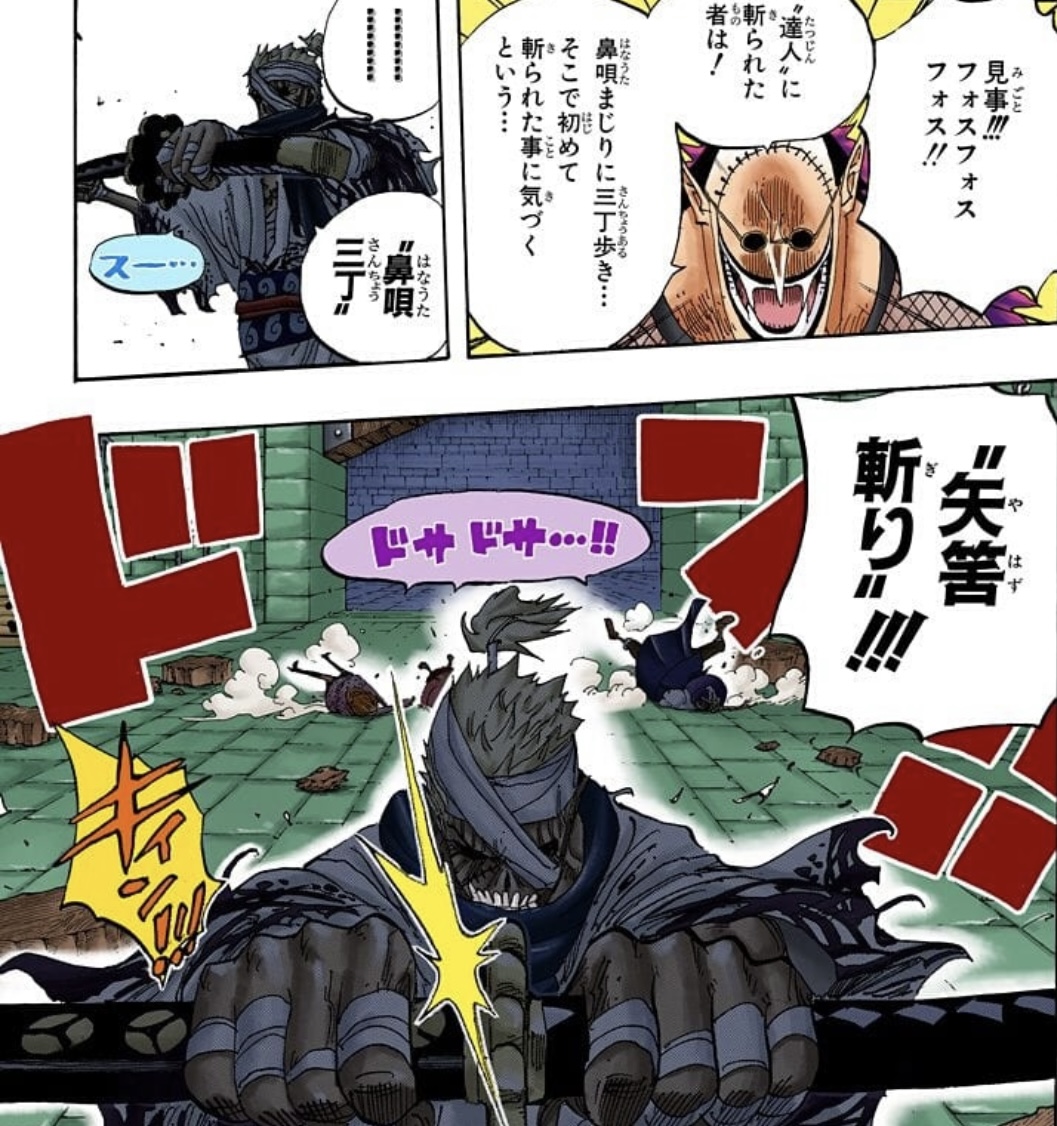
This special swordsmanship technique references the rakugo story Kubi Chochin (Head Lantern).
Plot summary:
A drunk man wanders a night road and encounters a samurai who asks for directions. The drunk insults the samurai — calling him a “country bumpkin” — and eventually spits on him, sending the samurai into a rage.
The enraged samurai draws his blade in a flash and cuts off the drunk’s head, then calmly walks away.
The drunk doesn’t realize he’s been decapitated and starts walking toward the sake shop anyway.
After a while, strange things begin happening — air leaking from his throat, blood dripping. He finally realizes his head has been cut off.
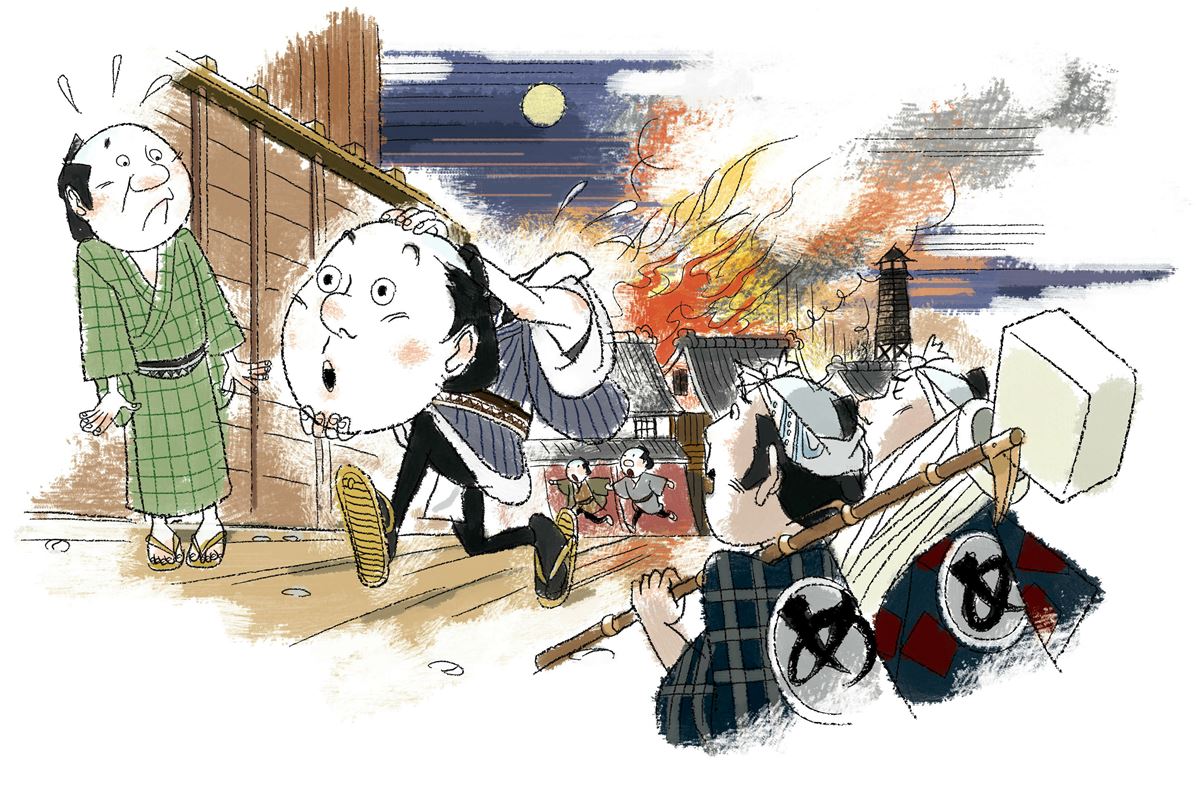
“Oh dear, there’s a fire ahead and a crowd forming. If I get bumped into and my head falls off, that’s a disaster!”
“I know — I’ll carry it carefully with my hands, like a lantern.” And so the drunk walks through the crowd, head in hand, calling out, “Excuse me, coming through, I’m in a bit of a rush!”
“Rare Species as Spectacle” Comes from “Ichigan-koku” (One-Eye Country)
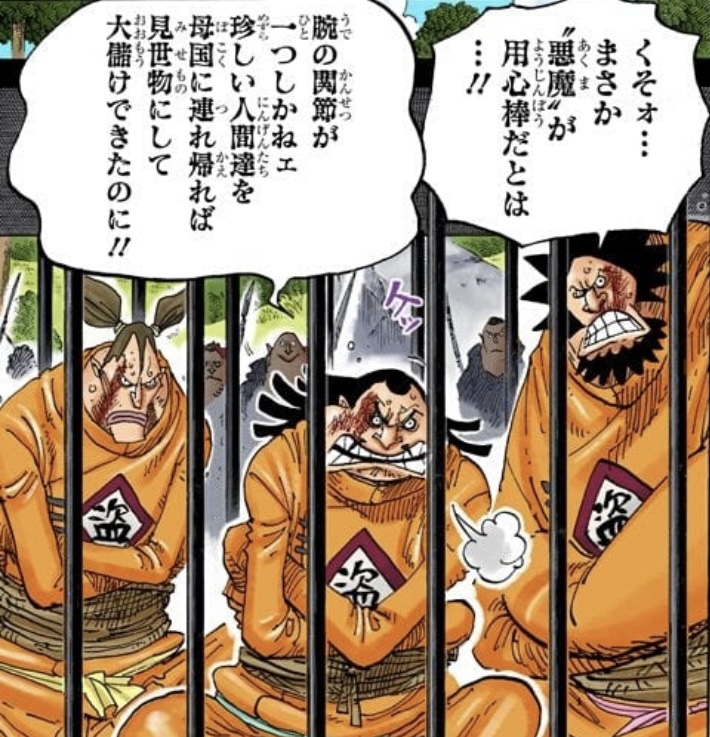
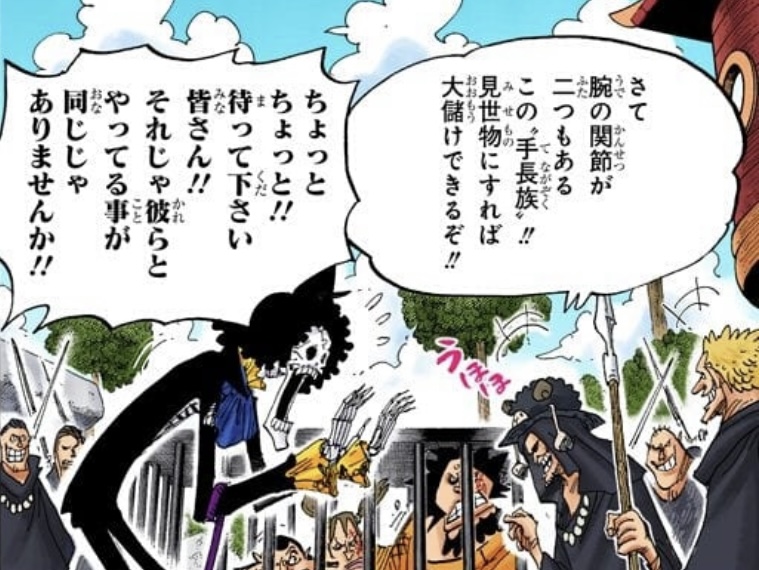
Both a ONE PIECE character and a rakugo performer want to profit by putting a “rare species” on display. This references the rakugo story Ichigan-koku (One-Eye Country).
Plot summary:
A traveling pilgrim is offered lodging at the home of a carnival barker who’s been scheming to capture some rare creature and make money displaying it.
“You travel across Japan — surely you’ve seen something strange?” he asks. The pilgrim replies that he was startled by a one-eyed child and ran away.
The next morning, the barker sets off to capture a one-eyed person and make money.
Resting under a tree, he hears: “Mister, mister!” He turns around — there’s a one-eyed little girl.
He grabs her and tries to leave — but she screams “Help!” and the barker is surrounded by one-eyed adults.
“That kidnapper — grab him!” He’s taken back to their village.
“Look at this weirdo — he’s got TWO eyes! He’s so rare, let’s put him on display and make money!”
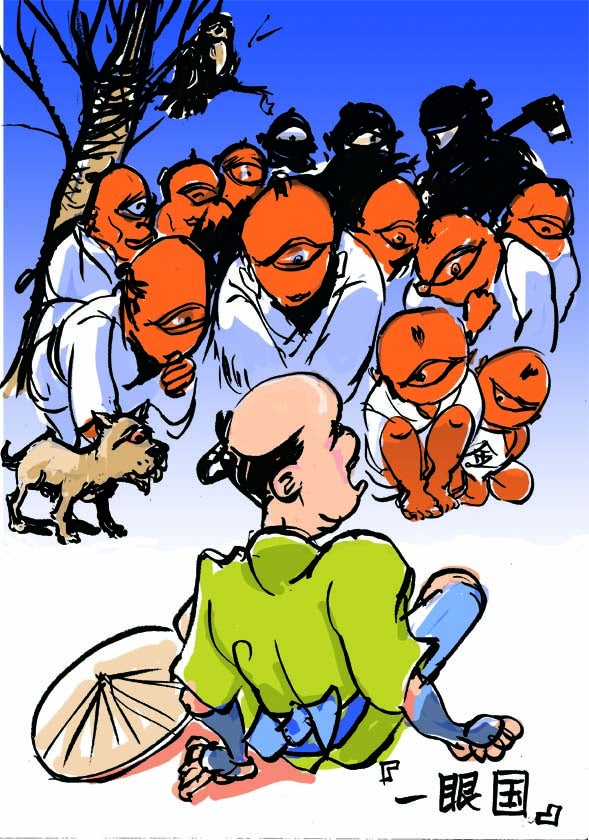
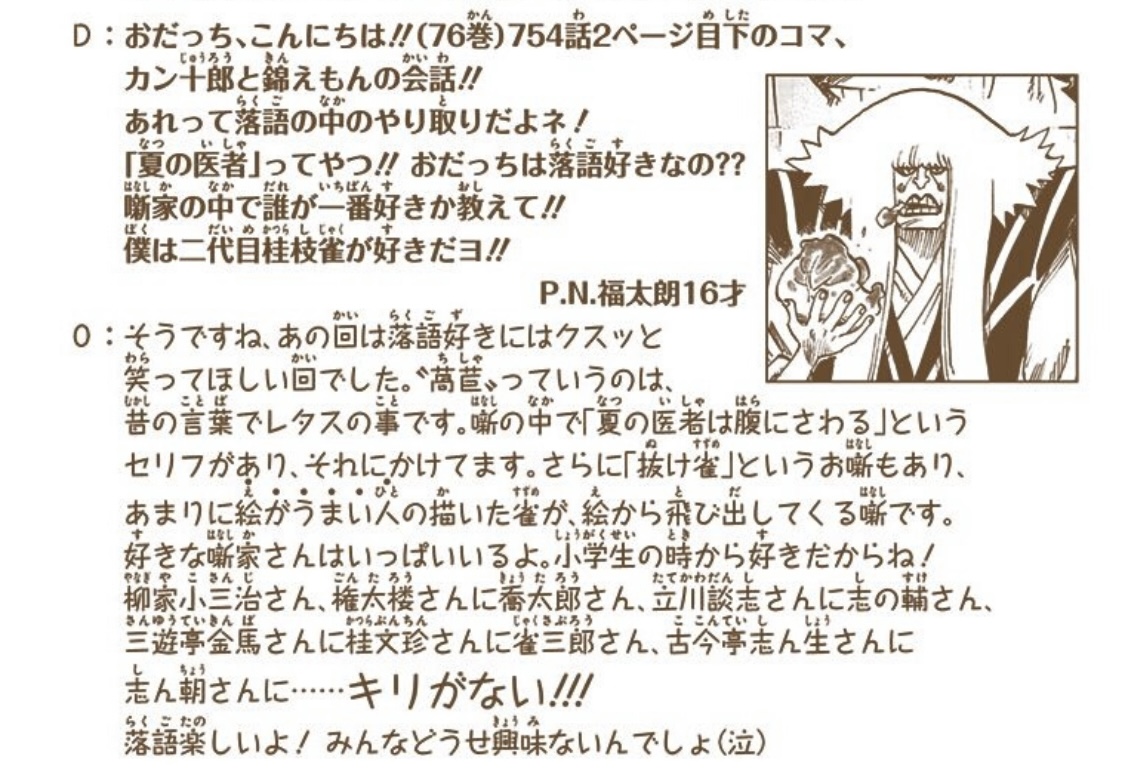
“Lettuce is Harmful to the Stomach” Comes from “Natsu no Isha” (Summer Doctor)
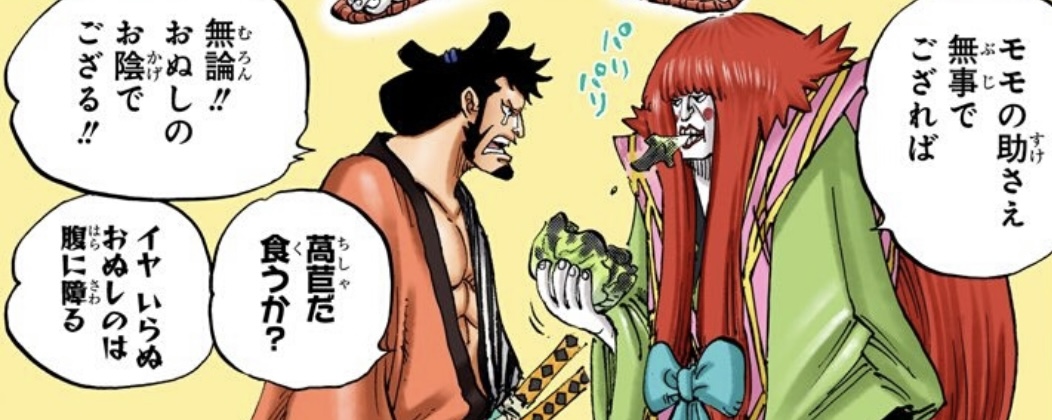
Chisha (萵苣) means lettuce. The exchange between Kinemon and Kanjuro during their reunion references the rakugo story Natsu no Isha (Summer Doctor).
Plot summary:
In a rural village, a farmer collapses in the midday summer heat. The farmer’s son runs over a mountain to the next village to fetch a doctor.
The doctor immediately suspects food poisoning and adds: “Summer lettuce upsets the stomach.” (A famous rakugo catchphrase.)
The doctor and son rush back together, but rest in the mountains along the way — when suddenly everything goes pitch black.
“Oh no. There’s a giant serpent (uwabami) in this mountain that eats people. We’ve been swallowed whole!”
The doctor pulls a laxative from his kit and sprinkles it in the serpent’s belly. The serpent expels them in agony.
They finally reach the farmer — but the doctor’s medicine kit is inside the serpent.
“I left it inside the serpent’s belly!” The doctor rushes back. “Swallow me again, please!” The serpent refuses, saying:
“Summer doctors upset the stomach.” (Natsu no isha wa hara ni sawaru.) — chisha (lettuce) and isha (doctor) rhyme, creating the punchline.

“Nuke-suzume” Comes from “Nuke-suzume” (The Escaping Sparrow)

This references the rakugo story Nuke-suzume directly.
Without understanding the pun in the punchline, this story won’t fully land. Quick note on two terms:
- Kago-kaki (cage painter) — One who painted a birdcage with a perch onto the folding screen.
- Kago-kaki (palanquin bearer) — The job of carrying a person in a palanquin; grueling physical labor, hence low status and a disliked profession.
The punchline reveals that the son forced his father to become a “kago-kaki” (palanquin bearer) — conveying just how deeply unfilial the son’s actions were.
That’s the meaning embedded in the ending.

Plot summary:
A poor couple running a struggling inn is approached by a fat man in dirty clothes who arrogantly says he’ll stay.
He drinks heavily on tab for a week. When they ask him to pay, he says he has no money now — but as he’s a painter, he offers to paint something as collateral, drawing five sparrows on their folding screen.
“Don’t sell this while I’m gone. I’ll pay when I return.” And off he goes.
The couple is fuming — but then they hear sparrows chirping from inside the room. The painted sparrows are walking around!
When the couple exclaims, the sparrows fly back into the screen.
Every morning the sparrows escape and play. Word spreads, crowds gather, and the couple grows wealthy.
But the sparrows grow weaker day by day.
Then an old man arrives, saying he knows the painter. “The painting is too crude — the sparrows will die soon. There’s no perch — they’re flying nonstop, exhausted.” He adds a birdcage with a perch.
The sparrows begin resting and regain their vitality. The old man leaves without a name.
The inn’s fame grows. A wealthy man offers a fortune for the painting — but the innkeeper refuses, honoring his promise.
Eventually the painter returns, well-dressed, to pay his debt. The innkeeper treats him warmly and tells him about the old man.
The painter rushes upstairs, kneels before the screen: “As healthy as ever. I’m sorry for my rudeness.”
The innkeeper learns: the old man was the painter’s father, who had secretly come to save his son’s careless work.
“A father-son pair of masters — how wonderful!” “Wonderful? I made my father a kago-kaki.” (A palanquin bearer — a disgraceful fate for such a master craftsman.)

“Gama no Abura” Comes from “Gama no Abura” (Toad Oil)

This directly references the rakugo story Gama no Abura (Toad Oil).
Plot summary:
A street medicine seller uses clever patter and sleight of hand to peddle “toad oil” as a miracle cure. He makes good money and goes to celebrate with sake.
Drunk, he spots a crowd and tries to make more money — but his speech is garbled and he forgets to rig his trick blade, accidentally cutting his own arm.
“If toad oil heals wounds, just put some on!” a spectator calls. Of course, it’s fake — the wound doesn’t close.
Punchline: “Is there anyone here who has some medicine that stops bleeding?”

“Evil Eye Grass” (Jagan-so) Comes from “Jaganso” (Snake-dissolving Grass)

The “Jagan-so” grass in ONE PIECE references the rakugo story Jaganso. The clearest version is told as Soba-sei.
Plot summary:
A giant serpent has swallowed a human whole and lies in agony with a bloated belly. A passing man watches from hiding as the serpent swallows a certain plant — and its belly deflates, before slithering away.
The man assumes this plant has “super-powerful digestive properties” and takes it home.
However, this plant only dissolves humans.
“Atamayama” Comes from “Atamayama” (Head Mountain)

The “Atamayama” reference in ONE PIECE directly comes from the surreal rakugo story of the same name.
This is an advanced story — you need to abandon all common sense and use your imagination to the fullest.
Plot summary:
A hot-tempered man eats a cherry whole — pit and all — and a cherry tree starts growing from his head, eventually becoming a magnificent tree.
Delighted neighbors name it “Atamayama” (Head Mountain) and hold huge cherry-blossom parties on his head.
Furious at the noise, the man yanks out the cherry tree — leaving a giant hole in his head.
The hole fills with rainwater, becoming a pond. Neighbors start fishing in it.
Since they’re fishing inside his head, the hooks keep catching on his eyelids and nostrils.
Driven past his limit, the man hurls himself into the pond to drown. The pond he drowns in? The one on his own head.

“Rakuda” Comes from “Rakuda” (Camel)

This directly references the rakugo story Rakuda.
Plot summary:
A violent thug called “Rakuda” (Camel) lived in a tenement. His gang boss “Hanjo of the Block” comes to visit and finds Rakuda dead from pufferfish poisoning.
Hanjo wants to give Rakuda a funeral but has no money. He grabs a passing secondhand goods dealer and coerces him.
“Buy everything in Rakuda’s place for a high price.” But there’s nothing valuable. He sends the timid dealer to collect condolence money from the landlord.
The landlord — harassed by Rakuda for years — refuses. Hanjo’s solution: drag Rakuda’s corpse to the landlord’s house and make it “dance.”
The uncanny dancing corpse terrifies the landlord into paying. Using this tactic, they shake down residents one by one.
Eventually, the hapless dealer snaps. He starts chugging the sake they bought with the collected money. The alcohol transforms him — the timid weakling lectures the yakuza boss Hanjo, and the power dynamic flips completely.
“Ichido Kitsune” Comes from “Nanado Kitsune” (Seven-time Fox)

This references the rakugo story Nanado Kitsune (Seven-time Fox).
Plot summary:
Two travelers heading to the Grand Shrine of Ise unknowingly incur the wrath of a fox.
This fox is the feared Nanado Kitsune — once it holds a grudge, it exacts revenge sevenfold.
Wherever the two travel, the fox tricks them repeatedly. It’s a slapstick comedy of escalating pranks.

“Denjiro’s Pot Deal” Comes from “Tsubozan” (Pot Arithmetic)

The scene where Denjiro buys a pot references the rakugo story Tsubozan (Pot Arithmetic).
Plot summary:
Yoshikichi wants to buy a 100-liter pot on the cheap, so he recruits his skilled-negotiating brother-figure, Naga-san.
Naga-san first haggles down a 50-liter pot from 1 yen 15 sen to exactly 1 yen.
He returns later and asks to exchange the 50-liter pot for the 100-liter one. “Since the 50-liter was 1 yen, the 100-liter should be 2 yen, right?” — a 30-sen discount.
“I already paid 1 yen earlier, right? And I’m returning this 50-liter pot — so together that’s 2 yen paid.”
“So I’ll just take the 100-liter pot now.”
And just like that, he’s walked out with a 100-liter pot for 1 yen.

[Recommended] Rakugo Anime

Right now, rakugo is definitely experiencing a revival.
The anime that was a massive hit during the previous rakugo boom: Showa Genroku Rakugo Shinju.
It has two seasons. Highly recommended for anyone curious about rakugo after reading this article.

Showa Genroku Rakugo Shinju is available on Amazon Prime Video and d Anime Store.