What Is a Kyokaku (Chivalrous Outlaw)?
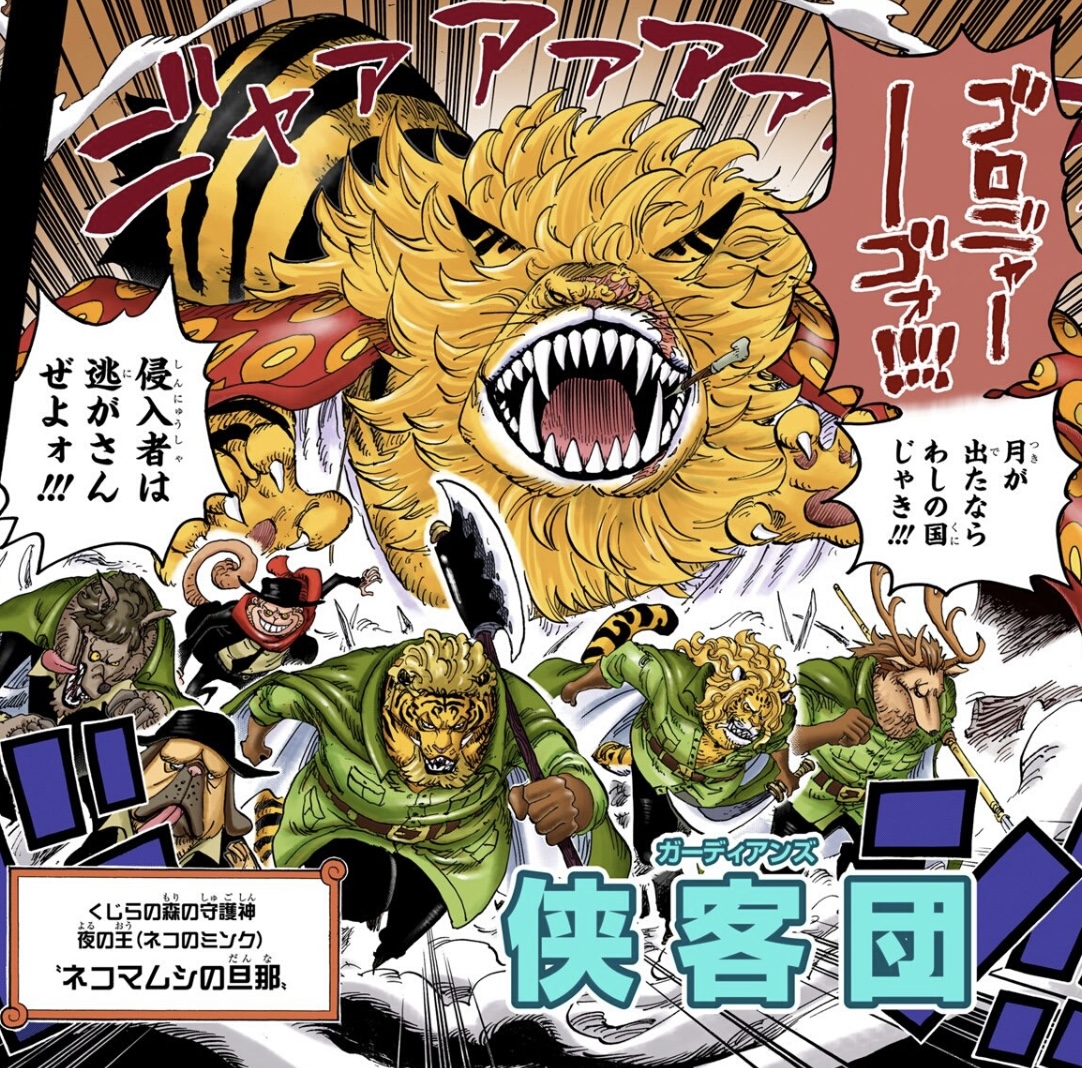
In One Piece, words like jingi (code of chivalry), ninkyo (chivalrous spirit), and kyokaku (chivalrous outlaw) appear again and again.
But unless you grew up watching old Japanese yakuza films like Battles Without Honor and Humanity or Jirocho Sangokushi, these terms can feel pretty opaque.
So in this post I’ll break down exactly what “kyokaku” means — and why it matters for understanding One Piece. (I’ve also covered jingi in a separate article, worth reading alongside this one.)
The “-kyaku” Suffix
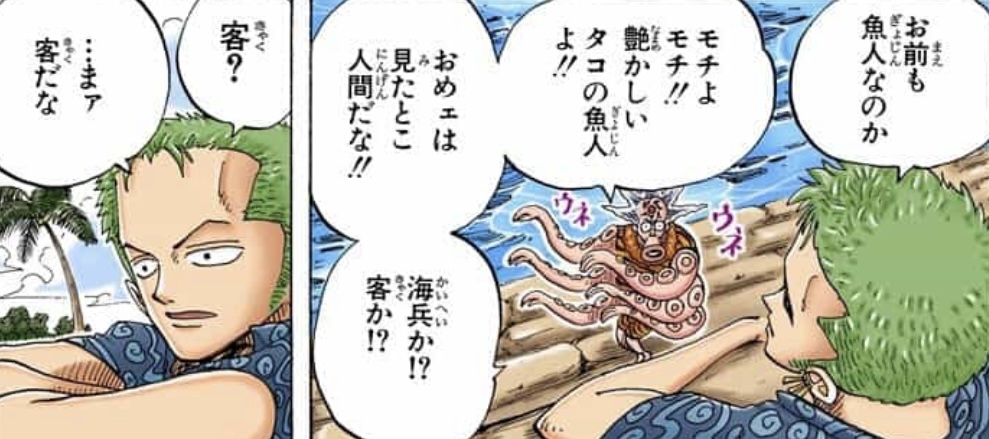
↑ Here Zoro is a “kyaku” all right — but the “kenkyaku” (swordsman) kind, or even “shikaku” (assassin) kind.
The character 客 (kyaku) has multiple meanings: the everyday “customer” or “guest,” but also “a person who excels at something.”
Examples: ronkyaku (skilled debater), seikyaku (seasoned politician), bokkyaku (master calligrapher), kenkyaku (master swordsman).
So kyokaku = a person who excels at kyo (侠). But what is kyo?
…What even is kyo?
The Character 俠
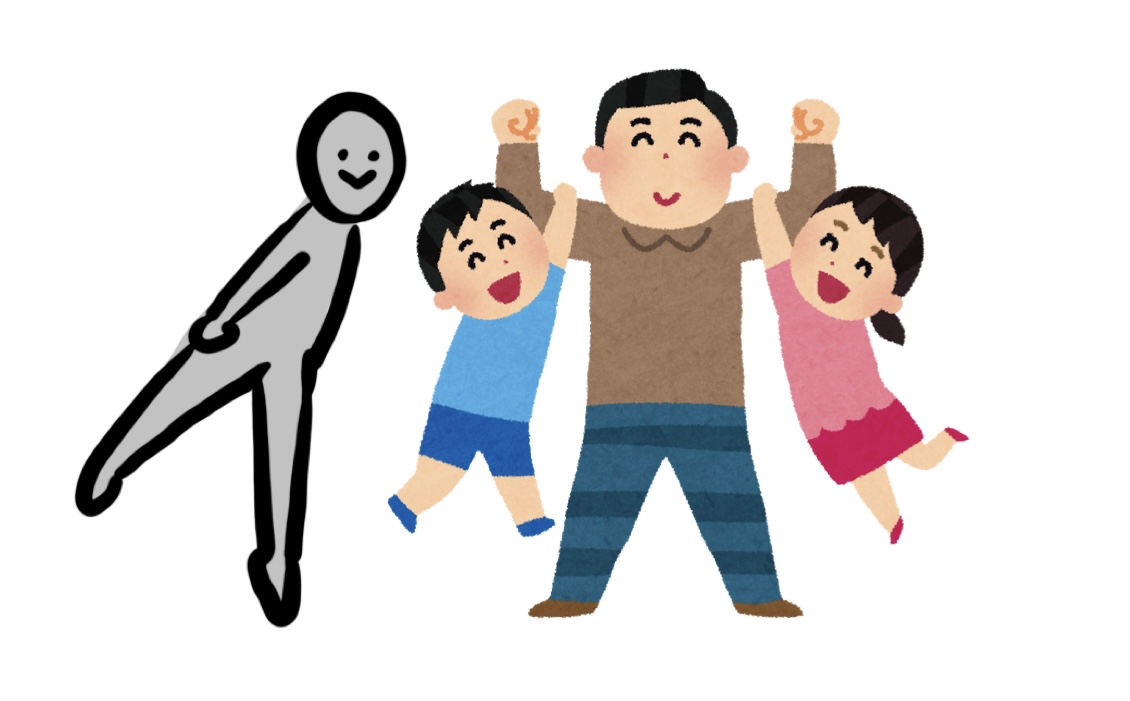
The “kyo” in kyokaku has an older variant: 俠. The modern simplified form is 侠, but the original had more punch.
It’s written with the “person” radical (イ) + “large” (大) + two small “person” characters (人) on either side — visually, it looks like a towering figure flanked by two people who rely on them. Immediately reassuring.
Pronunciation and meaning of 俠:
Reading: Kyō (on-yomi); otokodate, kyan (kun-yomi). Meaning: ① manly chivalry; a heroic man of honor (e.g., kyokaku, kyoki). ② A spirited, bold woman; a tomboy.
Otokodate (also dateo-toko) has the exact same meaning as kyokaku — a person brimming with gallantry, the kind of man who stands up for others.
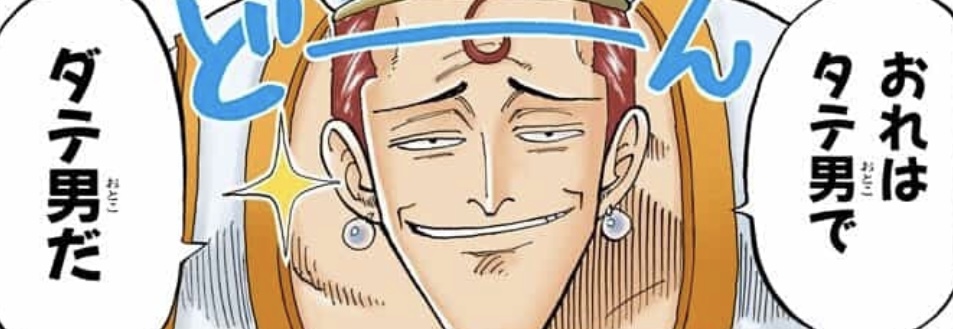
Definition of otokodate: One who conducts himself in a way that preserves his honor as a man. He crushes the strong, protects the weak, and values loyalty even at the cost of his life. Also: a kyokaku.
In other words, a kyokaku is a person who excels at 俠 — a true man among men.
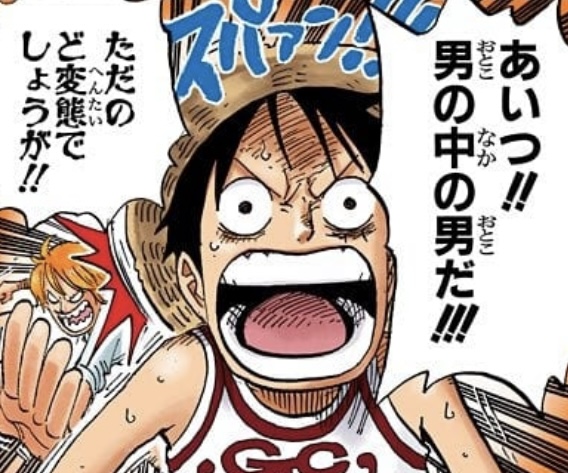
Franky: The Living Definition of Kyokaku
When Luffy calls someone a “man among men,” the first name that comes to mind is Franky.
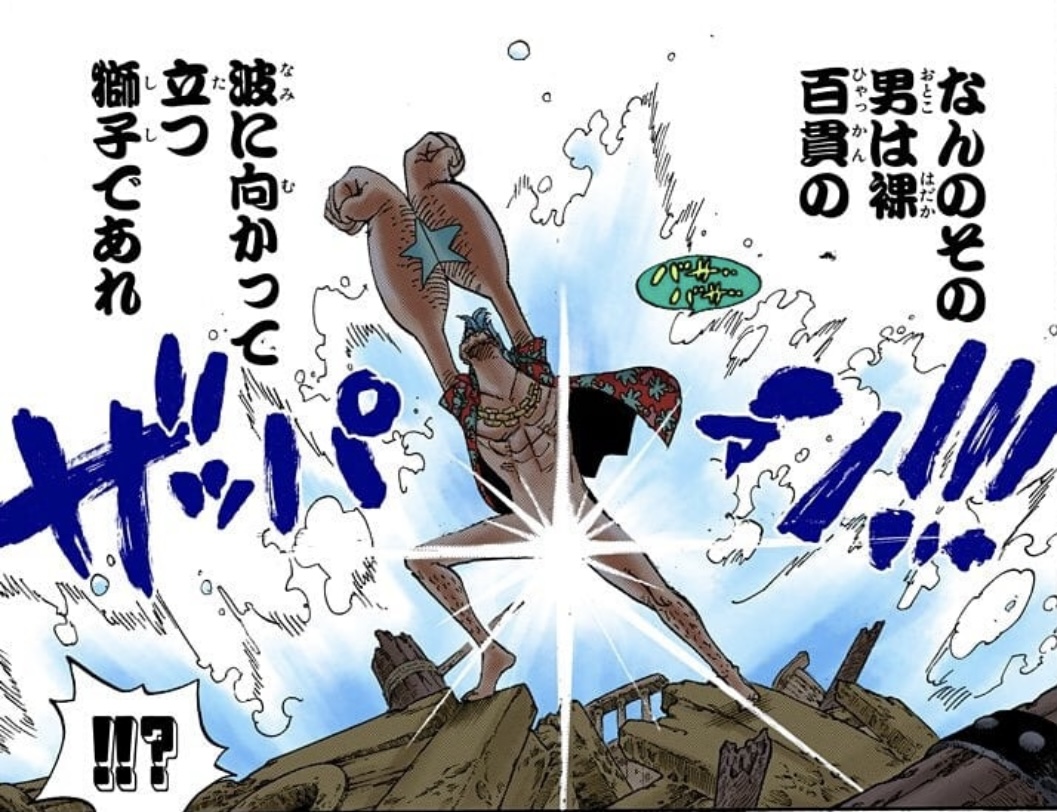
Let’s check whether Franky actually meets every condition for being called a kyokaku.
The three conditions of a kyokaku: (1) He crushes the strong, protects the weak, and values loyalty even at the cost of his life. (2) He has no attachment to money and can take losses without flinching. (3) He treats even battle as a form of play.
Crush the strong:
→ Franky has enough firepower to defy the World Government, which hides behind its authority to do whatever it likes.
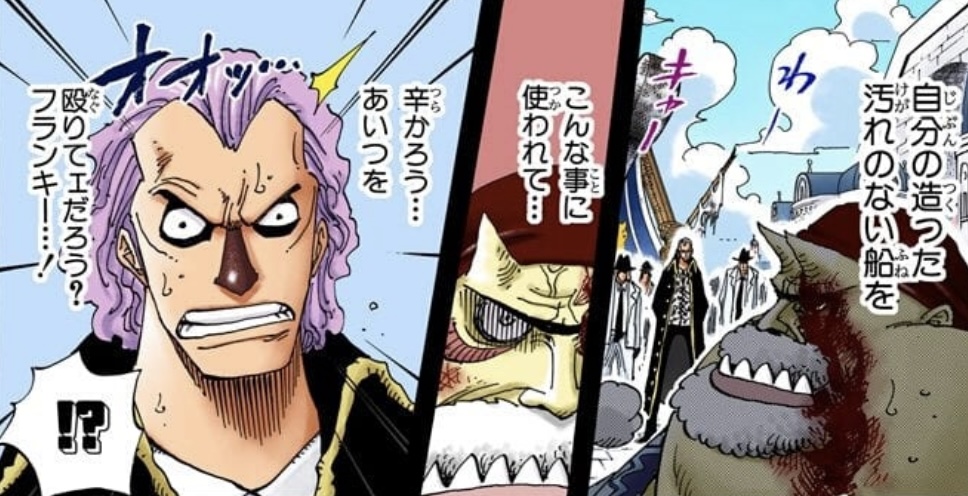
Protect the weak:
→ Franky takes in street punks who can’t hold down normal jobs and gives them honest work running his dismantling business.
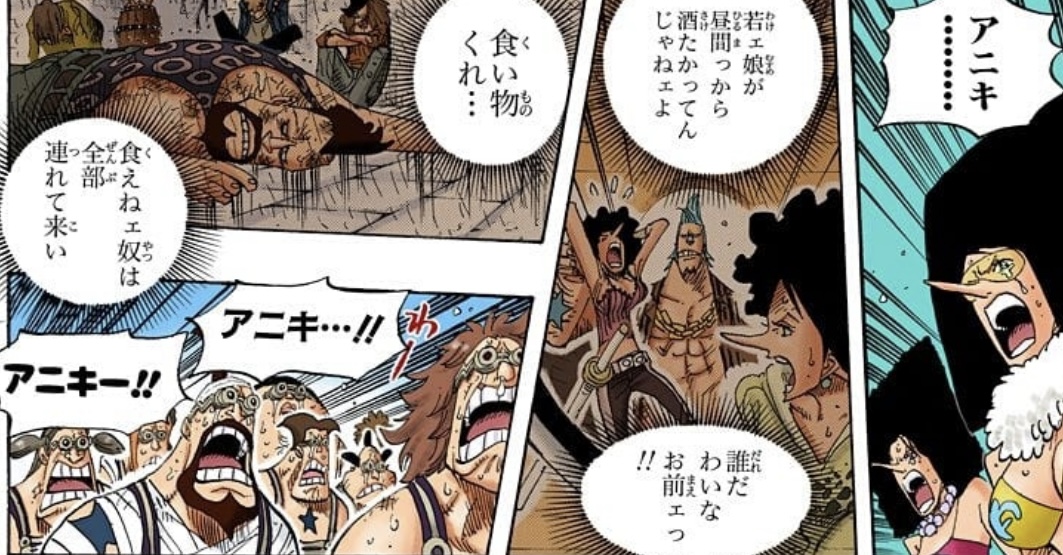
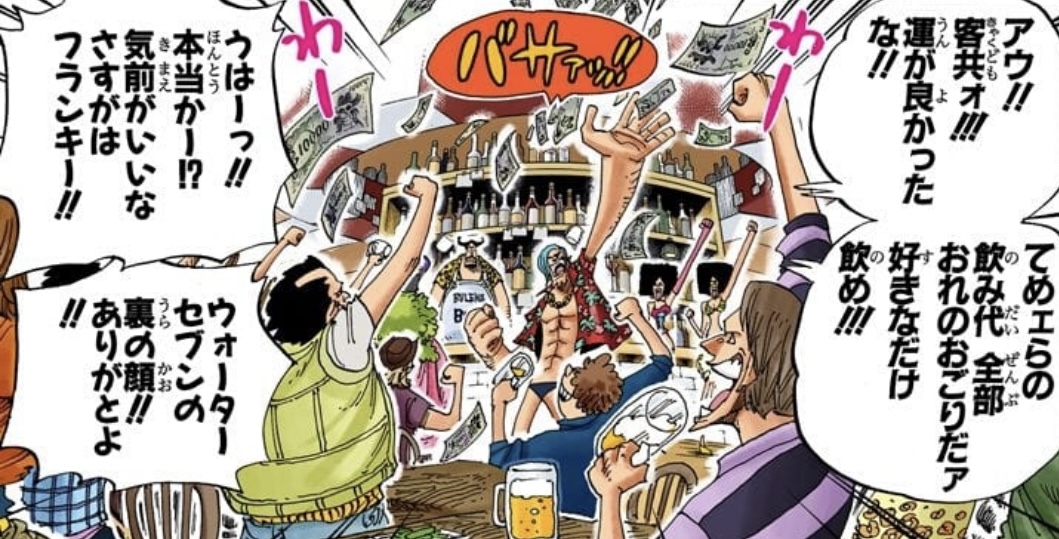
No attachment to money, can take a loss:
→ Classic Edokko spirit — “I don’t hold onto money overnight.”
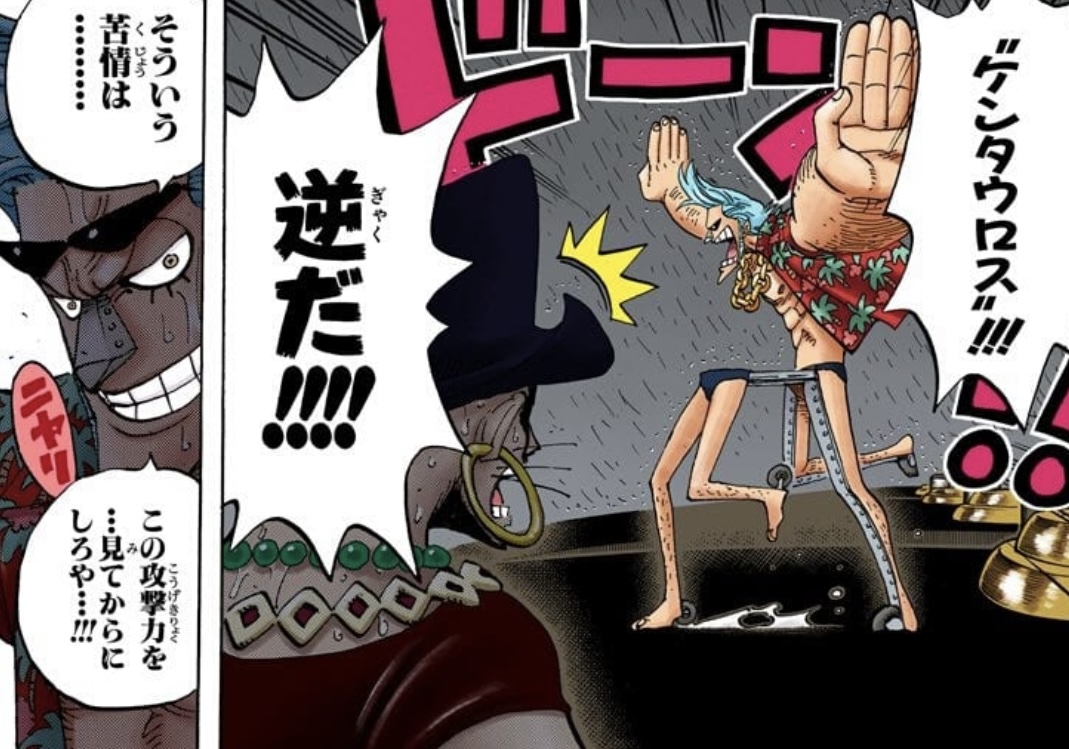
Treats battle as play:
→ His ridiculous, theatrical fighting style says it all.
Perfect score across the board.
It’s very likely that Oda designed Franky’s entire personality around the concept of kyokaku — as the clearest illustration of what the word means.
Jinbe: Knight of the Sea

Franky — the gold standard of kyokaku — genuinely respects Jinbe and recognizes him as a true man. That alone tells you a lot.
Jinbe has embodied ninkyo and jingi (the moral code of chivalry) through his actions throughout the story.
Fun detail: when Jinbe first appeared, his epithet was written with the old character — 海俠 (using the archaic 俠).

By the time he was introduced as a Straw Hat member, the epithet used the modern character — 海侠 (simplified 侠).

We don’t know why the character changed, but the meaning is the same.
Bottom line: a kyokaku is a true man among men who lives by ninkyo as his creed and honors jingi in every action.
What exactly is ninkyo? I’ll break that down in a future post.
By the way — Oda was apparently delighted when someone told him One Piece is a “ninkyo manga.”
Suzuki Toshio’s Ghibli Podcast — Oda Confirms It

Studio Ghibli producer Toshio Suzuki runs a radio show called Suzuki Toshio no Ghibli Ase Mamire. Oda appeared as a guest, and the exchange went like this:
Suzuki: “Honestly, when I first read One Piece, my gut reaction was — this is a yakuza film!” [laughs]
Oda: “I think it’s because I just love that genre [ninkyo films]. If that came through, then I hope you’ll watch the new film (FILM Strong World) — especially the second half.”
Oda: “This time I wanted to tap into the Japanese DNA of the loyal retainer charging into battle.”
Suzuki: “It’s ninkyo, all right. A gorgeous piece of ninkyo.”
Oda: “Bingo. [laughs] I’ve always loved ninkyo stories ever since I was a kid, so it just seeped in.”
There it is straight from the source. One Piece is a ninkyo manga — and kyokaku like Franky and Jinbe are its spiritual core. That’s all for today!