The Birth of Masakado the Vengeful Spirit [Heian Period]
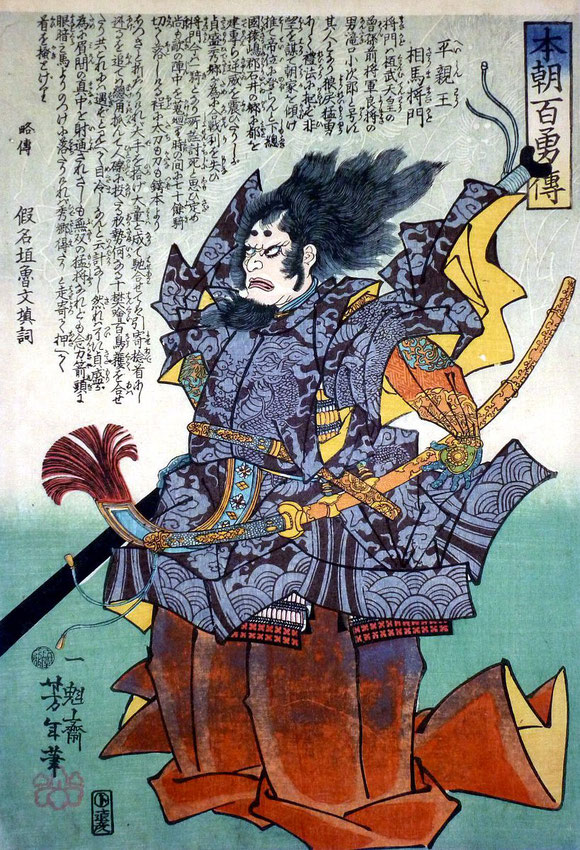
Taira no Masakado was a warrior of the Heian period, descended from Emperor Kanmu. He based himself in Kanto and, in 939, raised an army — ultimately conquering the entire region.
Having unified Kanto, Masakado declared himself Shin-no (New Emperor), establishing a parallel court to the Imperial family in Kyoto. His actual intention was to split Japan in two: ‘You rule the west, I’ll rule the east.’ But the Kyoto court branded him a traitor.
“I have the divine mandate to rule the east. I shall be New Emperor — equal to the Emperor in Kyoto.”
Alarmed, his former allies abandoned him one by one.
Cut off and encircled, Masakado was swiftly defeated.
He was killed in 940, at approximately 38 years of age. His legendary vendetta, however, had only just begun.
Japan’s First Gokumon and the Legend of the Severed Head
You may have heard the term gokumon (Prison Gate) from Gojo Satoru’s technique in Jujutsu Kaisen.
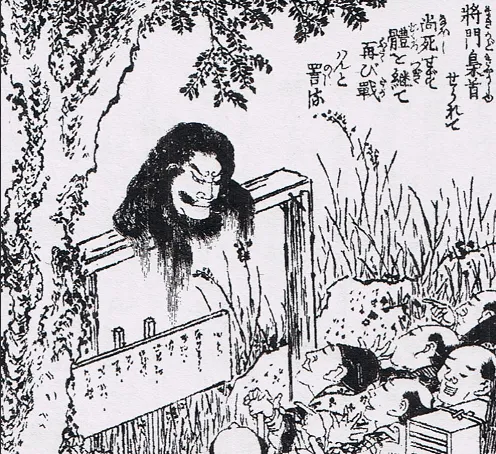
Gokumon was a punishment in which a criminal’s severed head was publicly displayed. The oldest confirmed record of this practice in Japan is the execution of Taira no Masakado.
Killed in battle in Kanto, Masakado’s head was transported to Kyoto for public display. The humiliation of being decapitated and exhibited is said to have ignited his vengeful spirit.
According to legend, the displayed head opened its eyes at night and bellowed: ‘Where is my body?! I can still fight! Give me back my body!’
| Vengeful Spirit | Era | Background |
|---|---|---|
| Sugawara no Michizane | Heian | Scholar-aristocrat demoted by rivals; died in despair and became a vengeful spirit |
| Taira no Masakado | Heian | Warrior who defied the Emperor; proclaimed himself New Emperor and was beheaded in battle |
| Emperor Sutoku | Heian | Exiled emperor who cursed Japan on his deathbed |
The Headless Body That Wandered to Find Its Head
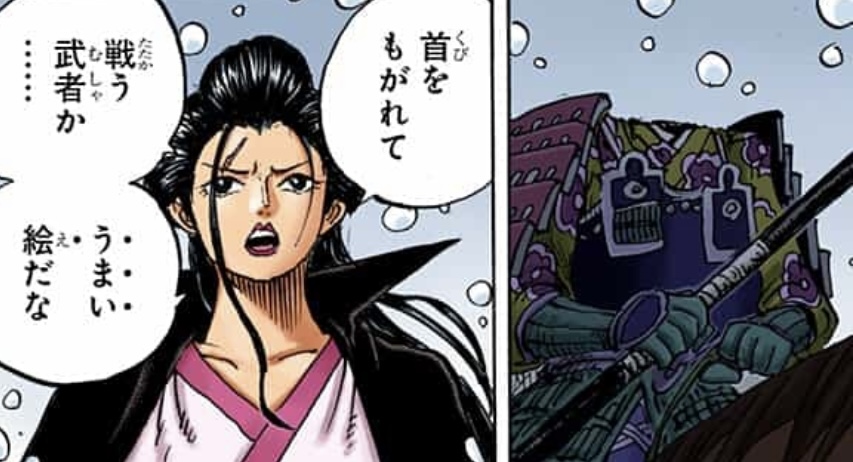
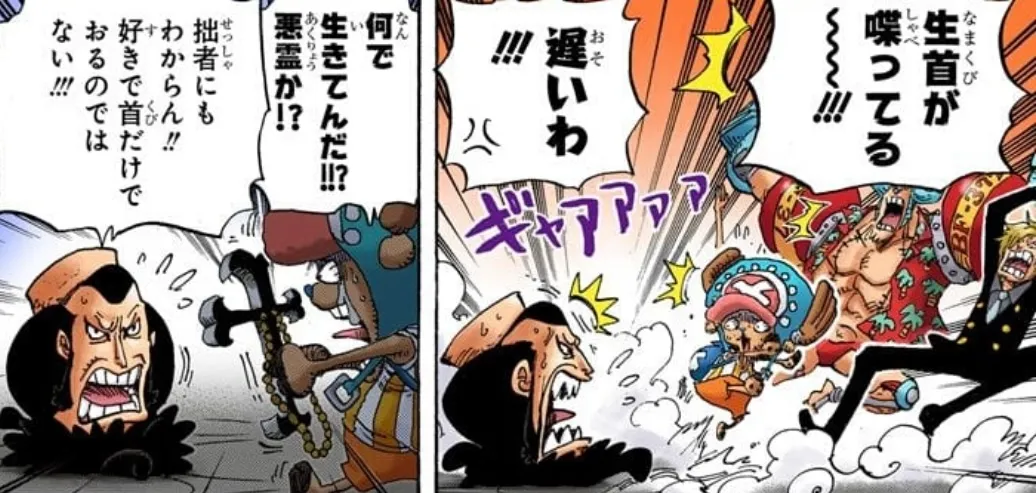
Meanwhile, the headless body left behind in Kanto reportedly wandered the nights in search of its missing head — drawn toward the screaming voice in distant Kyoto.
Both scenes above appear to be direct homages to the legend of Taira no Masakado.
According to one theory, the spot where Masakado’s body finally collapsed became the original site of Kanda Myojin shrine in Tokyo.
The shrine’s very name may trace back to this legend: body (karada) to kara to kanda — ‘Kanda.’
The Legend of the Flying Head
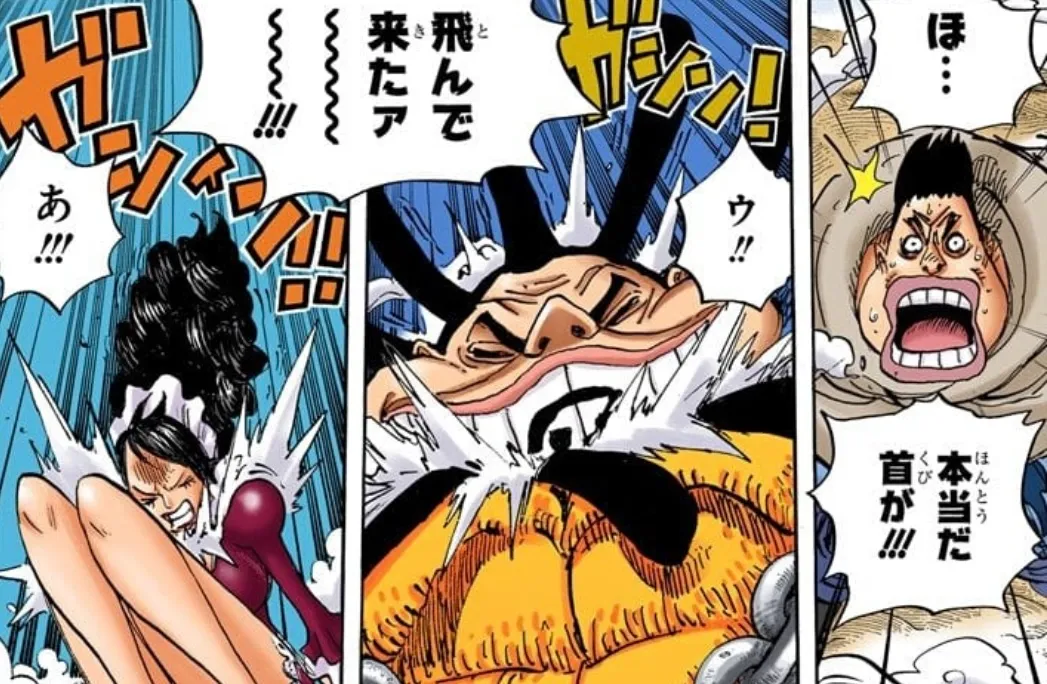
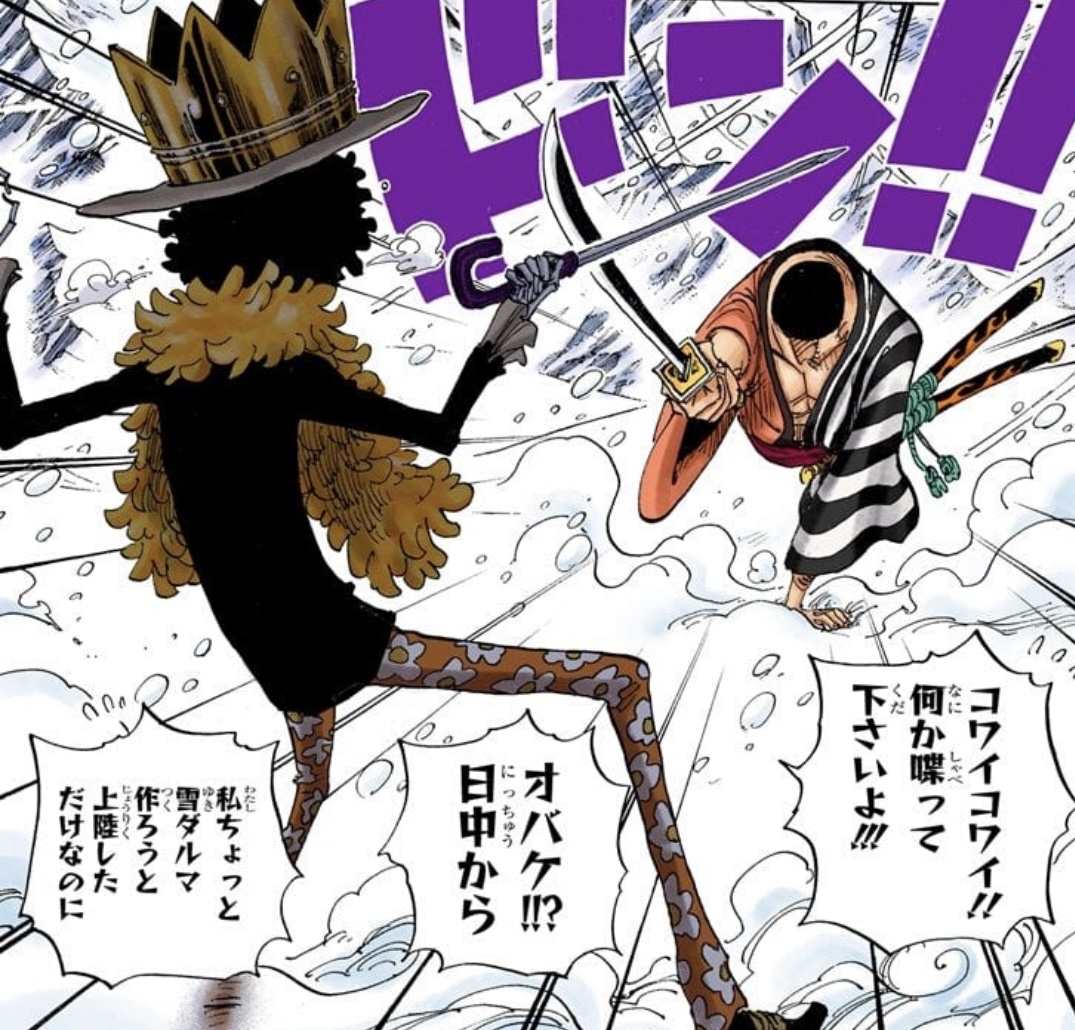
After three nights of roaring in Kyoto, Masakado’s head finally took flight — soaring east toward Kanto in search of its body.
The scene above appears to be a direct homage to this legend of the flying head.
Notably, the Punk Hazard arc began with Kin’emon’s detached head and closed with the severed heads of the Donquixote Family — a narrative bookended by this very legend.
But the head could not find its body. Its strength exhausted, it tumbled to earth.
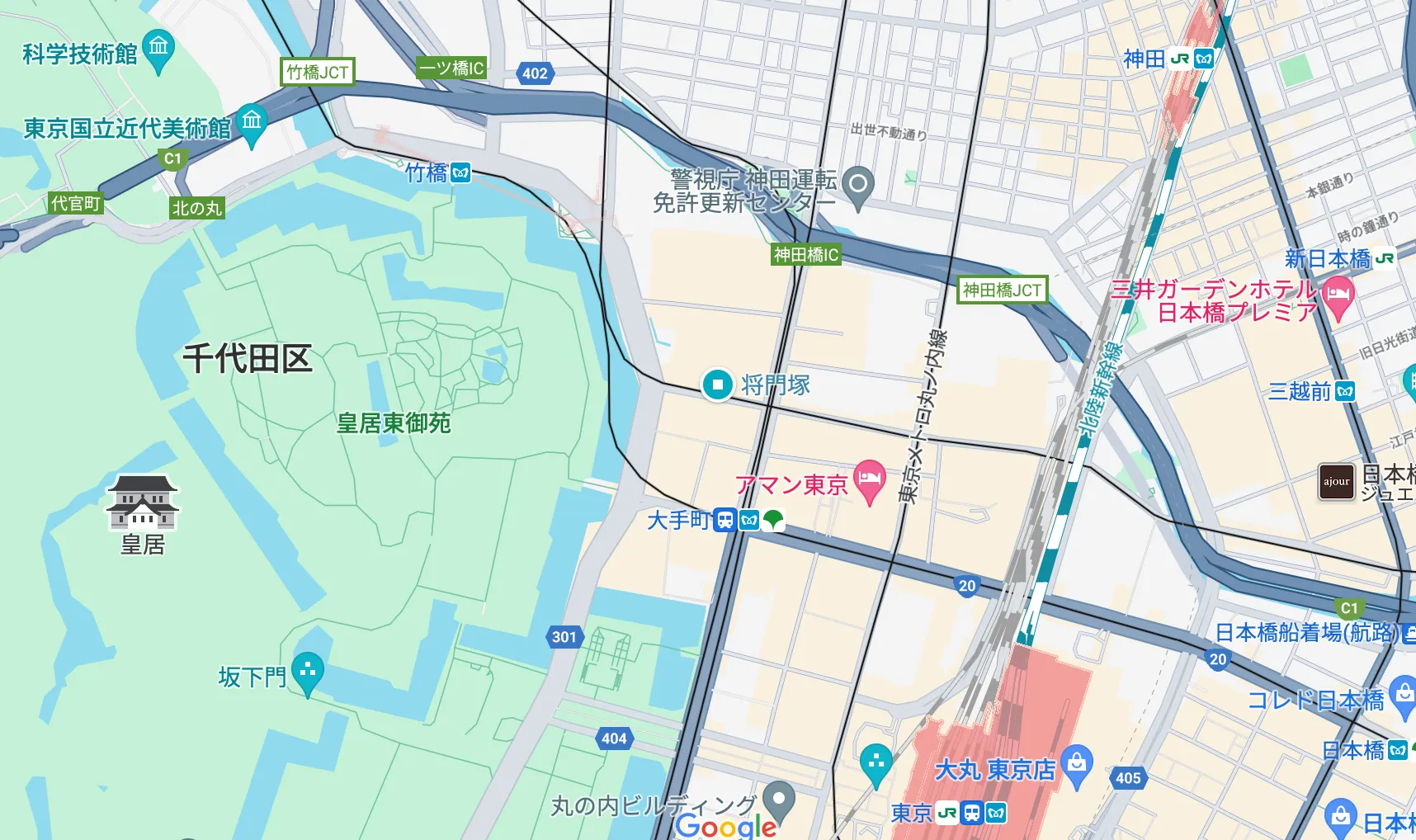
The spot where it finally came to rest is preserved to this day as the Masakado Kubizuka (Head Mound) in Otemachi, Tokyo.
Weaponizing Masakado’s Curse — The Edo Barrier [Edo Period]
Pulling together what we know about Taira no Masakado:
- Born and raised in Kanto — an eternal symbol of resistance against Kyoto’s authority
- Proclaimed himself New Emperor — a direct defiance of the Imperial family
- After his death, his severed head flew back to Kanto — suggesting his soul remained bound to the east
- A powerful vengeful spirit — the Kyoto court lived in fear of his curse for centuries
- Worshipped by local people — enshrined and revered as a god throughout Kanto
- Deeply connected to the Big Dipper through Myoken faith — regarded as a god of death governing the stars
- A warrior who once unified all of Kanto — a symbol of enormous military and spiritual power
- One of Japan’s Three Great Vengeful Spirits — his curse remains feared to this day
In other words: for the Imperial family in Kyoto, Masakado was a mortal enemy. For anyone based in Kanto who sought to rule all of Japan, he was an invaluable ally.
The man who harnessed this power — and shifted Japan’s center of gravity from Kyoto to Edo (present-day Tokyo) — was Tokugawa Ieyasu.
The Big Dipper Barrier Against the Emperor
The Edo area was, at the time, little more than swampland — territory that nobody wanted.
Toyotomi Hideyoshi, wary of Ieyasu’s growing power, assigned him governance of Edo as what was intended to be a political demotion.
But Ieyasu saw it differently: ‘Mountains to the north, sea to the south, rivers to the east and highways to the west — outstanding feng shui.’ He launched massive land reclamation projects, built an extensive canal network, and transformed the marshes of Edo into a thriving city.
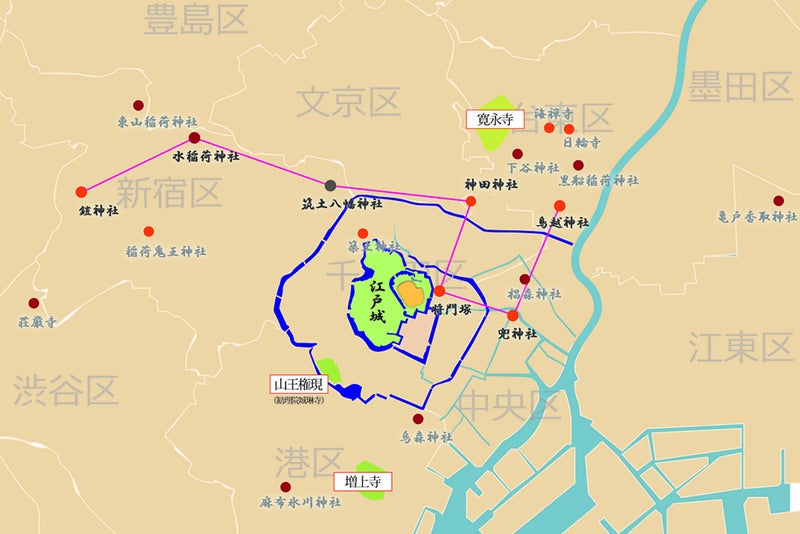
He then arranged shrines across the city in the shape of the Big Dipper constellation, forming a spiritual barrier to protect Edo from the Imperial power in Kyoto.
Reading the positions of the Big Dipper from upper right, the corresponding shrines are:
| Star | Shrine | Location |
|---|---|---|
| Alkaid | Ueno Toshogu | Ueno, Taito-ku |
| Mizar | Nezu Shrine | Nezu, Bunkyo-ku |
| Alioth | Kanda Myojin | Sotokanda, Chiyoda-ku |
| Megrez | Yanaka Tenmangu | Yanaka, Taito-ku |
| Phecda | Hie Shrine | Nagatacho, Chiyoda-ku |
| Merak | Shiba Daijingu | Shibadaimon, Minato-ku |
| Dubhe | Fujiwara Hidesato Shrine | (Incorporated into the formation) |
Like the sealed pieces of Exodia the Forbidden One, the scattered remains of Taira no Masakado were enshrined across these seven locations — binding the barrier together.
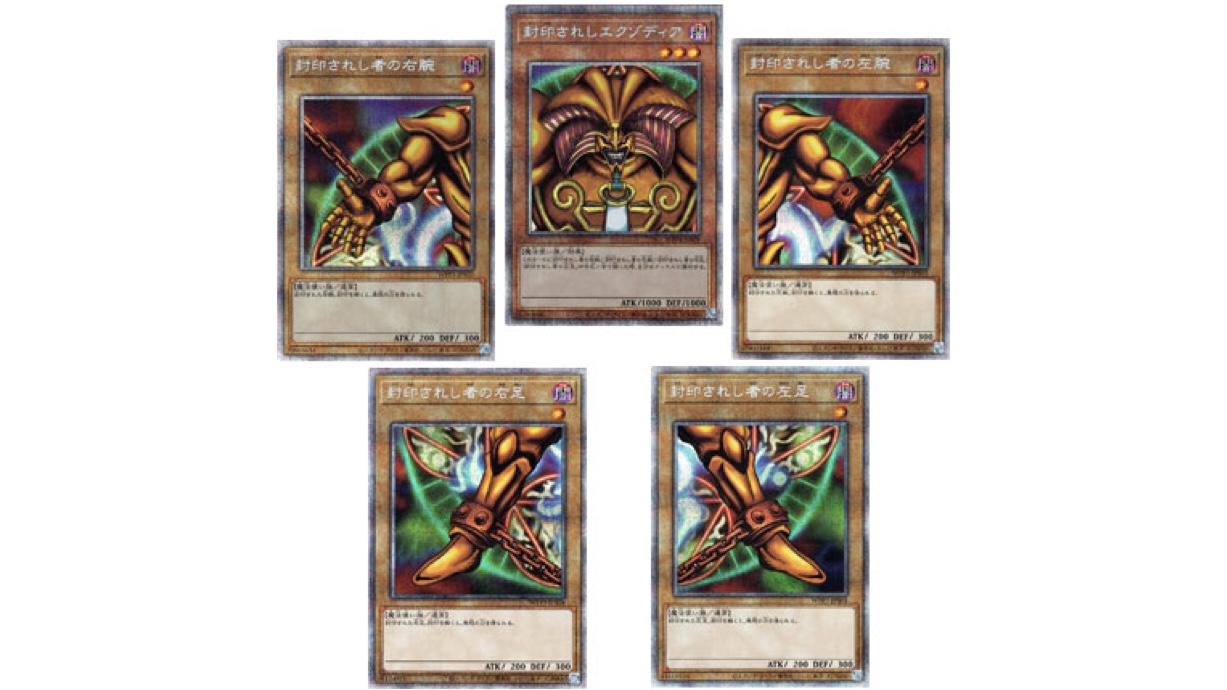
The Kyoto Emperor was said to be genuinely afraid to set foot in Kanto, for fear of Masakado’s lingering curse.
Cleverly, Ieyasu also incorporated the shrine of Fujiwara no Hidesato — the warrior who had defeated Masakado in life — into the barrier formation.
By weaving in a god who had already conquered Masakado once before, Ieyasu achieved complete dominion over the vengeful spirit — subjugation layered upon subjugation.
A remarkably thorough piece of spiritual engineering.
But look at that Big Dipper formation again. Doesn’t it make you wonder why he chose that particular constellation?
Myoken Faith — Big Dipper Worship
Both Taira no Masakado and Tokugawa Ieyasu were practitioners of Myoken faith — the worship of the North Star and Big Dipper. It was one of the most widespread religious currents of the era.
In Myoken faith, the Big Dipper is regarded as the constellation that governs death. Kenshiro from Fist of the North Star frequently calls himself a ‘god of death’ — and this is no accident.
A religion that deified death naturally resonated with warriors, for whom death was an ever-present companion.
It seems every warrior of the era went through an edgy skull-motif phase at some point.
In brief, Myoken faith is:
A branch of Buddhism centered on the deification of the North Star or the Big Dipper.
The deity is also called Myoken Bosatsu (Bodhisattva of Subtle Vision), or Hokushin Bosatsu (Bodhisattva of the North Star).
The Government vs. Edo’s Barrier [Meiji to Taisho]
The Meiji Restoration brought the Edo period to a close.
The Tokugawa shogunate was dismantled, and power was returned to the Emperor under the formal restoration of Imperial rule.
Edo Castle — the very symbol of the Tokugawa era — was demolished, and the Imperial Palace was erected in its place. Emperor Meiji relocated from Kyoto, planting his seat of power on the Tokugawa clan’s former ground.
The anti-Imperial barrier laid across Edo was gradually dismantled: shrines were relocated to distort the Big Dipper’s alignment, and Masakado’s enshrinement was quietly suspended at several sites.
The Yamanote Line — Built to Sever the Barrier
Spiritual power, it is said, can be cut by iron.
Iron originates from ore — a mineral that has absorbed the concentrated force of the earth itself. Because it carries the raw energy of nature, blades forged from iron were believed capable of cutting down even supernatural beings.
The Meiji government applied this logic on an urban scale.
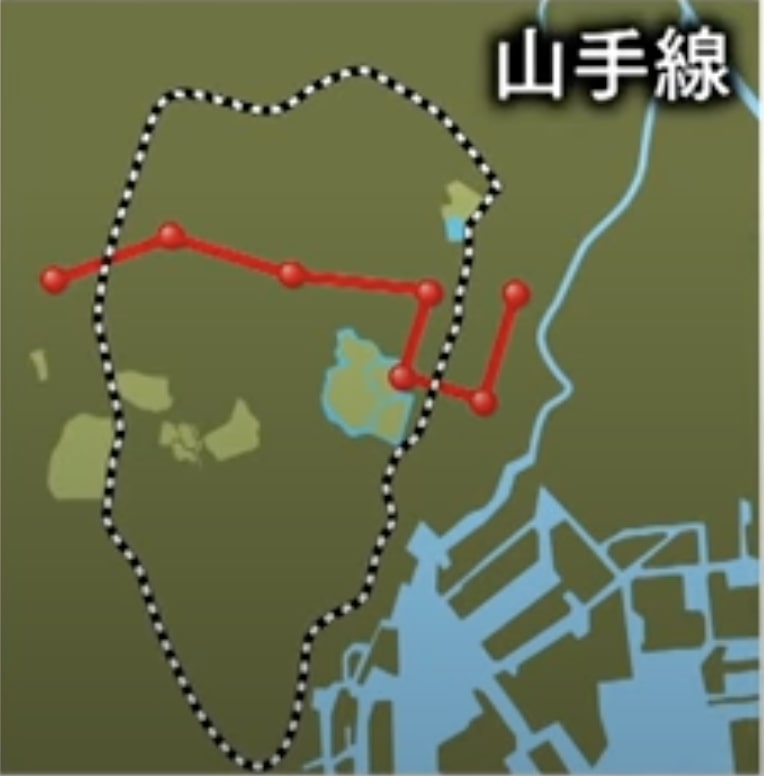
But just as the Yamanote Line neared completion…
September 1, 1923 — the Great Kanto Earthquake.
The earthquake reportedly struck at the precise moment workers were laying the final tracks between Kanda Station and Akihabara Station — the exact section that would have severed the spiritual connection between the Kubizuka and Kabuto Shrine.
The furious spirit of Masakado was said to have unleashed the earthquake, destroying the newly laid rails and delaying the line’s completion by years.
The Curse That Made MacArthur Tremble [Showa to Reiwa]
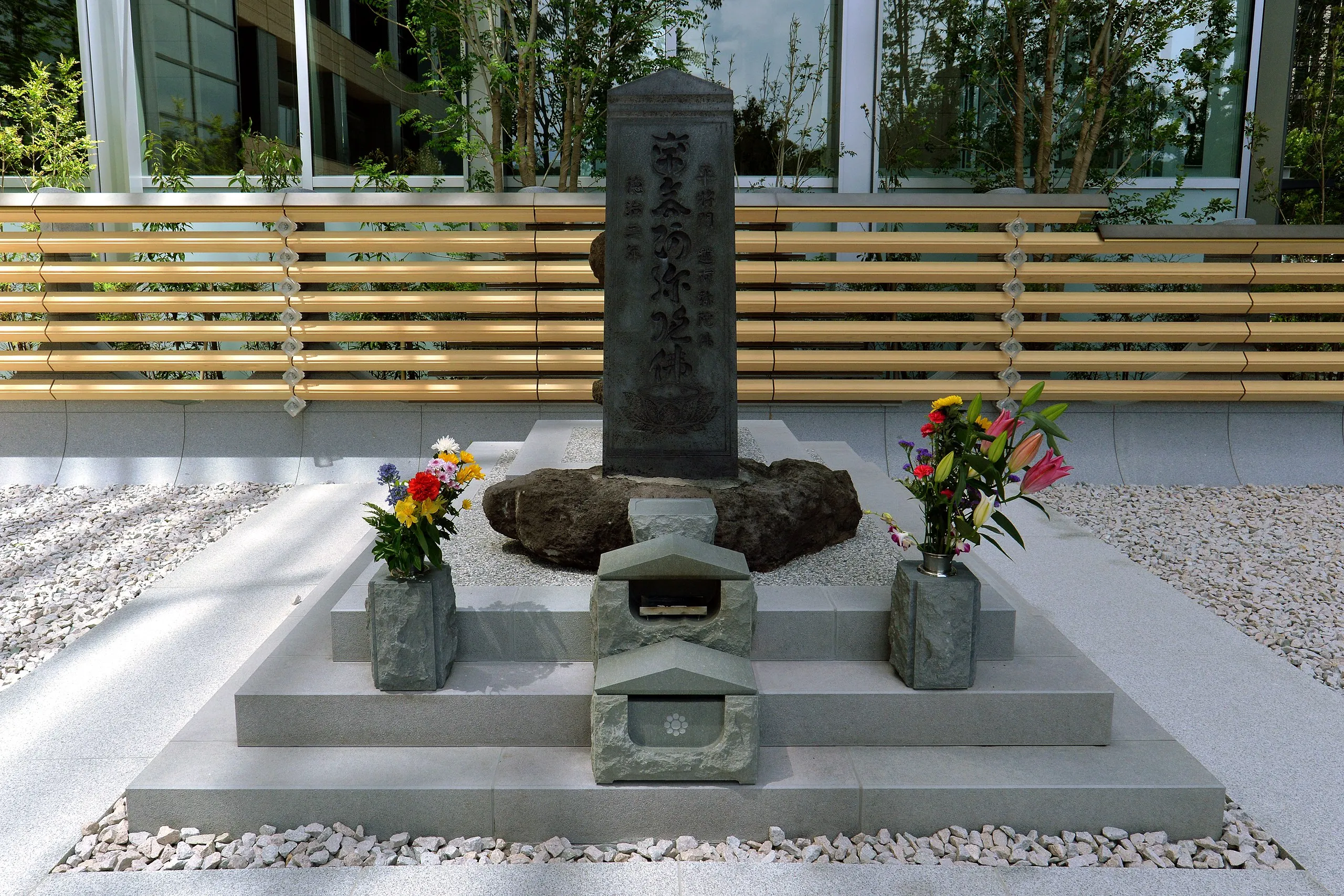
Masakado’s Kubizuka stands on some of the most expensive real estate in Japan — directly in front of the Imperial Palace, a five-minute walk from Tokyo Station.
Address: 1-2-1 Otemachi, Chiyoda-ku, Tokyo.
Surrounded on all sides by government ministry buildings and major corporate headquarters, this solitary stone monument stands conspicuously out of place at the very heart of the nation’s capital.
After World War II, under the direction of GHQ, the surrounding land was earmarked for development — and the Kubizuka site was designated as a car park.
But the moment demolition work began, a bulldozer reportedly overturned and killed its operator. Casualties continued to mount. The project was halted.
There is also a persistent legend that officials in the Ministry of Finance building immediately behind the Kubizuka — those who sat with their backs to the shrine — died one after another under mysterious circumstances.
And evidence that this curse is still taken seriously has surfaced even in the present-day Reiwa era.
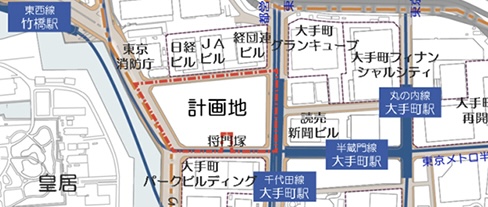
The section labeled ‘Masakado Kubizuka’ has been left completely untouched.
Here’s a closer look: ↓
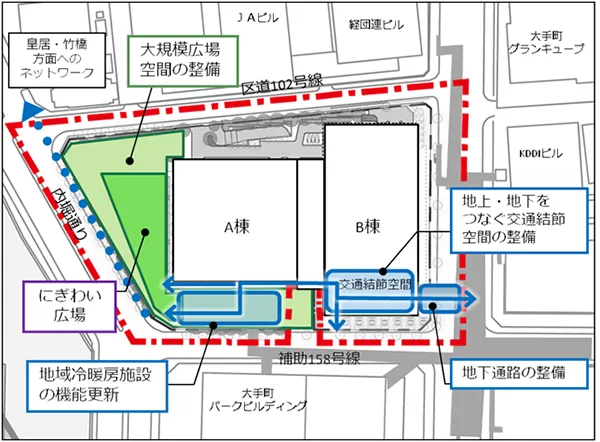
As clearly visible in the plan, the Kubizuka site has been deliberately routed around.
As noted, the address is 1-2-1 Otemachi, Chiyoda-ku, Tokyo.
The plot measures approximately 44 tsubo (about 145 m2). At current Otemachi land values, that is prime real estate worth well over 400 million yen.
The fact that this patch of land is being carefully preserved — worked around by a major developer — speaks for itself.
Large-scale mixed-use redevelopment ‘OH-1 Project’ begins construction in Otemachi.
Whether you believe in the curse or not — that is for you to decide.
Related Video
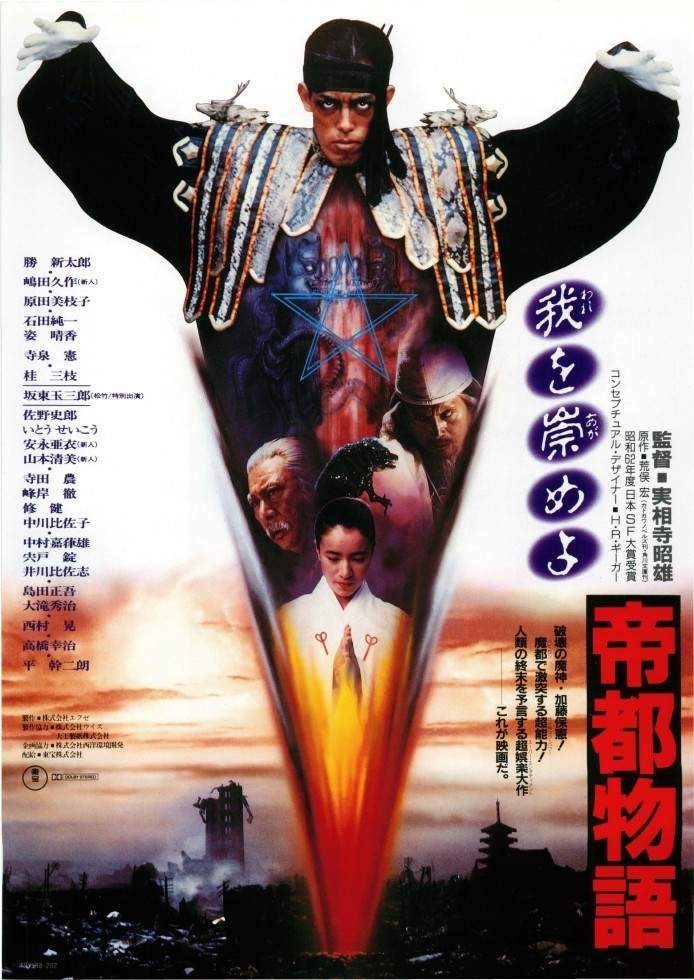
‘Teito Monogatari’ — available on Amazon Prime Video
This is the film widely credited with bringing the legend of Taira no Masakado to mainstream public attention.