Roger knew the truth of the Void Century. His named techniques — Aramitama (荒御魂) and Kamusari (神避) — are both words drawn from Shinto, Japan’s indigenous religion.
Why would Roger name his techniques after Shinto concepts? Pulling on this thread leads us straight to the heart of the Void Century.
Roger’s Technique Names
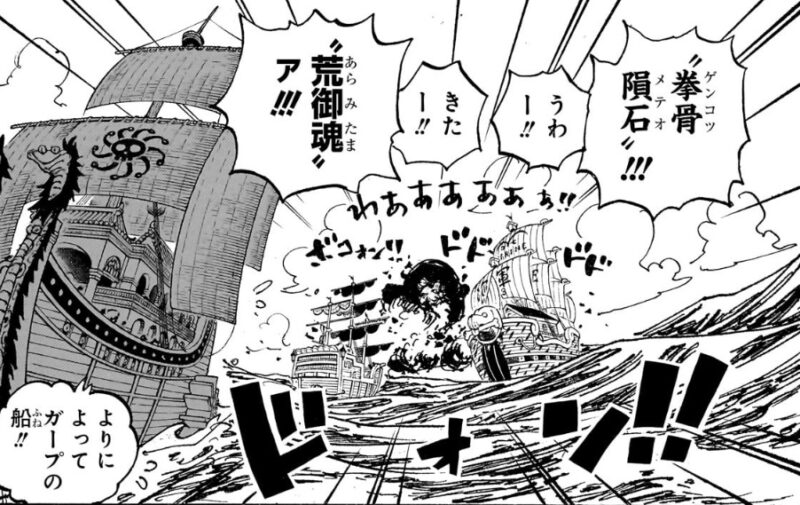
The Elbaf flashback arc gives us a glimpse of young Roger vs. Garp — and one of Roger’s named techniques is finally revealed:
“Aramitama” (荒御魂)
Looking closely at the scene, both ships are still at significant distance from each other, and Garp is also using a long-range technique. That means Aramitama is likely a ranged attack — a flying slash or a burst of projected Haki powerful enough to cancel out Garp’s Genkotsu Meteor.
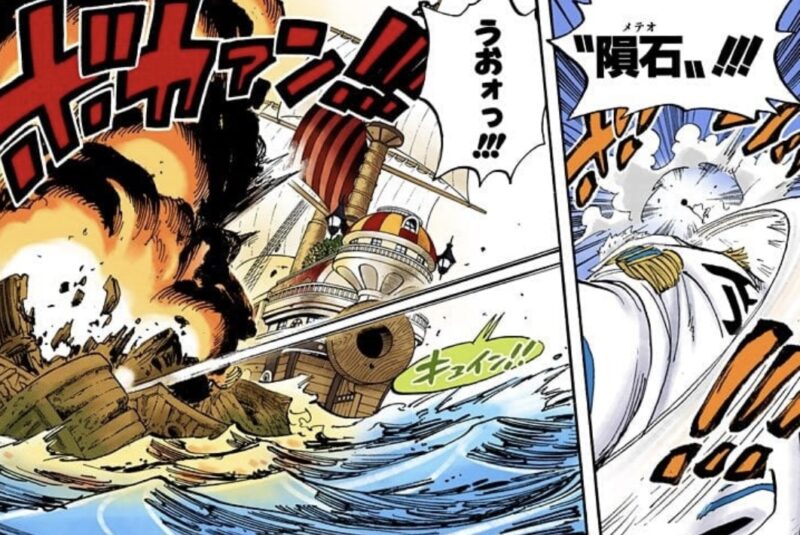
What is Aramitama?
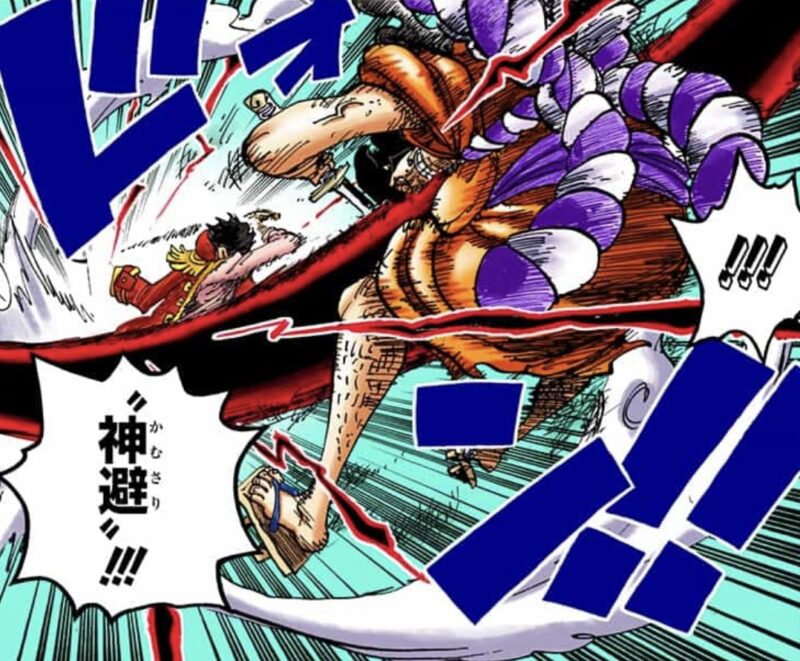
Roger’s known techniques:
- Kamusari (神避) — literally “the god departs”: the death of a god, or a god withdrawing from a place, causing its divine power to vanish from the area
- Aramitama (荒御魂) — the fierce, violent aspect of a divine spirit. Its counterpart is Nigimitama (和御魂) — the calm, benevolent aspect of the same spirit
Both terms come from Shinto.
What is Shinto?
Shinto is often conflated with Japanese mythology — the stories of Amaterasu, Susanoo, Tsukuyomi, Izanagi, and Izanami. But they are not the same thing.
Japanese mythology (as recorded in the Kojiki) was compiled by the ruling Yamato court as a political text — a curated, edited narrative designed to legitimize their power, drawing on local myths and oral traditions collected in regional gazetteers called Fudoki. It is, in essence, state-sponsored historical fiction.
Shinto, by contrast, is far older. It took shape during the Jōmon period and was more fully formed by the Yayoi and Kofun periods. It is a primitive animist religion — no founder, no prophet, no holy text.
Shinto is Japan’s indigenous religion. It has no founder, no central deity, and no scripture. In contrast to monotheism, it holds that divine spirits (kami) inhabit all things in nature. Born from the relationship between people and the natural world — through farming, fishing, and daily life — it is an animist, ancestor-worshipping folk religion. The reverence of nature’s overwhelming power as divine, and the ritual act of calming its fury to ensure peaceful harvests and daily life, is where Shinto begins.
Source: Wikipedia — Shinto
What matters most here is when Shinto’s foundations were laid — the Yayoi to Kofun period transition.
So why did Oda give Roger — the man who uncovered the truth of the Void Century — techniques named after Shinto concepts?
Because the Void Century in One Piece is modeled after Japan’s own lost era: the Blank 4th Century.
The Void Century
Before the Void Century, the world was centered around a single great kingdom.
Then a catastrophic war engulfed the world. The great kingdom was obliterated without a trace — and in its place, the World Government rose to rule over what remained.
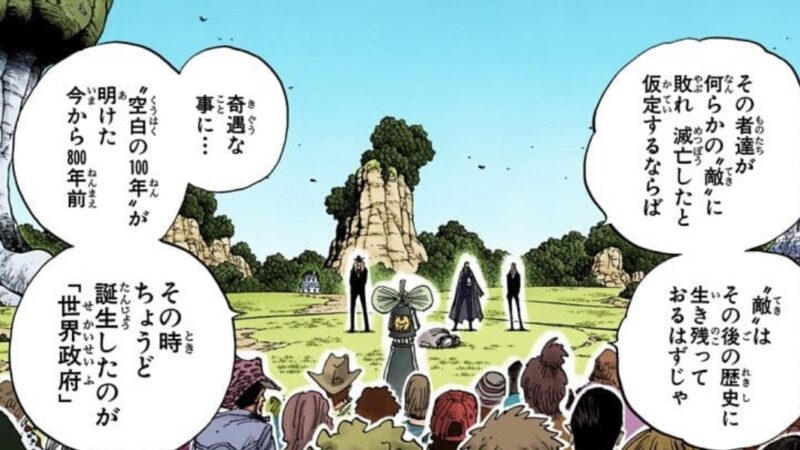
Meanwhile, in real Japanese history:
Before the Blank 4th Century, the Yamatai Kingdom held enormous power, ruled by a queen called Himiko.
Then the 4th century arrives — and when history resumes, Japan is ruled by the Yamato court. Yamatai has been erased completely. Its very location remains a mystery to this day — theories place it in Kyushu, in the Kinai region near Nara, even in northern Tōhoku, or argue it never existed at all.
In other words, One Piece may be:
A manga by the history-obsessed Oda, retelling the mystery of Japan’s Blank 4th Century — the disappearance of Yamatai.
Himiko’s “Kidō” — The Demon Path
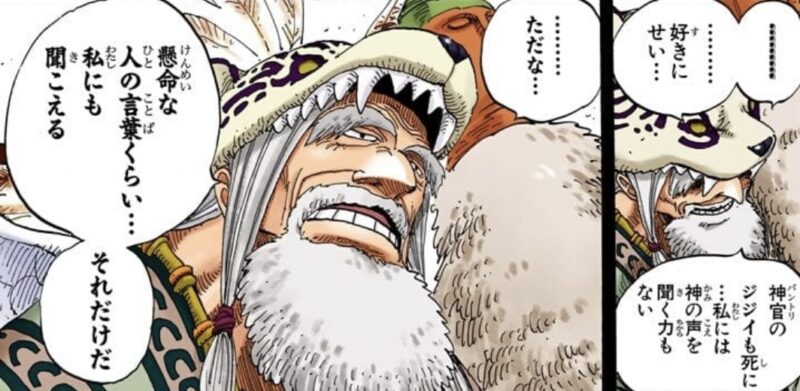
Himiko is said to have wielded Kidō (鬼道) — an occult art of divination through which she heard the voices of gods (nature) and the dead, using this power to unite and guide her people.
That sounds a lot like the Shandian priests of Skypiea — particularly the priest Pantri, who served as a channel for the divine.
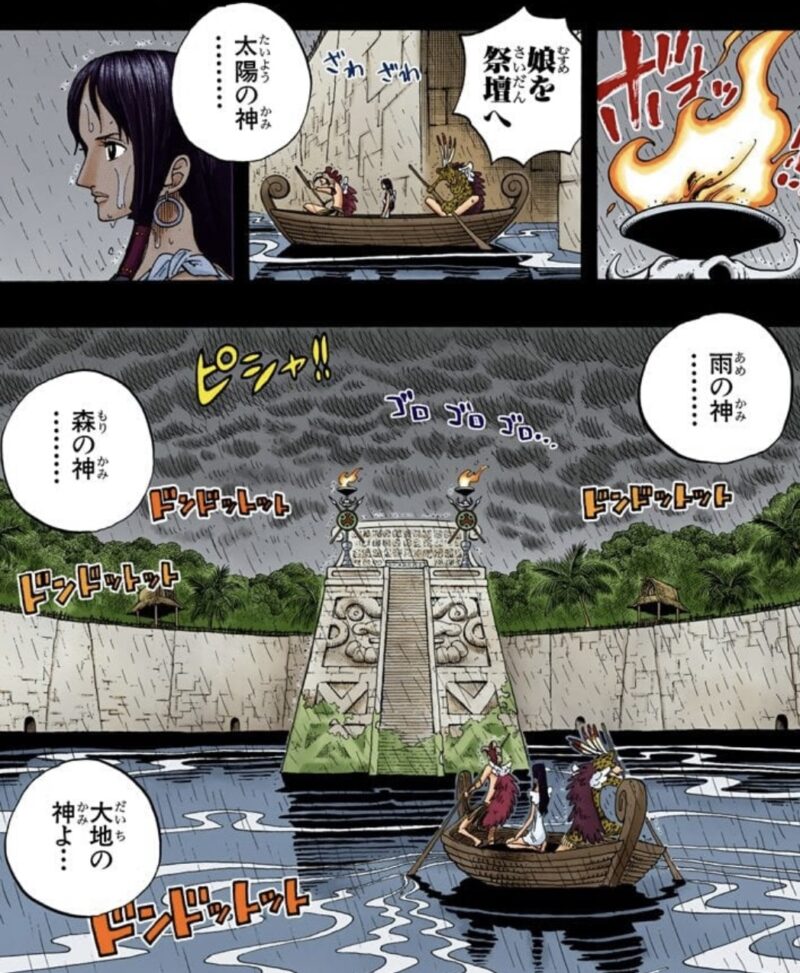
And in the sacrifice scenes: “O gods of the sun, rain, forest, and earth” — the same animist reverence of nature that defines Shinto. It’s no coincidence that the Skypiea arc, thematically about rejecting false gods, fit so naturally with Shinto’s nature-worship.
As for why Himiko’s art was called Kidō — literally “demon path” — it’s because the forces that displaced her needed her to be remembered as a witch. If the victors’ ancestors were simply conquerors and thieves, that’s a serious problem — especially when those victors’ descendants still sit at the very top of Japan as the imperial family.
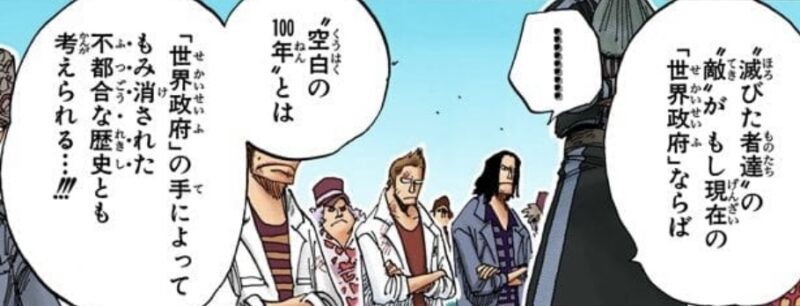
After the Blank 4th Century, Japan’s new rulers were the Yamato court. But something triggered the transition — a war, a conflict. And war requires justification. Simply wanting land and power isn’t good enough when your dynasty’s descendants still reign today.
So Himiko had to become the villain: a dangerous sorceress who wielded demon magic to deceive her people. History is always written by the victors. The losers are always the monsters.
One Piece makes this dynamic visible — just by reading it, you start to sense how power rewrites truth.
So if Oda is using Himiko and Yamatai as the template for the Void Century:
- The World Government = the Yamato court
- The Ancient Kingdom = Yamatai
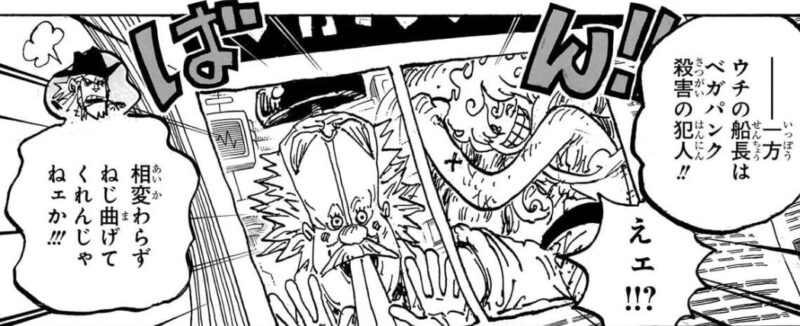
- The woman demonized for her “demon path” Kidō = Nefertari D. Lili? Or perhaps Nami’s birth mother?
Either way, Oda’s view of Himiko’s Kidō is almost certainly positive — a genuine art that guided and protected her people, not dark sorcery. The proof? In One Piece, the title of oni (鬼/demon) belongs to the heroes: Roger was called a demon, Ace and Luffy were called the demon’s children, Yamato wears a demon’s mask, and Dorry and Brogy are the Red Ogre and Blue Ogre. In Oda’s world, being called a “demon” is a badge of honor.
[Aside] Izumo Province
While researching Roger’s technique Kamusari (“the god departs”), I came across its opposite: Kamiiari (神在) — “the gods are present.”
In the Japanese lunar calendar, October is called Kannazuki (神無月) — the “Month Without Gods.” The reason: according to tradition, all the gods of Japan gather in Izumo Province for a divine assembly every October, leaving everywhere else empty of divine presence. So the rest of Japan calls October Kannazuki, while Izumo itself calls it Kamiarizuki (神在月) — “the Month When the Gods Are Here.”
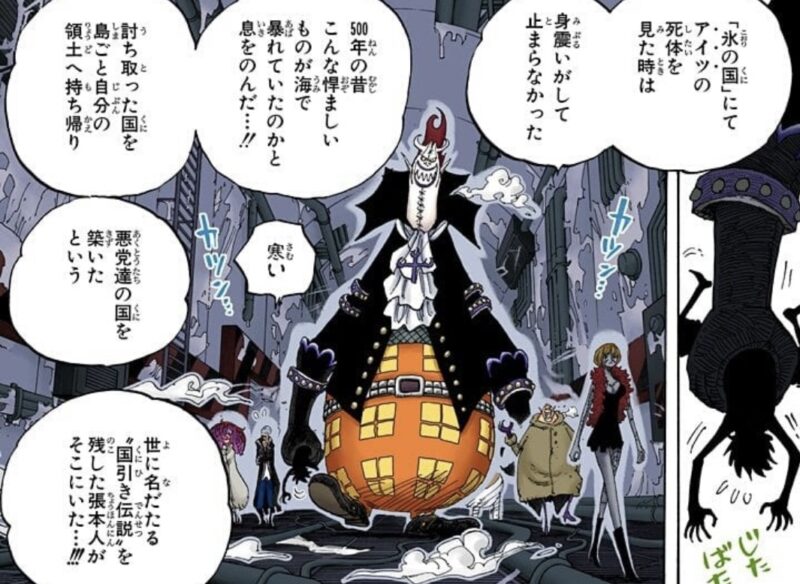
Izumo is also the land of the Kuniiki legend (国引き神話): a colossal god named Yatsukamizuomitsunu dragged islands from across the sea and stitched them together to form the land of Izumo. That sounds a lot like Oars.
Okuninushi
Izumo is also famous for Okuninushi’s Land Cession — the legend in which Okuninushi, king of Izumo, is told by Amaterasu to hand over his land, and submits without resistance.
Okuninushi is known locally in Izumo as “Daikoku-sama” (大黒様), derived from the Chinese reading of the characters in his name. And through that shared pronunciation, he became identified with Daikokuten — one of the Seven Lucky Gods, the god of wealth and fortune.
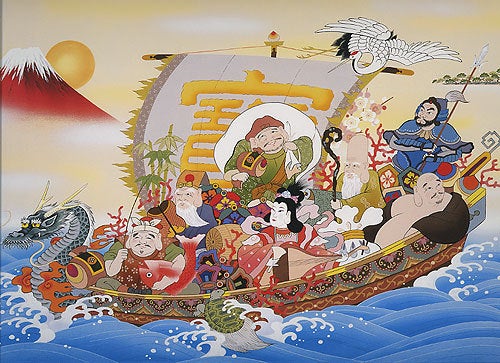
The Seven Lucky Gods ride the Takarabune — the treasure ship. And the treasure ship → Luffy.
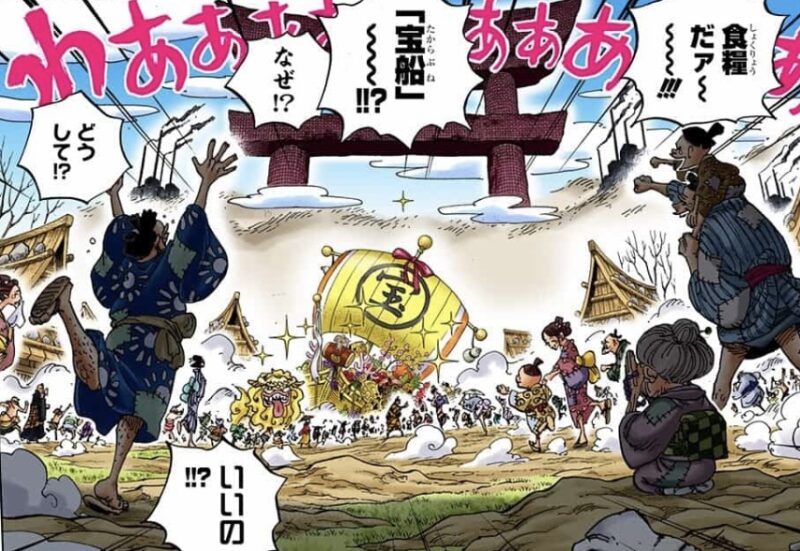
And Luffy’s Gear 5 form was compared to a Myōō (明王 — Wisdom King in Buddhist tradition). As it turns out, Daikokuten and the Myōō share a common origin.
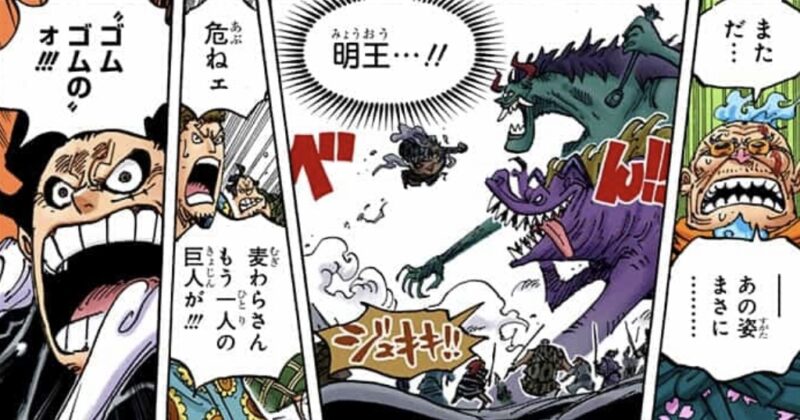
Both trace back to Shiva — the Hindu god of destruction and regeneration.
Luffy is the Destroyer God Shiva
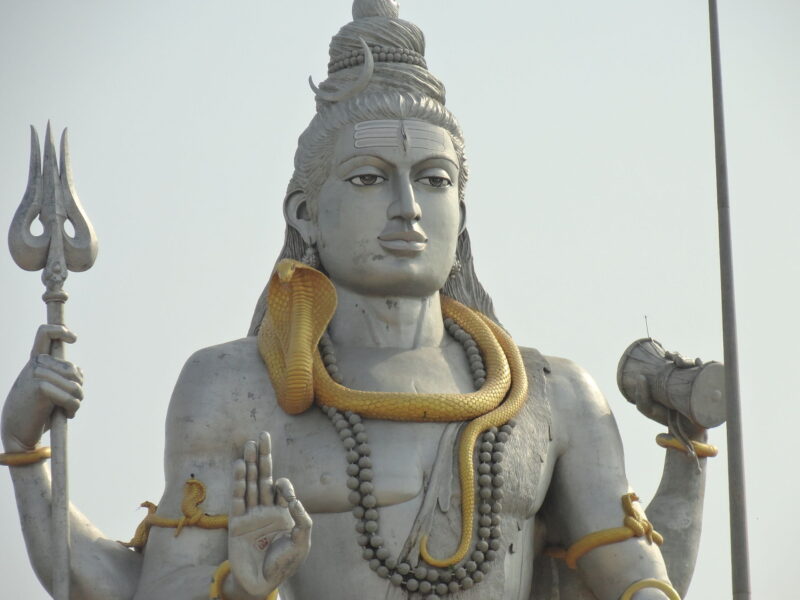
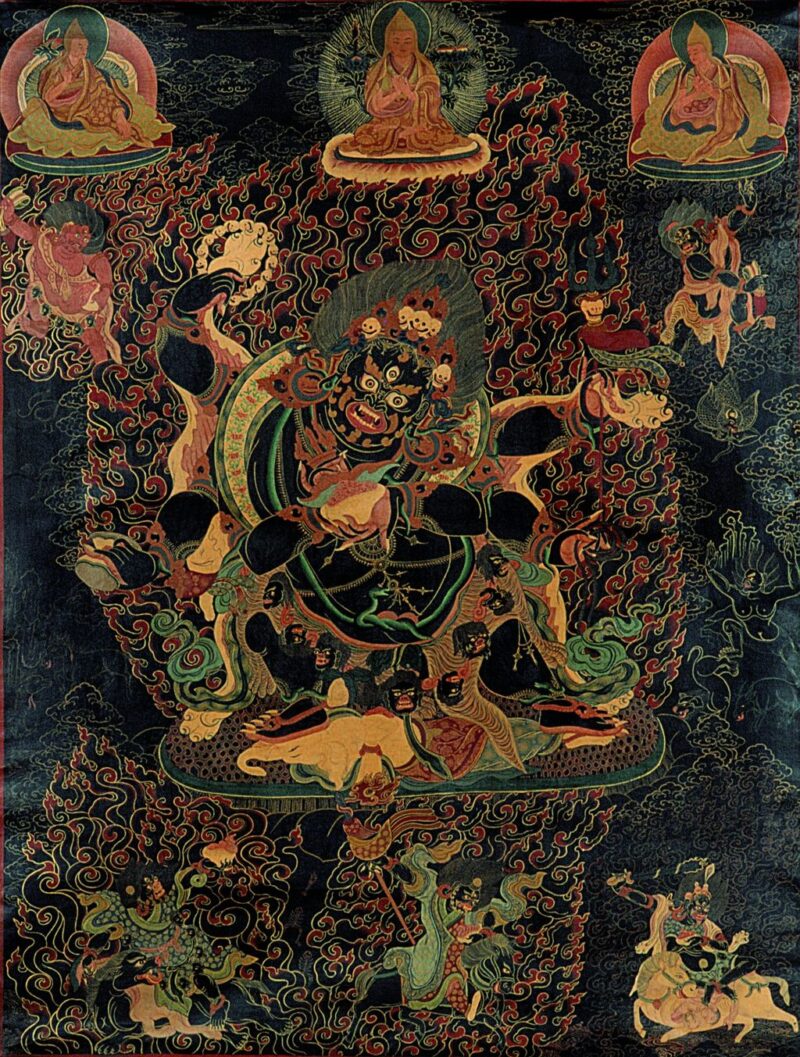
Daikokuten derives from Mahākāla — a fierce aspect of Shiva in Hinduism, absorbed into Buddhism, and eventually worshipped in Japan as a god of wealth and fortune. The Myōō (Wisdom Kings) are similarly understood as manifestations of Shiva within Buddhism — the most famous being Fudō Myōō (Acalā).
The chain of connections:
- Okuninushi → Daikoku-sama → Daikokuten → Mahākāla (avatar of Shiva)
- Myōō (Wisdom Kings) → Shiva
Therefore: Luffy = the Destroyer God Shiva.
Almost every depiction of Shiva shows him with a third eye and serpents coiled around his neck.
- Third eye → Pudding (currently with Blackbeard)
- Serpents → Luffy’s Snakeman form, and the snake-named techniques he unleashes within it
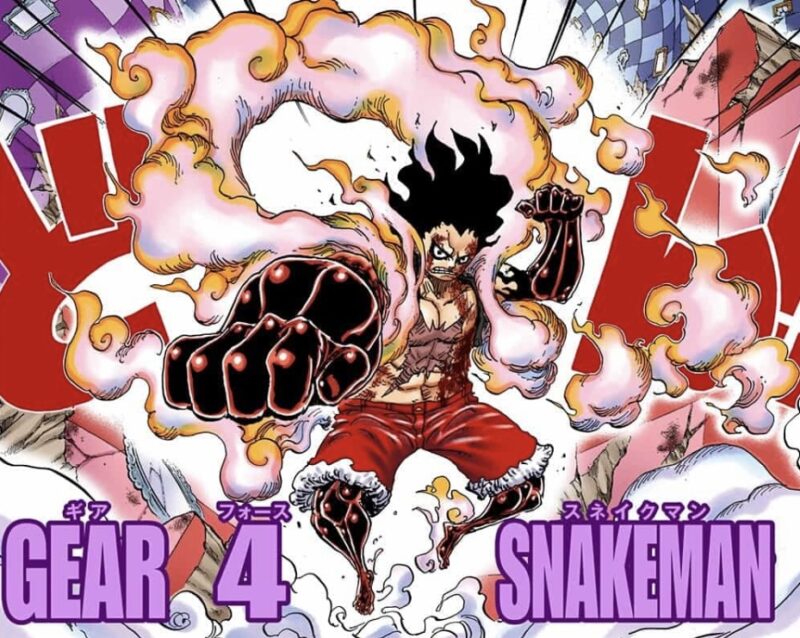
This suggests: since Luffy is Shiva — the god who commands serpents — he will likely end up commanding Loki, who appears to be a giant serpentine Devil Fruit user.
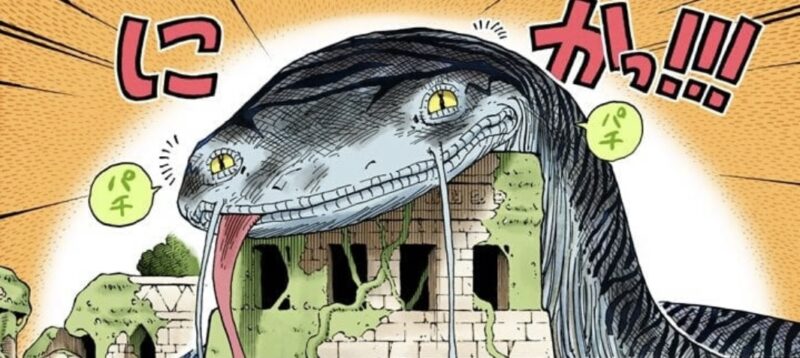
And the India connections in One Piece run deep:
- Five Elder Nasujuro‘s appearance evokes Gandhi
- The country where caste-based slavery and discrimination remain most deeply entrenched is India
- The Lunarians appear modeled on the Aryans — the people who conquered and ruled ancient India
- Luffy’s birthplace Goa is a real Indian city and state
- Bajrang Gun is named after Hanuman, the Hindu monkey god
- Studio Ghibli’s Castle in the Sky draws from Indian mythology; Princess Sheeta‘s name is taken directly from the Indian epic (Sita)
- The flying fortress Laputa itself appears in Indian mythological tradition
- The immortality elixir Amrita comes from Hindu mythology
- In the Samudra Manthan myth, gods and demons use a giant serpent as a cosmic rope to churn the ocean and produce Amrita — the serpent being pulled in this churning could become Loki
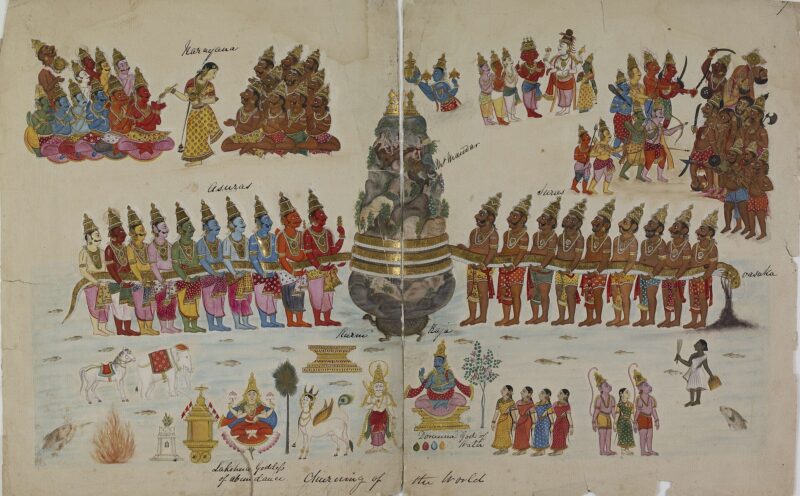
Every major thread in One Piece leads back to India.
Mapping the 800-Year Timeline to Real History
One Piece’s present is around year 1520 of the Sea Circle Calendar. That puts the events of 800 years ago at roughly year 720 in the story — corresponding to the 8th century CE in the real world.
793 CE: Viking raiders attacked the monastery at Lindisfarne, England — marking the beginning of the Viking Age.
Elbaf’s giants are modeled on Vikings. The Void Century (800 years ago in the story) overlaps with the dawn of the Viking Age in our world — which is likely why the Ancient Kingdom and the giants of Elbaf were allies. Their eras match.
That’s all for this week. See you next time.